Quick answer
- Add first: Fakarava for diving, Rangiroa for scale and passes, Tikehau for easy motu days.
- Best window: May to October — settled trade winds, clean visibility, calm passes.
- Trip length: 7 nights for one atoll, 10 to 14 nights for a multi-atoll route.
- Fakarava rule: UNESCO biosphere status means no jet skis, wakeboarding or waterskiing.
- Skip if you don’t dive: the Society Islands suit a first charter better.
- Book early: charter supply here is thin — reserve 12 to 24 months before you sail.
For most crewed Tuamotu charters, add three atolls and not more: Fakarava for the diving, Rangiroa for scale and pass drift dives, and Tikehau for quiet lagoon time. That trio gives you the full range of what the Tuamotus do well without spreading a 10-night charter too thin.
If you only have 7 nights, build the whole charter around one atoll — usually Fakarava or Rangiroa — and don’t try to cover more. The passes here are tide-driven and the runs between atolls are real open-water legs, so a rushed multi-atoll plan trades the best hours of the trip for transit time.
 Chris de Kock, Charter Broker, Sales Broker, Active CYBA Member at DMA Yachting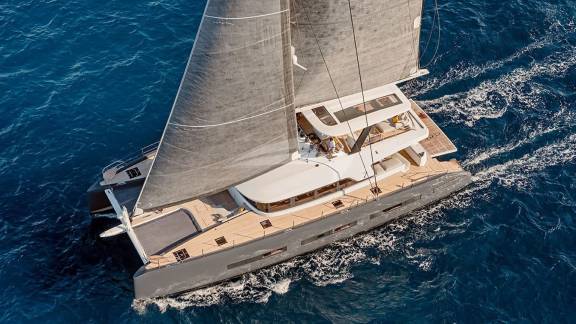
The big-name atoll
Fakarava: the one to add for diving
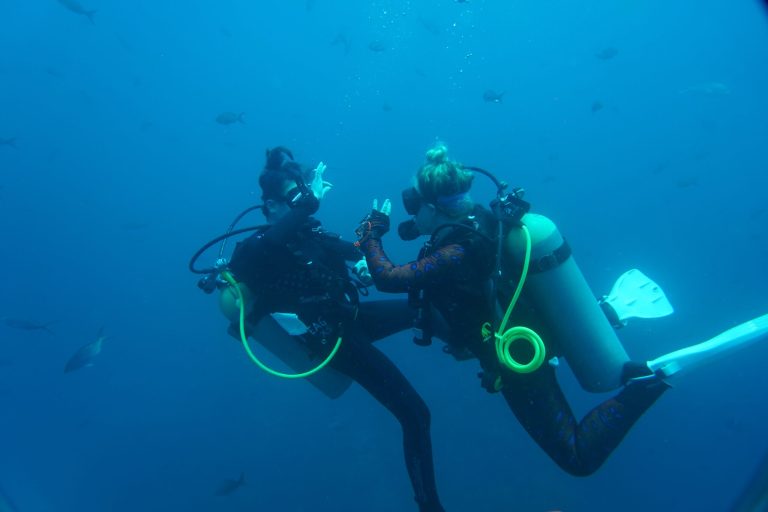
Fakarava is the atoll we build dive-led charters around. It is a UNESCO Biosphere Reserve, and the south pass, Tetamanu, holds the famous wall of grey reef sharks — drift dives through the pass with hundreds of sharks holding in the current. It is more protected and more selective than Rangiroa, and the diving is consistently the strongest reason clients come to the Tuamotus at all.
Catamarans


Rangiroa: scale, passes and the only on-land options
Rangiroa is the giant — a vast lagoon roughly 40 by 20 miles, and one of the largest atoll lagoons in the world. Tiputa Pass is some of the best drift diving anywhere, with napoleon wrasse, eagle rays, hawksbill turtles and dolphins riding the current. For divers, Tiputa is the main reason the atoll earns its place on a charter.
Rangiroa also gives you more to do ashore than any other atoll: the Blue Lagoon, plus the Mana’o rum cellar and vineyards on a motu off Avatoru. For mixed groups where not everyone dives, that variety matters. It is also one of the few Tuamotu atolls with overwater bungalows ashore, so it pairs neatly with a night on land at the start or end.
 Martina Asmus, Owner, Charter Broker, Active CYBA Member, IYBA, ECPY at DMA Yachting
Tikehau: the softer, barefoot atoll
Tikehau is the easy one. It forms an almost unbroken circle 16 miles across, with pink-sand beaches, sandbanks and famously rich, fish-heavy waters. There is a spot where manta rays congregate, and the lagoon colour is the kind people remember.
This is where motu time happens — private beach setups, long lagoon swims, the unhurried anchorage hours that are often the best of a charter. We add Tikehau when a group wants the Tuamotus to breathe rather than be a back-to-back dive schedule.
Catamarans


Which atolls to skip — and what we’d avoid
The archipelago has nearly 80 atolls, but only a handful repay a luxury charter. Manihi and Ahe appear in itineraries and have their charms, but they don’t add enough over the core three for a 7 to 10-night trip. Makatea — with its 80-metre fossilised coral cliffs and sea caves reachable only by boat — is a genuine standout for extended 14-night routes, but it’s a detour, not a default.
 Marcelle Hailwax, Charter Broker at DMA Yachting
The boats and what it costs
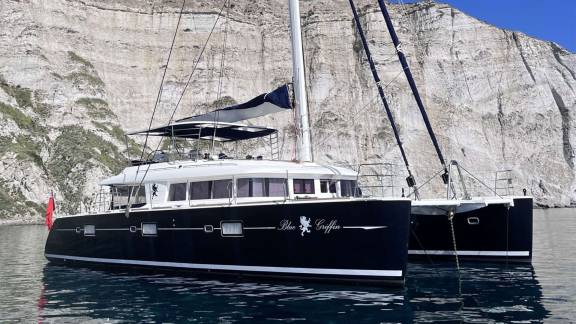
Charter supply in the Tuamotus is thin and still developing, so the right boat matters more than people expect — and you need to book it early. A roomy catamaran is the natural fit for atoll cruising: shallow draft for the lagoons, stable for diving, comfortable for long days at anchor. Catamarans like BLUE GRIFFIN (a 62 ft Lagoon, 4 cabins) sit at the accessible end of the fleet, while BABAC and the larger ARKTOS step up in space and range. We’ll confirm current rates and availability against the live listings when we put a shortlist together for your dates.
| Atoll | Best for | Not ideal for | Add it when |
|---|---|---|---|
| Fakarava | Serious diving, pass sharks | Toys, watersports, non-divers | Diving is the priority |
| Rangiroa | Drift dives, on-land variety | Quiet, intimate days | Mixed group, some don’t dive |
| Tikehau | Motu time, manta rays, lagoon | Hardcore dive schedules | You want pace and calm |
| Makatea | Dramatic cliffs, sea caves | Short 7-night charters | You have 14 nights |
Tuamotu catamarans run roughly USD 11,000 to 96,000 per week as a base rate; the three motor yachts we list sit between USD 42,000 and 80,000. On top of the base, budget the 5% French Polynesia charter tax, APA of 20 to 25% for sail and 30 to 35% for motor, and crew gratuity of 15 to 20%. Browse the full French Polynesia fleet, or filter by yachts under $60k and catamarans to narrow the field.
FAQ
How many Tuamotu atolls should I add to a 7-night charter?
One. Build the whole 7 nights around a single atoll — usually Fakarava or Rangiroa. The passes are tide-driven and the runs between atolls are open-water legs, so a one-atoll plan keeps you diving and at anchor rather than in transit. You need 10 to 14 nights to cover a multi-atoll route properly.
Should I charter the Tuamotus or the Society Islands?
The Society Islands — Moorea, Bora Bora and the lagoons around Tahiti — are the easier first charter and the classic lagoon-cruising choice. The Tuamotus are the diving alternative. If your group dives and wants pass sharks and remote motus, go Tuamotus; otherwise start with the Societies, which pair well when a charter begins or ends near Tahiti.
When is the best time to charter the Tuamotus?
May to October, the dry season. You get consistent trade winds, water between 26 and 30 degrees, calm seas and excellent diving visibility. July and August are excellent but busy, so reserve those dates well ahead.
How far ahead do I need to book?
Earlier than most destinations. Charter supply in French Polynesia is limited, and the right boat in the right month goes quickly — plan 12 to 24 months before you sail, and 6 months minimum for July and August.
Can I do watersports in the Tuamotus?
It depends on the atoll. Fakarava is a UNESCO Biosphere Reserve and bans jet skis, wakeboarding and waterskiing. Rangiroa and Tikehau are more relaxed, so if your group wants powered toys, base that part of the trip there or choose a boat with the gear and route around the protected zones.
More yachts available for this charter
Motor yachts


Catamarans


Plan Your Charter With Real Experts
Tell us how you like to travel and our charter team will hand-pick the right crewed yachts, dates and route — no obligation.
Our Top Recommendations
We put these shortlists together because most travellers don’t need to weigh up every yacht on the water — just the handful that consistently get this kind of trip right. Each guide below digs into the boats, the best months to go, and the trade-offs worth knowing before you book.



















 iMessage
 WhatsApp




































