Quick answer
- Best for first-time guests: the Society Islands (Bora Bora, Taha’a, Raiatea) — short hops, protected lagoons, easy logistics.
- Best for diving and wildlife: the Tuamotus (Fakarava, Rangiroa) — shark-filled atoll passes, but the trip needs more time and a captain who knows the tides.
- Gateway for both: you fly into Papeete, Tahiti, then connect onward — to Raiatea for the Society Islands, or by domestic flight to an atoll for the Tuamotus.
- Best season: May to October, the dry season with steadier trade winds and less humidity.
- Trip length: 7 nights is enough for a focused Leeward Islands route; the Tuamotus want 10 to 12 nights to cover more than one atoll properly.
- Fleet reality: sailing and power catamarans are the backbone of both regions, with Raiatea as the main charter base.
For most first-time French Polynesia guests, we recommend the Society Islands. It gives you the overwater-bungalow scenery people picture when they think of Tahiti, in a compact, reef-protected route that a captain can run comfortably in 7 nights. We only build the trip around the Tuamotus when diving, manta encounters, or genuine remoteness matter more to the group than the postcard skyline of Bora Bora.
The two regions are not interchangeable versions of the same trip. The Society Islands are about lagoon cruising between islands you can see from the deck. The Tuamotus are atolls, not islands with peaks, and the charter is shaped by passes, tides, and long stretches of open lagoon rather than by scenery you hop between. Getting this choice wrong does not ruin the trip, but it does mean paying for one experience and getting the other. Guests sometimes assume French Polynesia is one destination with a single itinerary template, the way Croatia or the BVI might be. It is not. Choosing between these two routes is closer to choosing between a coastal cruising trip and a dive expedition than picking between two versions of the same lagoon.


The core decision
Which Tahiti route fits first-time charter guests?
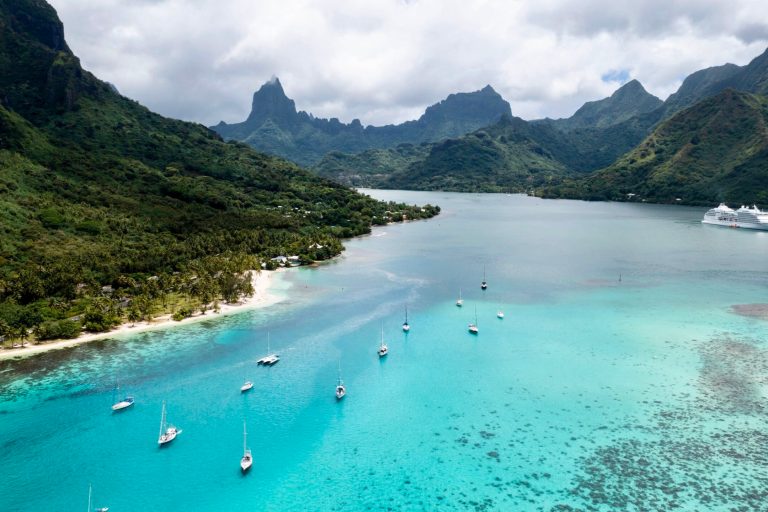
The Society Islands are the easier first charter, and we say that plainly because it is true in operational terms, not just as a sales line. You embark in Raiatea, the main catamaran base in French Polynesia, and from there Bora Bora, Taha’a, and Huahine sit within short, protected runs of each other. Anchorages are inside the reef. Crossings are measured in hours, not days.
The Tuamotus ask more of the itinerary. Rangiroa and Fakarava are atolls with a narrow pass connecting the open ocean to a huge interior lagoon, and the captain has to time entries and exits around the tide, not around your preferred breakfast hour. A slack tide might fall at six in the morning or two in the afternoon, and the day’s schedule bends around that, not the other way round. Guests who need a fixed daily rhythm, or who are chartering with very young children, tend to do better on the Society Islands route for this reason alone. This is not a reason to avoid the Tuamotus. It is a reason to go there for the right reasons, with enough nights built in, rather than squeezing it into a route designed for lagoon-hopping.
Who the Society Islands route fits
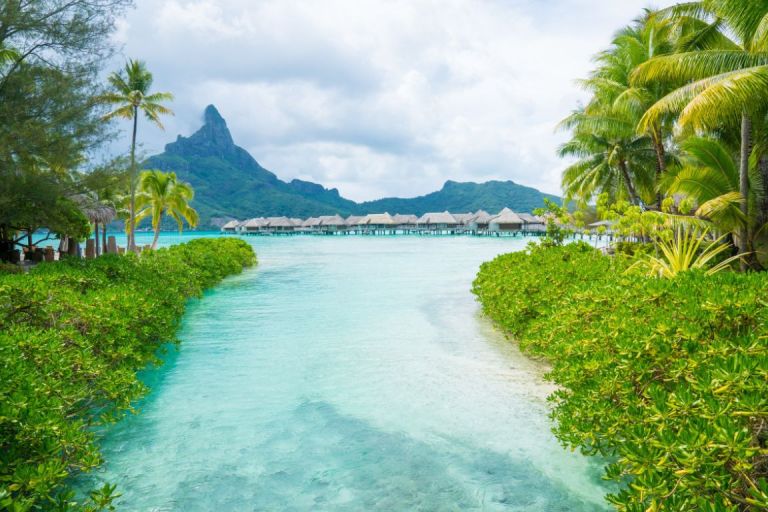
This is the route for couples on a honeymoon-style trip, families with younger children, and anyone chartering French Polynesia for the first time without a specific diving agenda. Bora Bora delivers the lagoon silhouette people fly here for. Taha’a is quieter and more lived-in, a good place to slow the pace after a day near Bora Bora’s more visited anchorages. Huahine is greener and less staged again, and a night or two there does more to change the feel of the trip than most guests expect. Raiatea itself is rarely the highlight of the trip, but it is worth the anchorage or two most captains build in near departure, since the island has genuine cultural weight as the ancestral center of Polynesian voyaging, with the Taputapuatea marae nearby.
A 7-night charter out of Raiatea, covering Bora Bora, Taha’a, and Huahine, is the sweet spot for a first trip. Seven nights is enough to spend two full days around Bora Bora, a day and a half at Taha’a, and a night at Huahine without the trip feeling rushed between anchorages. Guests who want a longer, unhurried version of the same region, adding Moorea near Tahiti at one end, should plan on 14 nights instead. Moorea pairs naturally with charters that start or finish close to Tahiti, since it sits a short crossing from Papeete.
Who the Tuamotus route fits
This is the route for divers, and for guests who have already done a Society Islands-style trip somewhere and want something less staged. The diving here is genuinely stronger than in the Society Islands. Drift dives through the passes at Rangiroa and Fakarava put you among grey reef, lemon, and white-tip sharks in numbers you will not see on a standard lagoon-hopping route.
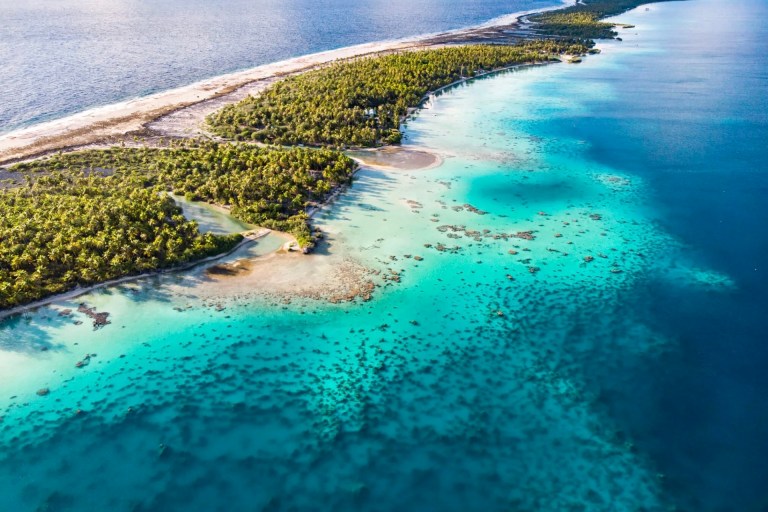
Rangiroa is the big one, one of the largest atolls in the world, with a famous pass and a strong dive operation to match. Fakarava is more selective and more protected, recognized as a UNESCO biosphere reserve, and it tends to reward guests who want fewer, better dives over volume. The South Pass at Fakarava, sometimes called the wall of sharks, is one of the more consistent large-shark aggregations anywhere in French Polynesia, and it is the single site most divers are chartering a Tuamotus trip to see. Tikehau is softer again: pale, luminous lagoon water, sandbanks, and a slower rhythm that suits a couple of days built around swimming and beach time rather than diving.
Plan on 10 to 12 nights if you want to cover more than one atoll properly. A 7-night Tuamotus charter works, but it usually means committing to one or two atolls rather than stringing several together, since the flight connections and pass timing eat into cruising time in a way the Society Islands never do.
What changes onboard: the real tradeoffs
The difference between these two routes is not scenery preference. It changes how the crew plans each day, how much notice they need before entering or leaving an atoll, and what the group actually does with its time on the water.
| Route | Best for | Not ideal for | Daily rhythm |
|---|---|---|---|
| Society Islands | First-time guests, families, honeymoons, guests who want the classic overwater-bungalow scenery | Serious divers, guests who have already done Bora Bora and want somewhere less visited | Short hops between Bora Bora, Taha’a, and Huahine; reef-protected anchorages |
| Tuamotus | Divers, shark encounters, snorkeling that has not been shaped around cruise-ship traffic | Short trips, guests uneasy with tide-dependent scheduling | Pass entries and exits timed to the tide, long lagoon days, what we call “motu time” |
In the Society Islands, the crew can set a rough plan for the week and adjust for weather as it comes. In the Tuamotus, the plan is built around slack tide first and everything else second — meals, dives, and transfers all sit around that window. Guests who like a fixed daily schedule sometimes find this unfamiliar for the first day or two, then adjust once they see why it matters and stop asking what time the day “officially” starts.
“Motu time” is worth explaining, because it is one of the best parts of a Tuamotus charter and easy to undersell in a brochure. It is not an activity. It is the crew anchoring off a private motu, or islet, setting up a beach for the afternoon, and letting the group swim, snorkel, and do nothing in particular for several hours. The Society Islands have version of this too, but the Tuamotus lagoons are larger and emptier, so the effect is stronger.
How long you need, and when to go
Both regions run best from May to October. This is the dry season: lower humidity, steadier trade winds, and the most settled weather for pass crossings in the Tuamotus specifically, where wind and swell against an outgoing tide can make an entry uncomfortable. November to April is warmer and wetter, with occasional storms, and it is not the season we build a first Tuamotus charter around. French Polynesia sits at the edge of the South Pacific cyclone belt, and while direct hits are rare, November through April is technically cyclone season, which is another reason we do not push first-time guests toward those months.
Unlike destinations where catamarans are scarce, French Polynesia has a deep, well-supported catamaran fleet, with Raiatea functioning as a real charter base rather than a one-off stop. Ask your broker which specific yachts are confirmed and available for your dates before you commit to a route, since the boats in the region change through the season as they relocate between charter grounds. If your trip falls in the July or August peak, book 12 to 18 months before you sail if you can — those weeks fill first, and the well-run catamarans that make a 7-night Leeward Islands route work do not sit empty for long. See our French Polynesia charter listings or the wider South Pacific fleet for what is currently available, and browse power catamarans if a motor-driven layout suits your group better than sail.
What usually goes wrong
The most common mistake is building a 7-night Tuamotus trip and expecting to see Rangiroa, Fakarava, and Tikehau in one charter. The domestic flight connections and tide-dependent pass timing make that tight even in good weather. We would rather set a group up for one or two atolls done well than three done in a rush.
The second mistake runs the other way: guests who want serious diving book a Society Islands route because Bora Bora is the name they know, then find the snorkeling and diving there is pleasant but not remarkable next to what the Tuamotus offer. If diving is the priority, say so early, and we will steer the route toward Fakarava or Rangiroa instead.
A third mistake is treating Tikehau as a diving stop. It is not built for that. Guests who want a full day of drift diving should spend it at Rangiroa or Fakarava and save Tikehau for the slower motu time and beach afternoons it does well. For a broader look at how this compares to other expedition regions we work in, our charter insights section and the full list of destinations we place charters in are worth a browse before you commit to dates.
Can I combine the Society Islands and the Tuamotus in one charter?
Not comfortably in a single week. The Tuamotus require a domestic flight from Papeete separate from the Raiatea embarkation used for the Society Islands, so combining both properly needs 14 nights or more, or two separate trips.
Do I need diving certification for a Tuamotus charter?
No, but it changes what you get out of it. Snorkelers can still experience the passes and the lagoon life at Fakarava and Rangiroa, but the shark encounters that make the Tuamotus distinctive are strongest on scuba dives through the current.
Is Moorea part of the Society Islands route?
Yes. Moorea sits close to Tahiti and pairs naturally with charters that begin or end near Papeete, though the core Leeward Islands route (Bora Bora, Taha’a, Huahine) is usually run from Raiatea.
What size yacht works best for these routes?
Sailing and power catamarans are the standard here, and for good reason: shallow draft for lagoon anchorages, stability at the pass entries, and open indoor-outdoor living that suits both lagoon cruising and atoll diving. Monohull motor yachts are available too, but catamarans are the more common, better-supported choice across both regions.
Should first-time guests consider the Marquesas instead?
Generally no. The Marquesas are further out and logistically heavier than either the Society Islands or the Tuamotus, and we do not usually recommend them as a first French Polynesia charter. They are worth discussing separately once you have done one of the two routes above.
Plan Your French Polynesia Charter With Real Experts
Tell us how you like to travel and our charter team will hand-pick the right crewed yachts, dates and route — no obligation.
Our Top French Polynesia Recommendations
We put these shortlists together because most travellers don’t need to weigh up every yacht on the water — just the handful that consistently get this kind of trip right. Each guide below digs into the boats, the best months to go, and the trade-offs worth knowing before you book.



















 iMessage
 WhatsApp




































