Quick answer
- Best window for most guests: December to April (northeast monsoon) — calm seas, up to 30m visibility, warm 28–31°C water.
- Shoulder months worth booking: November and May — very good conditions, lower demand, easier availability.
- Manta season: May to November brings mantas to Hanifaru Bay in Baa Atoll — the reason to book a “wet season” charter.
- What we’d avoid: Peak of the southwest monsoon (roughly June–October) if you want flat anchorages and reliable visibility.
- The fleet: around a dozen motor yachts and superyachts. Sailing catamarans are scarce — motor is the realistic choice.
- Book ahead: 8–12 months for December–April; 5–7 months for manta season.
 John Boullin, Charter Broker at DMA Yachting
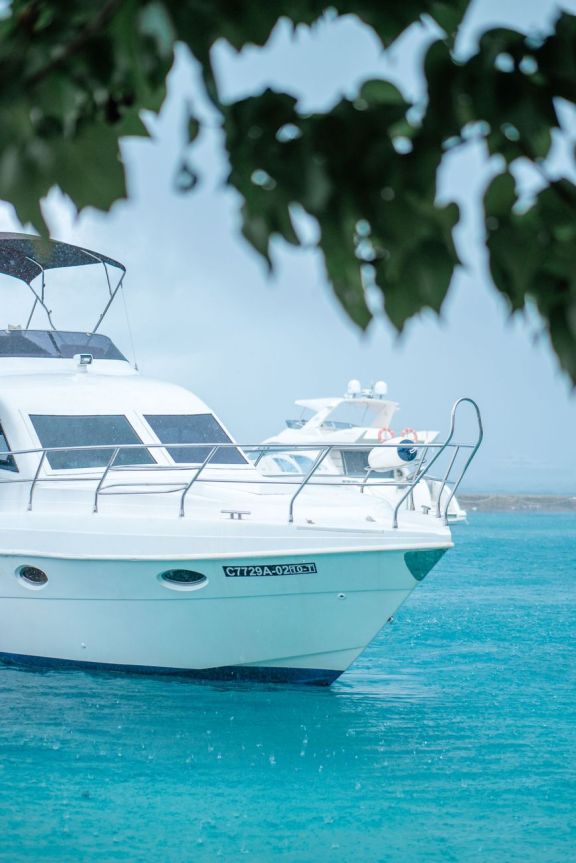
For most first-time charter guests, we recommend the dry season — December to April — and we do not think the Maldives yacht charter peak season premium is wasted money. That window gives you the calmest crossings between atolls, the best underwater visibility, and the widest choice of anchorages, which is exactly what makes a crewed Maldives charter feel effortless. Shoulder months — November and May — are the smart alternative: conditions stay very good, prices ease, and availability opens up.
The one group we steer toward the wet season is divers and wildlife travelers chasing mantas. From May to November, plankton blooms draw manta aggregations to Hanifaru Bay in Baa Atoll, a UNESCO Biosphere Reserve. If that is your trip, you build around the season deliberately — you don’t apologise for it. For the full destination picture, our Maldives crewed charter guides cover routes, atolls, and vessels in one place.


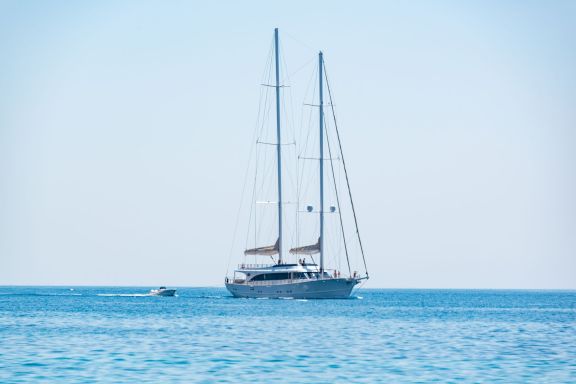
Dry season vs shoulder season at a glance
The choice comes down to sea state, visibility, and what you want in the water. Here is how the two windows actually compare on the water, not on paper.
| Window | Best for | Not ideal for | On-water reality |
|---|---|---|---|
| Dry / peak (Dec–Apr) | First-timers, families, snorkelers, honeymooners | Guests on a strict budget or short lead time | Calm seas, up to 30m visibility, easy tender work |
| Shoulder (Nov, May) | Flexible travelers who want value with good conditions | Guests who need guaranteed flat seas at Christmas | Conditions still strong, quieter dive sites, lower demand |
| Wet / SW monsoon (Jun–Oct) | Divers chasing mantas and whale sharks | Nervous sailors, poolside-focused groups | Variable seas, more rain, richer marine life |
 William Mc Nally, Charter Broker, Associate CYBA Member at DMA Yachting
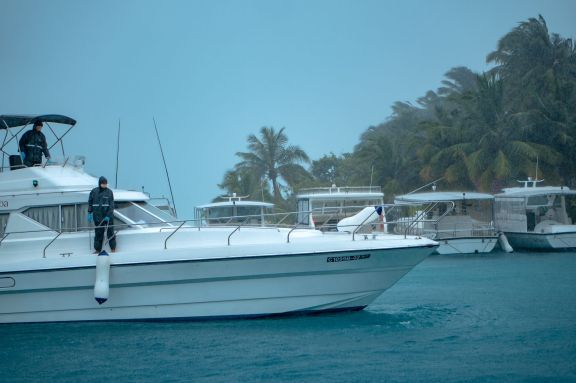
Who peak season suits
Book the dry season if this is your first Maldives yacht charter
December to April is the window we build most first charters around. The seas between the atolls settle, so transits from Malé down to Ari, Vaavu, or Meemu are comfortable rather than something the crew has to time carefully. Snorkeling off sandbanks and uninhabited islands is at its best, and the calm water makes tender operations and dive drops simple — which matters more than guests expect when you have children or non-swimmers aboard.
The tradeoff is demand. The fleet is small — roughly a dozen charter vessels — and Christmas, New Year, and the February–March honeymoon window fill 8 to 12 months before you sail. If those dates are fixed for you, commit early or you will be choosing from what’s left, not what’s best.
Who shoulder season suits
Best month for a Maldives luxury yacht charter: choose November or May if you have flexibility
If your schedule bends, November and May are the value plays and, for flexible travelers, the best months for a Maldives luxury yacht charter. Conditions stay largely good, the dive sites and anchorages are quieter, and both demand and pricing sit below the December–March peak. May also sits at the front edge of manta season, so you can get calm-ish water and the start of the marine-life show in one trip. Our guide to whether the shoulder season is worth the risk goes deeper on the tradeoff.
The full wet season — roughly June to October — brings the lowest rates and the richest wildlife: mantas in Baa Atoll, whale sharks in Ari Atoll (present year-round but peaking February–April and August–November), and the best surf swell in the North and Central Atolls. You accept more rain and more variable seas in exchange. For a dive-led charter on a yacht with scuba onboard, that trade is often worth making.
 Susannah Deehan, Charter Broker & CYBA Member at DMA Yachting
Maldives charter yacht high season rates by season
Maldives charter yacht high season rates run highest from December to April, ease in the November and May shoulder, and sit lowest through the June–October wet season. The same 30–60m motor yacht can move meaningfully between windows, so the month you pick changes the base rate before you compare anything else. Here is the pattern we see across the fleet.
| Season | Months | Rate level | Availability |
|---|---|---|---|
| Peak / high season | Dec–Apr (Christmas & New Year highest) | Top of the range | Tight — book 8–12 months ahead |
| Shoulder | Nov, May | Below peak | Easier — a few months ahead |
| Wet / low season | Jun–Oct | Lowest | Widest choice |
Christmas and New Year sit at the very top of high season, and the February–March honeymoon window is close behind. If your dates are fixed to those weeks, expect peak rates and the tightest availability — that is the premium you are paying for calm seas and 30m visibility. Move to November, May, or the wet season and the same yacht costs less, which is why we push flexible guests toward the shoulders.
Maldives yacht charter availability and how early to book
Maldives yacht charter availability is the real constraint here, not price. The fleet is small — roughly a dozen charter vessels — so the good boats on the best dates go early. For the December–April peak, and especially Christmas, New Year, and February–March honeymoons, book 8 to 12 months before you sail. For manta season, 5 to 7 months usually still secures a strong vessel.
Because the market is this thin, we quietly reserve boats for clients well ahead of confirmation so you have first call on the right yacht for your dates. Leave it late and you are choosing from what’s left, not what’s best — the opposite of how a Maldives charter should feel.
The vessel reality: motor yachts, not catamarans
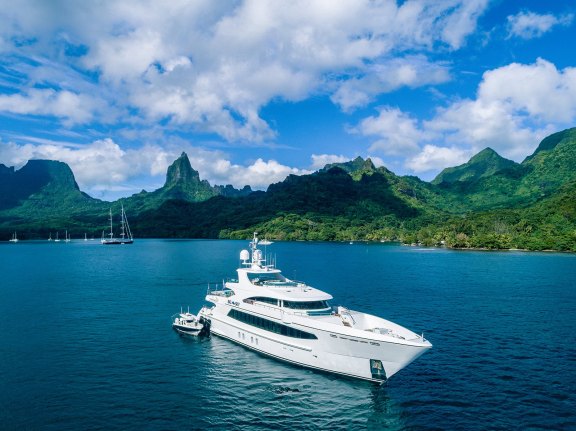
Clients often ask for a sailing catamaran here. We usually redirect them. The best-months breakdown for a crewed Maldives yacht makes the point: the charter fleet is motor-yacht and superyacht dominated, and sailing cats are scarce and hard to source. That isn’t a compromise — a 30–60m motor yacht is genuinely the right tool for a nation spread across 26 atolls, where you want range, multiple tenders, and dive support to reach sites like Maaya Thila without a long, slow passage.
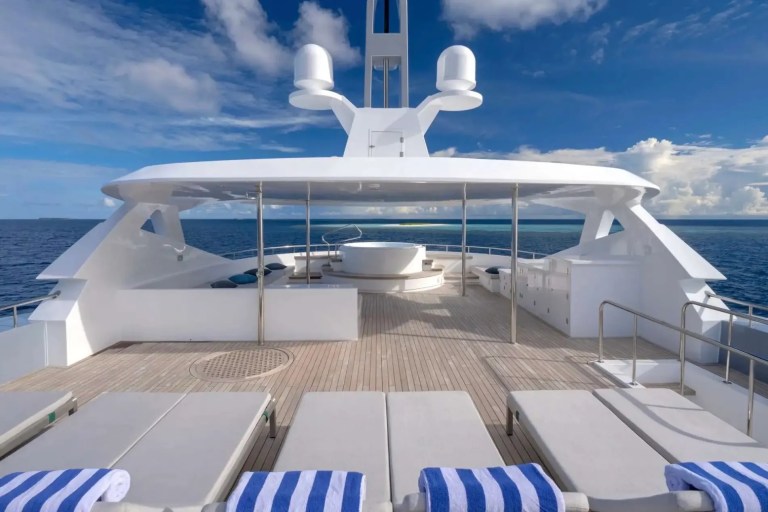
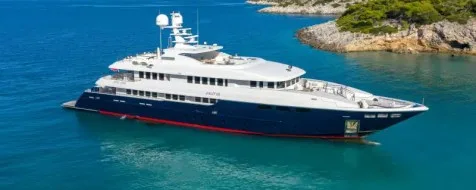
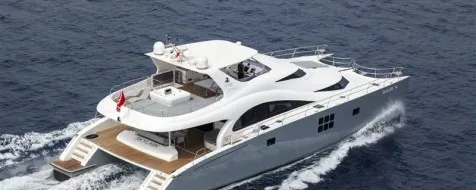
A good example of the class is PURPOSE, a 54.9m, 6-cabin motor yacht from USD 270,000 per week before expenses. For groups weighing size against budget, our luxury yacht and yachts under 200ft lists show what the realistic fleet looks like. If you specifically want a catamaran layout, a power catamaran is a more sourceable alternative than a sailing cat.
What the charter actually costs beyond the base rate
The weekly base rate is the start, not the total. On top of it you should budget an APA (Advance Provisioning Allowance) of roughly 25–40% of the base for fuel, food, and services, plus 17% TGST, a $12 per person per night Green Tax, and a customary crew gratuity of 10–20%. Provisioning across the atolls is expensive and options are limited, which is one reason a good crew and chef earn their keep. Our guide to what changes between the dry and wet season on a crewed yacht covers the on-board detail.
Against a resort, the maths holds up. A luxury motor yacht for a group compares closely with — and sometimes undercuts — the $1,800–$3,000 per night premium overwater-villa tier, while giving you the freedom to move across atolls that no fixed resort can match. That routing flexibility, more than the price, is the real reason to charter here. See our best Maldives atolls by season and wider charter insights if you’re weighing the Maldives against alternatives like Thailand or Indonesia.
FAQ
Is the peak-season premium worth it for a Maldives charter?
For first-timers, families, and snorkelers, yes. December to April buys you calm seas, up to 30m visibility, and easy tender and dive operations. If you’re flexible and price-conscious, November or May give you most of those conditions for less.
When is manta season in the Maldives?
May to November, centred on Hanifaru Bay in Baa Atoll, a UNESCO Biosphere Reserve. Plankton blooms in the southwest monsoon draw the aggregations. If mantas are your priority, build the trip around the wet season rather than the dry one.
How far in advance should I book?
8 to 12 months for the December–April peak, especially Christmas, New Year, and February–March honeymoons. For manta season, 5 to 7 months usually secures the best vessel choice. The fleet is small, so early confirmation matters more here than in larger markets.
Can I charter a sailing catamaran in the Maldives?
Rarely, and we usually advise against building your plans around one. Sailing cats are scarce here. The fleet is motor-yacht and superyacht led, and a 30–60m motor yacht is genuinely better suited to covering 26 atolls with range and dive support.
Which months should I avoid?
If you want flat anchorages and reliable visibility, be cautious about the peak of the southwest monsoon, roughly June to October, when seas are more variable and rain more frequent. January and February can also turn unsettled, and some yachts leave the region during that window.
Plan Your Maldives Charter With Real Experts
Tell us how you like to travel and our charter team will hand-pick the right crewed yachts, dates and route — no obligation.
Our Top Maldives Recommendations
We put these shortlists together because most travellers don’t need to weigh up every yacht on the water — just the handful that consistently get this kind of trip right. Each guide below digs into the boats, the best months to go, and the trade-offs worth knowing before you book.
















 iMessage
 WhatsApp