Quick answer
- Worth it in May and November: the shoulder months on the edge of the dry season, with mostly calm seas and much quieter atolls.
- Risky June to October: the southwest monsoon brings squalls, reduced visibility from plankton blooms, and variable seas.
- Go off-peak for mantas: Hanifaru Bay in Baa Atoll aggregates manta rays and whale sharks from June to November.
- Crew make it safe: an experienced Maldives captain routes across 26 atolls to dodge weather resorts can’t escape.
- Realistic vessel: a 30-60m motor yacht or superyacht — sailing catamarans are scarce here.
- Best value: shoulder and low season deliver near-empty anchorages at lower nightly rates.
 John Boullin, Charter Broker at DMA Yachting
Is a shoulder-season Maldives charter worth the risk?
For most guests, yes — but only if you charter in May or November, the two shoulder months that sit on the edge of the dry season. You get calmer conditions than the wet months, far fewer boats, and lower rates, while keeping most of what makes a Maldives charter work. We only push guests toward June to October if they are chasing manta rays or surf and accept the weather that comes with it.
The tradeoff is simple. Peak season (December to April) gives you the calmest seas and visibility up to 30 metres on the outer reefs — and the highest prices and busiest anchorages. Shoulder season trades a little certainty for a lot of space and value. The wet season (June to October) is the real gamble, and where clients get caught out.



Month by month
Which shoulder months actually work
November sits at the start of the dry northeast monsoon. Conditions are settling — rainfall is light and the seas are usually calm. This is the stronger of the two shoulder months for a first-time charter, and rates are still below December’s peak.
May is the tail end of the dry season as the southwest monsoon builds. Weather is transitional and mostly favourable, but conditions grow less predictable through the month. Book early May over late May if you want the calmer end of the window.
 Martina Asmus, Owner, Charter Broker, Active CYBA Member, IYBA, ECPY at DMA Yachting
What you gain — and what you give up
| Season | Best for | Not ideal for | Conditions |
|---|---|---|---|
| Peak (Dec–Apr) | First-timers, calm seas, best visibility | Value, quiet anchorages | Dry, up to 30m visibility, busiest |
| Shoulder (May, Nov) | Value, space, near-empty reefs | Guaranteed flat water late May | Mostly calm, light rain, quiet |
| Wet (Jun–Oct) | Mantas at Hanifaru Bay, surf, lowest rates | Families wanting flat seas and clear water | Squalls, reduced visibility, variable |
The biggest upside of going off-peak is space. In November and May you’ll have dive sites like Maaya Thila and sandbanks across Vaavu and the central atolls largely to yourself. That intimacy is hard to overstate — it’s the version of the Maldives resorts can’t sell.
One honest caution on price: don’t compare a low-season quote to the same yacht’s peak rate and assume you’re getting a bargain on identical conditions. You’re buying a different product. The savings are real, but so is the weather difference.

Why the crew and the boat matter more off-peak
The Maldives spans 26 atolls across roughly 500 miles. That scale is exactly why shoulder and wet season charters stay viable: an experienced captain reads the localised weather and moves the boat to the sheltered side of the country. A resort is fixed to one lagoon; a yacht is not. This is the single strongest argument for chartering here off-peak.
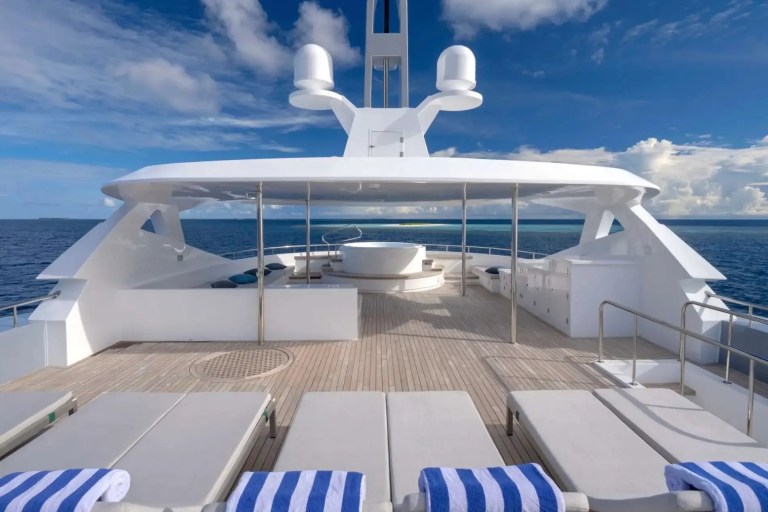
The realistic vessel is a 30-60m motor yacht or superyacht — purpose-built liveaboards with multiple tenders, dive compressors and toy garages. Sailing catamarans are genuinely scarce in the Maldives charter fleet (around a dozen charter vessels operate here), so clients set on a cat usually have to be redirected. Browse the luxury motor yachts that suit these waters, or if budget is the driver, the yachts under $100k list is the right starting point.
 Marcelle Hailwax, Charter Broker at DMA Yachting
Who each option really suits
Choose November or early May if you want most of the peak-season calm with more space and better value. This is our default recommendation for first-time guests who missed the December-to-April window. Start around North and South Malé Atolls for easy arrival logistics via Velana International Airport, then move out to Vaavu and the central atolls.
Choose June to October only if the wildlife is the point. This is manta and whale shark season, with Hanifaru Bay in Baa Atoll — a UNESCO Biosphere with controlled, limited access — at its best. A private yacht lets you time arrival around the tides, which is the real advantage over a resort. It’s also surf season on the North Malé breaks: Cokes, Chickens, Sultans and Jailbreaks.
If you want guaranteed flat water and don’t want to gamble, wait for peak season — or look at alternatives like an Indonesia charter or the sheltered cruising of French Polynesia instead. For more on matching season to region, our charter insights cover it in depth.
FAQ
Is May or November better for a Maldives charter?
November is generally the stronger shoulder month — it opens the dry northeast monsoon, with settling seas and light rain. May sits at the tail of the dry season and grows less predictable as the month goes on, so favour early May if you go then.
Can you still dive well in the Maldives during shoulder season?
Yes, in May and November visibility is usually still good. Deeper into the wet season (June to October), plankton blooms reduce visibility — but those same blooms bring the manta rays and whale sharks to Hanifaru Bay, so divers often accept the trade.
How much cheaper is an off-peak Maldives charter?
Shoulder and low-season rates run below the December-to-April peak, and low season is the cheapest window of the year. Exact savings depend on the vessel, dates and group size — and remember you’re paying for different conditions, not the same product at a discount.
Is it safe to charter during the southwest monsoon?
Yes, with the right crew. The Maldives spans 500 miles across 26 atolls, so an experienced captain repositions to the sheltered side of the country to avoid the worst weather. This routing flexibility is exactly why a crewed yacht handles the wet season far better than a fixed resort.
What kind of yacht should I charter in the Maldives?
A 30-60m motor yacht or superyacht is the realistic and best-suited choice, with tenders and dive support built in. Sailing catamarans are scarce here, so if you have your heart set on a cat, expect to be redirected toward a motor yacht.
More yachts available in Maldives
Motor yachts
Catamarans
Expedition yachts
Plan Your Maldives Charter With Real Experts
Tell us how you like to travel and our charter team will hand-pick the right crewed yachts, dates and route — no obligation.
Our Top Maldives Recommendations
We put these shortlists together because most travellers don’t need to weigh up every yacht on the water — just the handful that consistently get this kind of trip right. Each guide below digs into the boats, the best months to go, and the trade-offs worth knowing before you book.



















 iMessage
 WhatsApp




































