Quick answer
- Best all-round route: the 8-day Western loop — it reaches Isabela and Fernandina, the islands most boats skip.
- For wildlife density: Western itineraries beat Central and Southern routes for penguins, flightless cormorants and marine life.
- Only place for Waved Albatross: Española, on a Southern or combined route, April to December.
- You cannot improvise: the park assigns your route in advance and it cannot change once you sail.
- Shortest worth doing: 7 nights / 8 days — fewer days means you lose the remote west.
- Guide is mandatory: a certified naturalist lives aboard the whole charter and occupies a cabin.
For most guests, we recommend the 8-day Western loop. It is the only route that reaches Isabela and Fernandina — the volcanic, remote western islands with the richest marine life and the wildlife people fly to the Galápagos hoping to see. We only steer guests toward a Central or Southern itinerary when their dates, the boat, or the park calendar leave no Western slot open.
The honest catch: you do not freely design a Galápagos route. Every yacht runs a pre-approved itinerary set by the Galápagos National Park, capacity-controlled site by site, and it cannot be changed once you are underway. So the real decision is not “where do we want to go” — it is “which approved route does the boat we want actually hold.” Get that wrong and you miss the good stuff.
 Chris de Kock, Charter Broker, Sales Broker, Active CYBA Member at DMA Yachting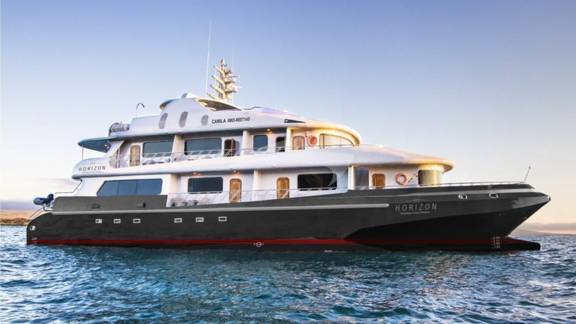
The three route families
Western vs Central vs Southern: which islands you actually get
Park itineraries fall into broad eastern and western groupings, and most 8-day loops stitch a Western or Central core onto a Southern or Northern add-on. The differences are real and worth understanding before you sign.
| Route | Key islands | Best for | Not ideal for |
|---|---|---|---|
| Western | Isabela, Fernandina, Santiago, Santa Cruz | Marine life, penguins, flightless cormorants, volcanic landscapes | Birders chasing Waved Albatross or red-footed boobies |
| Central | Bartolomé, Santiago, Rábida, Santa Cruz | Shorter trips, classic photo sites, first-timers on tight time | Anyone wanting the remote west or seabird colonies |
| Southern | Española, Floreana, Santa Cruz | Waved Albatross (Española), tame wildlife, snorkeling | Penguin and cormorant sightings (those are western) |
Española is the only place on earth to see the Waved Albatross, but they are present roughly April to December. Penguins and the flightless cormorant live on the cool western side, around Fernandina and Isabela. No single 8-day route gives you every headline species — which is exactly why route choice matters more here than guests expect.
Galápagos Motor Yachts →
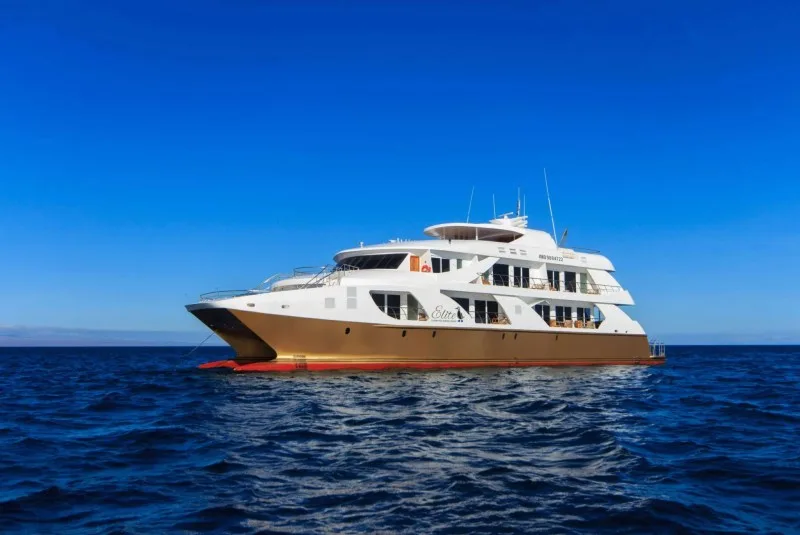
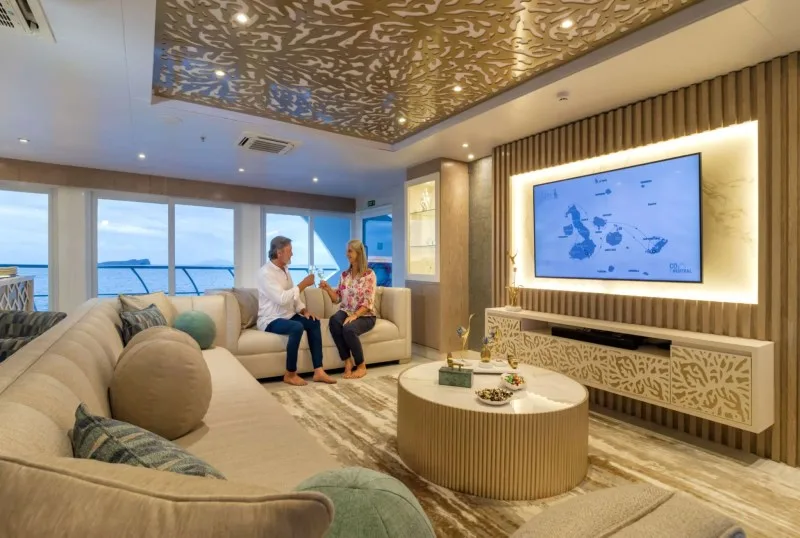
ELITE
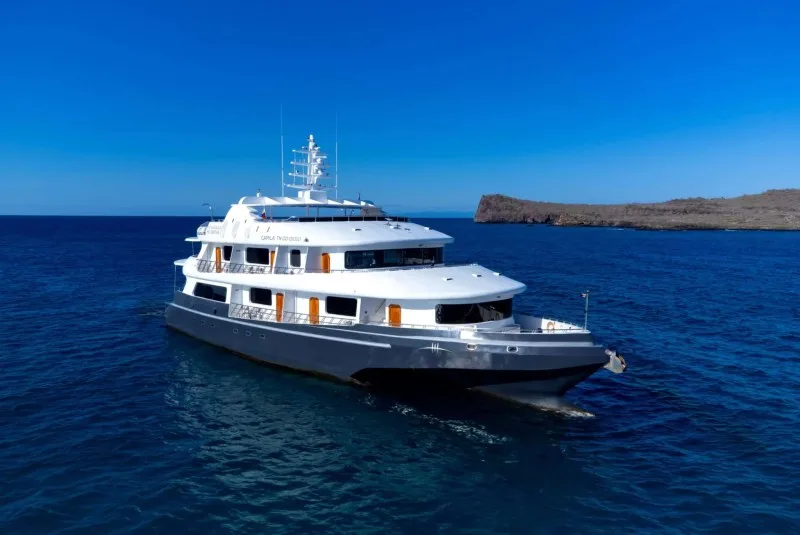
Galapagos Horizon
Why the Western loop wins for most guests
The 8-day Western loop covers 300-plus nautical miles and pairs the lush eastern islands with the raw volcanic west. Tagus Cove on Isabela — a hike up to the views over Darwin Lake, then a panga ride along the cliffs — is the kind of stop that only the longer western routes include. Fernandina, the youngest and most pristine island, sits beside it.
A Central-only route looks fine on a brochure and becomes a quiet disappointment at sea — you get Bartolomé’s pinnacle and good photo sites, but you are an hour’s flight from Ecuador and never reach the islands that make this place singular. We would not normally build a first Galápagos charter around a Central loop unless time is genuinely short.
 Marcelle Hailwax, Charter Broker at DMA Yachting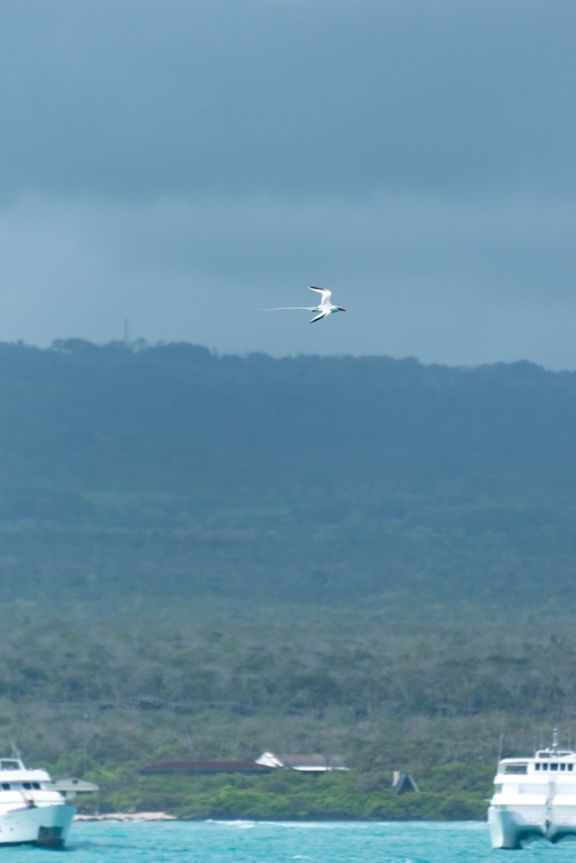
How long the trip needs to be
Go 7 nights / 8 days if you want the full picture. That is the length that lets a yacht reach western Isabela and Fernandina and still take in Española or the central islands without rushing. Shorter charters — 4 or 5 nights — exist, but they are structurally locked out of the remote west, so you are choosing convenience over the best islands.
One planning reality: the naturalist guide is required for the entire charter and takes a cabin. On smaller boats that costs you guest space, so match group size to the vessel before you fall in love with a route. Our itinerary guides walk through how the days actually pace out.
Galápagos Motor Yachts →
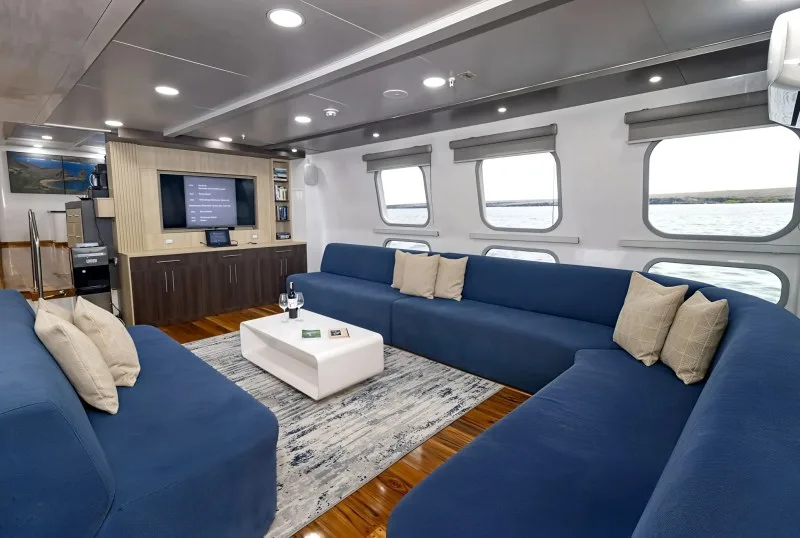
The boats that run these routes
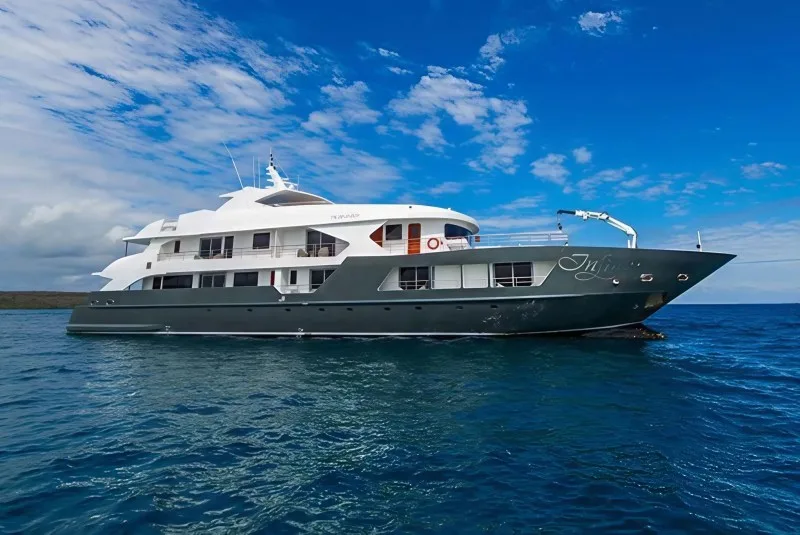
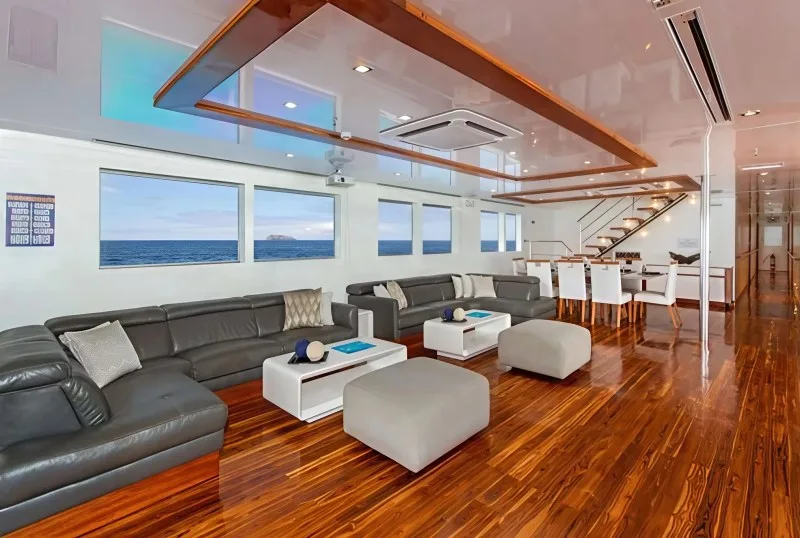
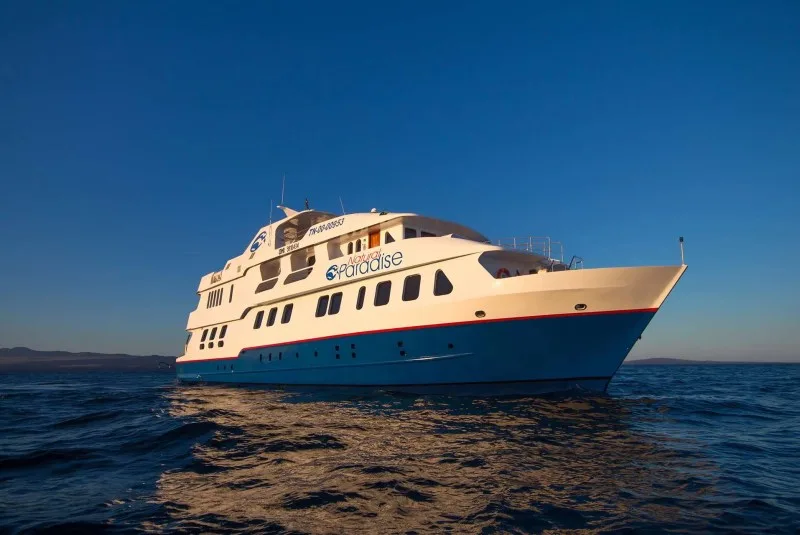
The Galápagos fleet is small and tightly regulated — mostly expedition power catamarans and purpose-built motor yachts, each holding its own park-assigned itinerary. The route you can book is bound to the boat, so we match the two together from the start rather than promising a route and finding a hull later.
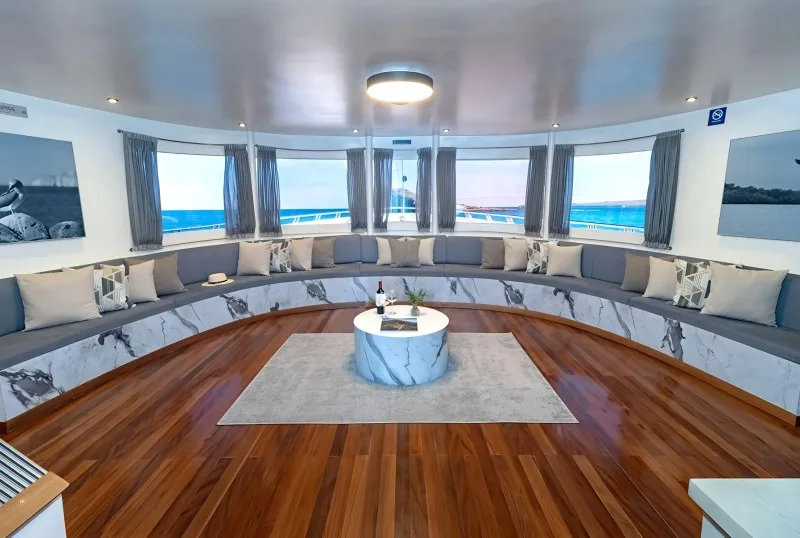
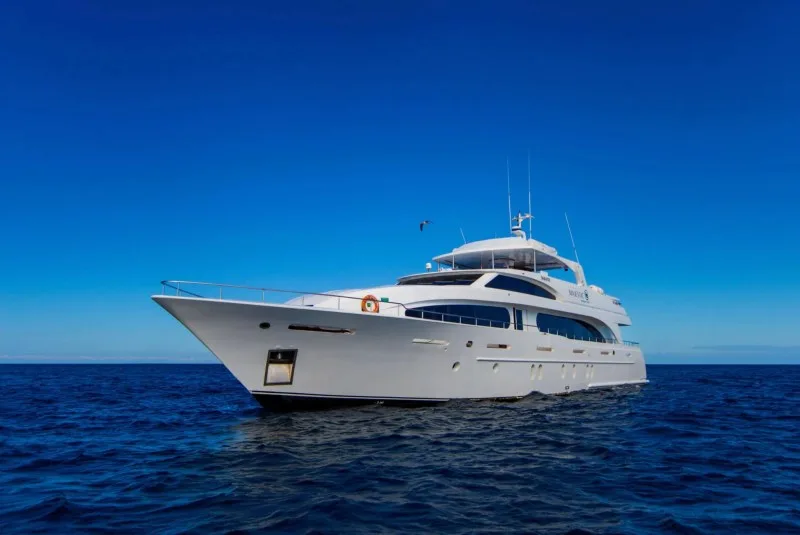
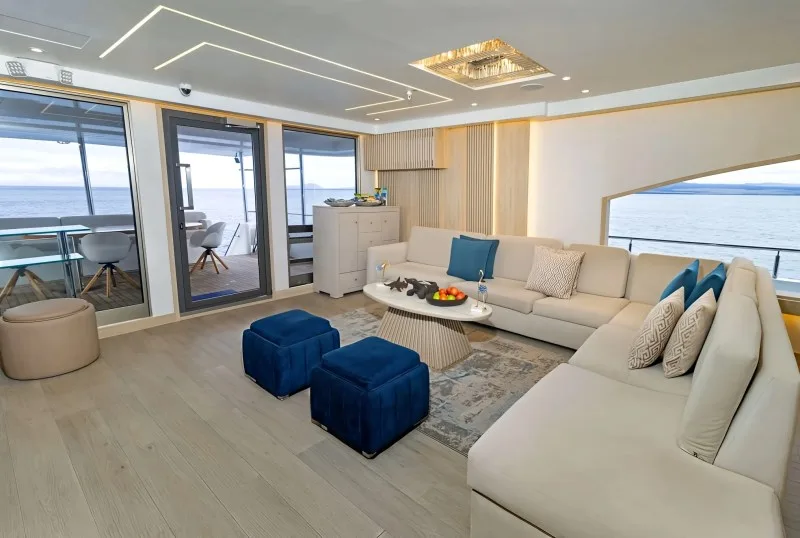
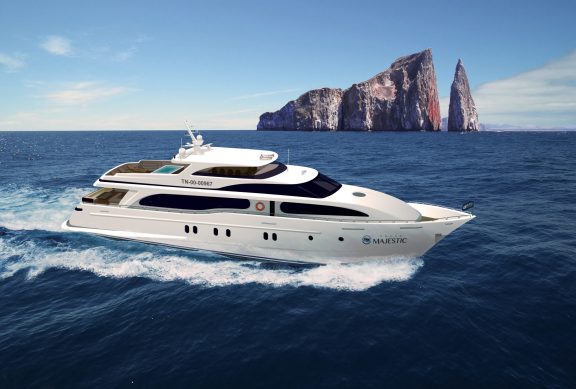
For families and groups wanting the western islands with room to breathe, GALAPAGOS HORIZON (8 cabins, 38.1m, from USD 63,225/week) and Grand Majestic (8 cabins, 38.7m, from USD 69,450/week) are well-suited expedition motor yachts. For larger parties, ELITE (9 cabins, 37.5m) carries more guests on the same calibre of route. See more options on our large-group and under-$100k pages.
 Nadja Asmus, Charter Broker at DMA Yachting
What goes wrong, and how to book it right
The most common mistake is booking late and taking whatever route is left. Peak weeks — Christmas, New Year, Easter and the dry-season months of July and August — sell out a year or more ahead, and the desirable Western slots go first. If your dates are fixed around school holidays, reserve the boat and route together, early.
The second mistake is ignoring the season. December to May brings warmer, calmer seas and better visibility — the easier choice for families and first-timers. June to November runs cooler and choppier on the Humboldt current, with richer marine life but rougher water, especially September to November. If anyone in the party is prone to seasickness, lean toward the calmer months.
If the Galápagos sells out for your dates, our brokers can look at comparable expedition options elsewhere — Raja Ampat, the French Polynesia archipelagos, or Alaska for cold-water wildlife. But for the Galápagos itself, the answer is consistent: the Western loop, 8 days, booked early.
FAQ
Can I design my own Galápagos yacht route?
No. The National Park assigns every yacht a fixed, capacity-controlled itinerary in advance, and it cannot be changed once you are underway. You choose by selecting a boat that already holds the route you want — Western, Central, Southern or a combination.
Which route is best for snorkeling and marine life?
The Western route, around Isabela and Fernandina. The cool, nutrient-rich water there supports penguins, flightless cormorants, sea lions, turtles and rays. Visibility is generally best March to May.
Do I need a naturalist guide on board?
Yes — a certified park naturalist is mandatory aboard for the entire charter and accompanies all shore landings. On smaller yachts the guide occupies a cabin, so factor that into your guest count.
How far ahead should I book?
For peak weeks — Christmas, New Year, Easter, July and August — book 12 to 18 months before you sail. The fleet is small and the best Western itineraries are reserved first. Shoulder months like September to November have more availability and run 15-25% cheaper, but seas are rougher.
Is one week long enough to see the best islands?
Yes — 7 nights / 8 days is the right length and reaches western Isabela and Fernandina plus an eastern island like Española. Anything shorter is locked out of the remote west, which is where the best wildlife is.
More yachts available in Galápagos
Motor yachts
ELITE
Galapagos Horizon
Plan Your Galápagos Charter With Real Experts
Tell us how you like to travel and our charter team will hand-pick the right crewed yachts, dates and route — no obligation.
Our Top Galápagos Recommendations
We put these shortlists together because most travellers don’t need to weigh up every yacht on the water — just the handful that consistently get this kind of trip right. Each guide below digs into the boats, the best months to go, and the trade-offs worth knowing before you book.




















 iMessage
 WhatsApp




































