Quick answer
- The real split: there is no “northern” or “southern” Galápagos itinerary. Every licensed yacht is approved by the National Park to run one of two fixed routes, an eastern route (typically built around Española, Genovesa, and San Cristóbal) or a western route (typically built around Isabela and Fernandina), not a free-form north or south choice. A boat cannot switch islands or mix routes mid-charter, and exact stops can vary by yacht, so confirm the specific itinerary before you book.
- Season is a separate decision: Galápagos has two broad climate seasons, warmer and wetter from December to May, cooler and drier (the garúa season) from June to November. Both routes run year-round through both seasons; what changes is sea state, water temperature, and comfort, not which route is available.
- Choose your season first: sail December to May if calm seas and warm-water comfort matter most to you. Sail June to November if you care more about marine-life activity and don’t mind choppier, cooler conditions.
- Then choose your route: pick the eastern route for seabird colonies (waved albatross, boobies) and easier, calmer landings. Pick the western route for penguins, flightless cormorants, and marine iguanas along Isabela and Fernandina, where the Humboldt current runs closest to shore.
- Avoid: assuming a specific route is only available in “its” season, or that a route automatically dictates your season. They are two separate decisions. Also avoid assuming any two Galápagos itineraries include the same islands by default — confirm the exact route with your broker before you lock dates.
- Full loop: a longer itinerary covering both routes exists, but it runs 300-plus nautical miles round trip and needs to be booked well ahead.
There is no “northern Galápagos” or “southern Galápagos” itinerary that you design yourself. When guests search for that pairing, what they actually need is the eastern-versus-western split, because that is how the Galápagos National Park structures every charter. It assigns each Galápagos yacht charter one of two approved routes, an eastern itinerary or a western itinerary, and the boat cannot switch islands or mix routes mid-trip. Season is a separate, additional factor layered on top of that route choice, and it is where we do most of our advising.
For most first-time guests, we recommend choosing your season first, then matching a route to it. Sail December to May if calm seas and warm-water comfort matter most. Sail June to November if you want richer, cooler-water marine-life activity and don’t mind rougher crossings. Which islands you actually see, the eastern route’s Española, Genovesa, and San Cristóbal, or the western route’s Isabela and Fernandina, is a separate decision based on which wildlife you want to see, not on which month you’re sailing.


Why “northern vs southern Galápagos” isn’t how yacht itineraries actually work
Galápagos is a strictly regulated national park, not open water you cruise at will. Every charter yacht operates on a park-approved itinerary with a certified onboard naturalist guide, and once the boat leaves the dock, the route is locked. There is no live rerouting because a guest wants to add an island or skip a crossing. So while guests often frame the choice as “north” or “south,” the park itself doesn’t organize the islands that way, and neither does the fleet.
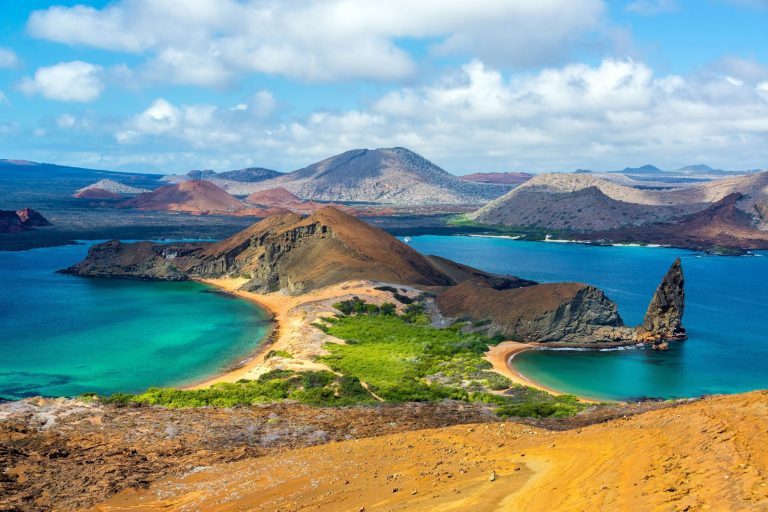
In practice this generally means two routes: an eastern loop typically built around Española, Genovesa, and San Cristóbal, and a western loop typically built around Isabela and Fernandina, usually paired with central islands like Santa Cruz and Bartolomé. Exact stops vary by yacht and week, so always confirm the specific island list before you book. A full-loop itinerary that touches both exists and covers more than 300 nautical miles round trip, but it is a longer, more demanding booking, not the default trip.
The eastern route
Eastern route: Española, Genovesa, San Cristóbal
The eastern route runs year-round, but the December to May season, Galápagos’ warmer, wetter window, brings calmer seas and clearer skies. That matters here because Genovesa’s cliff landings and the exposed Española coastline are more comfortable in settled conditions than in the choppier garúa swell later in the year. The route still sails through June to November too, and the wildlife colonies are there year-round, but expect cooler water and rougher crossings if you book outside December to May.
This is the route we usually recommend to first-time guests and families, especially if your trip lands in the December to May window. Warm water suits snorkeling, and the seabird colonies across the eastern islands, including waved albatross on Española and boobies on Genovesa, are present year-round, though calmer seas make the landings easier.
The western route
Western route: Isabela and Fernandina
Isabela and Fernandina sit closer to the cool, nutrient-rich Humboldt current, so the western route tends to run cooler and choppier than the eastern islands year-round. That gap widens further during the June to November garúa season, when upwelling draws Galápagos penguins, flightless cormorants, and marine iguanas to feed close to shore. From December to May, the water warms and seas calm down on this route too, at the cost of some of that marine-life activity.
We usually advise this route to guests who care more about diving conditions and cooler-water marine life than about calm anchorages. It is not the trip for anyone prone to seasickness or expecting warm-water snorkeling comfort every day. The tradeoff is real: rougher water in exchange for richer feeding conditions, and a better shot at penguins, cormorants, and marine iguanas actively feeding along the Fernandina shoreline, particularly if you sail in the June to November window.
Best Galápagos itinerary for wildlife: eastern or western route?
The best route for wildlife depends on which animals you actually want to see, not on which route sounds more scenic. The eastern route favors seabird colonies and calmer-water species, waved albatross and boobies on Genovesa and Española, plus sea lions and rays for snorkeling. The western route favors cooler-water, current-driven species, Galápagos penguins, flightless cormorants, and marine iguanas along Isabela and Fernandina, where the Humboldt current runs closest to shore.
Season is a separate factor that affects comfort and sea state on both routes. Expect calmer seas and warmer water December through May, and cooler, choppier conditions during the June to November garúa season, whichever route you’re on. Divers and guests focused on marine-life density generally prefer sailing during the garúa season; guests focused on comfort and easy landings generally prefer December to May.
Eastern route vs western route at a glance
| Route | Best for | Not ideal for | Wildlife highlights |
|---|---|---|---|
| Eastern (Española, Genovesa, San Cristóbal) | First-time guests, families, warm-water snorkeling, seabird colonies | Serious divers wanting cool-water marine life | Waved albatross, boobies, sea lions |
| Western (Isabela, Fernandina) | Divers, photographers, guests prioritizing marine life over comfort | Guests prone to seasickness, warm-water swimmers | Penguins, flightless cormorants, marine iguanas |
| Full loop | Repeat guests with flexible dates and 8+ days to spend | Short trips or guests wanting one consistent sea state throughout | Species from both routes across a longer route |
Choosing the right Galápagos expedition yacht itinerary for your season
Picking the right Galápagos expedition yacht itinerary starts with your travel dates, not with a wish list of islands. Once you know your dates, you can work through two separate decisions: which season fits the sea conditions and comfort level you want, and which route fits the islands and wildlife you want to see. Together those decisions narrow down which yachts are actually eligible, since each license is tied to a single route.
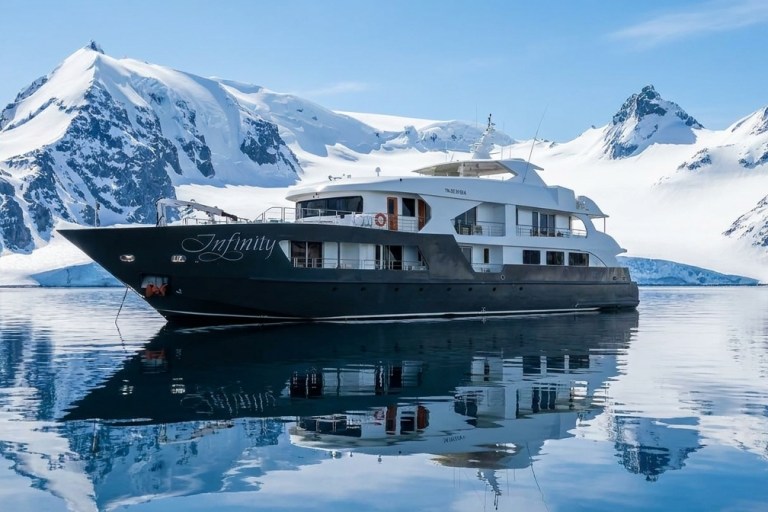
The Galápagos fleet is small because regulation limits it, mostly expedition-style power catamarans in the 27 to 45 meter range carrying up to 14 guests, along with a handful of expedition motor yachts, some of which also work seasons in Antarctica. Weekly rates typically run from $40,000 to $60,000 or more, and the mandatory naturalist guide takes up a cabin for the full trip, which reduces usable guest capacity compared with a similarly sized yacht elsewhere.
Because the fleet is small and each yacht is licensed for a specific route, we usually advise booking a Galápagos charter as far ahead of your travel dates as you can, particularly for December to May sailings, when demand from first-time guests and families is highest across the fleet. If your trip is less than six months away, we can still find you a boat, but the season available will likely decide your route options rather than the other way around, so it pays to stay flexible on exact dates if you can.
This is also where we do the most work behind the scenes. Because the licensed fleet is small and demand for the December to May season peaks in the same window every year, we track which boats are coming open for that season well before most guests start asking, and we can quietly reserve boats for clients who know roughly when they want to travel but haven’t finalized exact dates. That flexibility is worth more in Galápagos than in almost any other region we work in, simply because there is no improvising once a route is locked.
- Confirm whether the yacht is licensed for the eastern route, the western route, or the full loop, before you lock your dates.
- Check that the naturalist guide and cabin allocation are already factored into your guest count.
- Ask whether the cruising permit is already secured for your exact week, since permits are tied to yacht and route.
- Decide which matters more to you: calm, warm-water comfort (December to May) or cooler, richer marine-life activity (June to November). This choice applies whichever route you take.
- If you specifically want penguins, cormorants, or marine iguanas, confirm the western route is included in your itinerary. These species live around Isabela and Fernandina, not the eastern islands.
What goes wrong when guests pick the island before the season
The most common mistake we see is a guest falling for one bucket-list island, usually Genovesa or Fernandina, without checking which route it belongs to and whether their travel dates match the conditions they’re picturing. This works on paper and becomes a problem once the yacht and permit are already locked to the wrong route or the wrong conditions.
The second most common mistake is booking the full-loop itinerary purely to “see everything,” without accounting for the extra days and the mixed sea conditions it involves. The full loop is a genuinely good option for repeat Galápagos guests or anyone with eight or more days and flexible dates, but it is not the right default for a first trip, and it is not something to book at short notice given how few yachts are licensed to run it.
Our approach is to start with your travel dates, then work backward to the route and yacht that actually fit those dates, rather than starting with a single island and hoping the season cooperates. For guidance on how we think through fleet and season choices across regions, see our yacht charter insights, or browse the current Galápagos yachts available for each route.
Can I choose my own Galápagos itinerary?
No. Every charter yacht is licensed for one of two park-approved routes, an eastern itinerary or a western itinerary, and the National Park does not allow live changes once the boat is underway. A full-loop option covering both exists but must be booked as such from the start.
What is the best time to visit Genovesa Island?
We recommend December through May, when calmer seas make Genovesa’s cliff landings more comfortable. Genovesa is typically only reachable on the eastern route, since it sits far from the western islands and the two are rarely combined on one trip, so always confirm the exact islands on your itinerary before booking, as specific stops vary by yacht.
Is the western route colder than the eastern route?
Yes, generally. Isabela and Fernandina sit closer to the cool, nutrient-rich Humboldt current, so the western route tends to run cooler and choppier than the eastern islands year-round, and the gap widens further during the June to November garúa season. Guests focused on diving and cooler-water marine life generally do better in that window; guests wanting calm, warm-water comfort generally do better December through May, whichever route they take.
Which route has better wildlife, eastern or western?
Neither route wins outright; they favor different wildlife. The eastern route is stronger for seabird colonies, including waved albatross and boobies, and for calm, warm-water snorkeling with sea lions. The western route is stronger for penguins, flightless cormorants, marine iguanas, and cooler-water marine life around Isabela and Fernandina. Choose based on which animals matter most to you, then separately decide which season fits the comfort level and sea conditions you want.
Can I do both routes on one trip?
A full-loop itinerary exists and covers more than 300 nautical miles round trip, touching both the eastern and western islands. It is a longer, more demanding booking than a standard week, runs on a limited number of licensed yachts, and should be planned well ahead.
Can I bring my own yacht into Galápagos?
Technically yes, but it requires separate permitting through the Galápagos National Park and Ecuadorian maritime authorities, and the process is more involved and slower than chartering a yacht that already holds an approved route and permit. For most guests, chartering an already-licensed expedition yacht for the route and season that fit your trip is simpler and faster. See our FAQ for more on how Galápagos charters differ from other regions we cover, including our other expedition destinations.
Plan Your Galápagos Charter With Real Experts
Tell us how you like to travel and our charter team will hand-pick the right crewed yachts, dates and route — no obligation.
Our Top Galápagos Recommendations
We put these shortlists together because most travellers don’t need to weigh up every yacht on the water — just the handful that consistently get this kind of trip right. Each guide below digs into the boats, the best months to go, and the trade-offs worth knowing before you book.


















 iMessage
 WhatsApp




































