Quick answer
- Best for wildlife density: the Eastern Route (Española, San Cristóbal, Floreana, North Seymour).
- Best for volcanic scenery and marine megafauna: the Western Route (Fernandina, Isabela, Santiago).
- Want both sides in one trip: book the 8-day Full Loop, which combines both routes on a single permit.
- Calmer seas and warmer water: December to May. Choppier water and richer Humboldt current life: June to November.
- The route is fixed by permit: Galápagos National Park assigns each yacht a licensed Eastern or Western itinerary. You cannot mix and match once you are aboard.
- Every cabin count includes the guide: a certified naturalist occupies a cabin for the full charter, on both routes.
For most first-time guests, we recommend the Eastern Route. It covers Española, San Cristóbal, and Floreana, the islands with the highest concentration of accessible wildlife and the easiest walking terrain, and it suits families and anyone who wants a lot of animal encounters without long open crossings.
We usually steer repeat visitors, divers, and serious photographers toward the Western Route instead. It runs past Fernandina and around Isabela, where the marine life is thicker (mola mola, whale sightings, marine iguanas in volcanic terrain) but the crossings are longer and the landscape is starker. If you have eight days rather than five, the Full Loop removes the choice altogether by combining both sides of the archipelago into one licensed itinerary.
The one thing that does not change regardless of which route you pick: Galápagos yacht charters run on park-assigned, pre-approved itineraries. There is no custom routing here, and that is the first thing to understand before you compare islands.
How Galápagos itineraries actually work
Why you cannot design your own Galápagos route
Galápagos National Park issues each yacht a fixed cruising permit tied to one of a small set of approved itineraries, and that itinerary cannot be altered once you are underway. This is different from most of the destinations we book. In other expedition regions, a captain can often adjust a route around weather or guest preference. Here, the route is locked before you ever step aboard.
That is why the real decision is not “where do you want to go” but “which licensed route matches what you want to see.” The two standing options are the Eastern Route and the Western Route, plus the 8-day Full Loop that strings both together. A licensed naturalist guide accompanies every charter and occupies a cabin for the duration, which matters when you are counting berths for a group.


Who the Western Route fits
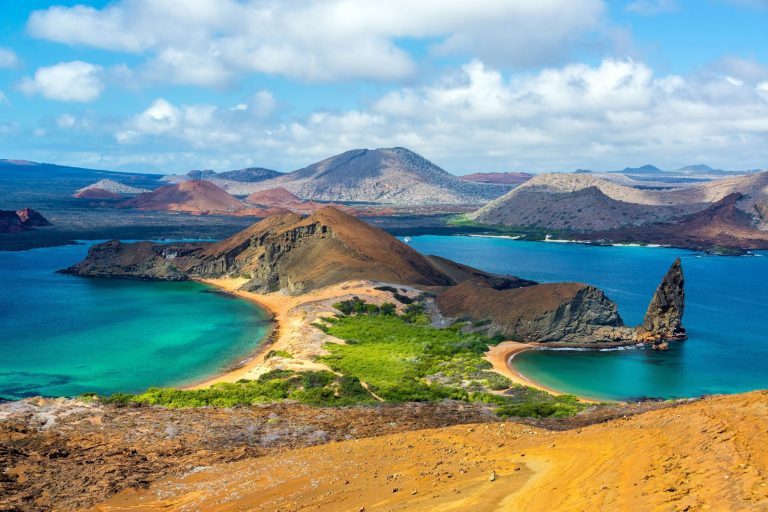
The Western Route runs through Fernandina, Isabela, and Santiago. It is the volcanic side of the archipelago: young lava fields, steep caldera walls, and the coldest, most nutrient-rich water in the islands where the Cromwell upwelling meets the Humboldt current. This is where guests see marine iguanas in real numbers, flightless cormorants, and the best odds of a mola mola or a passing whale.
This route suits guests who already know they want marine life over beach time, and who are comfortable with longer stretches at sea between anchorages. Divers and photographers chasing a specific shot tend to prefer it. It is not the easiest introduction to the islands. The crossings are longer, the water is colder for snorkeling, and there are fewer easy beach landings than on the eastern side.
We would not normally build a first-time family trip around the Western Route alone. It rewards guests who already have a clear target (megafauna, geology, diving) rather than guests who want a broad, easy sample of the archipelago.
Who the Eastern Route fits
The Eastern Route covers Española, San Cristóbal, Floreana, and North Seymour. This side is lusher and the wildlife is denser and more concentrated on land: waved albatross on Española (seasonal), sea lion colonies you can walk right past, blue-footed booby courtship displays, and Sally Lightfoot crabs on nearly every landing. Walking distances are shorter and the anchorages are more sheltered.
This is the route we usually recommend for first-time guests, families with children, and anyone who wants a high density of easy, close wildlife encounters without long open-water legs. It is also the more forgiving option for guests prone to seasickness, since the crossings between islands are shorter and the water tends to be calmer.
Eastern vs Western: the tradeoffs that actually matter
The two routes differ in more than which islands appear on the map. What changes for the guest onboard is sea state, walking difficulty, water temperature for snorkeling, and how much of the trip is spent traveling versus landing.
| Route | Best for | Not ideal for | Signature stops |
|---|---|---|---|
| Eastern | Families, first-timers, easy walking, calmer crossings | Guests chasing marine megafauna or diving-grade encounters | Española, San Cristóbal, Floreana, North Seymour |
| Western | Divers, photographers, repeat visitors, volcanic scenery | Guests prone to seasickness or wanting an easy first trip | Fernandina, Isabela, Santiago |
| 8-day Full Loop | Guests who want both sides and have the extra days | Short trips of 4-5 days or tight budgets | Highlights from both the Eastern and Western routes |
Season adds another layer on top of the route choice, and it applies whichever side you pick. From December to May, seas are calmer, water is warmer, and skies are clearer, which makes the Western Route’s longer crossings more comfortable. From June to November, the garúa season brings cooler, choppier water, but it is also when the Humboldt current is most active and marine life is richest, which is exactly the draw of the Western Route in the first place. That is a real tradeoff, not a footnote: the season that makes the west more rewarding for wildlife is also the season that makes the crossing rougher.
Why most guests end up booking the 8-day Full Loop
The Full Loop combines the volcanic west with the lush east over eight days and roughly 300 nautical miles of cruising, on an itinerary set by your yacht’s park permit. The exact sequence of anchorages and the port where you embark vary by vessel, but the loop is built to give you a mix of stops across both sides, with time worked in for kayaking, snorkeling, and easier beach landings between the longer legs.
We usually recommend this over picking a single 4 or 5-day route when a group has the extra time. It removes the “which side did we miss” question entirely, and it spreads the longer western crossings across a bigger trip so they feel like a smaller share of the total itinerary. The tradeoff is straightforward: more days, more cost, and a longer commitment for guests who are not sure Galápagos is where they want to spend a full week.
What the yacht itself needs to handle
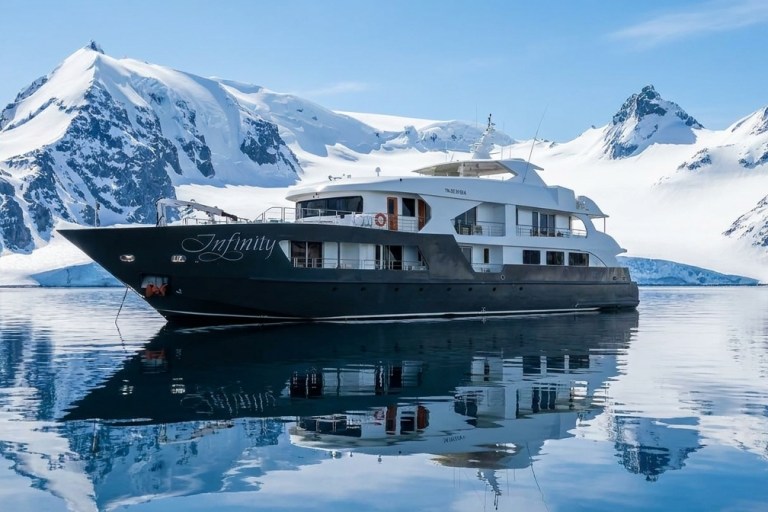
The fleet here is narrower than in most of the destinations we place charters in. Regulation limits the market mainly to expedition-style catamarans and big motor yachts built for the park’s specific landing and tender rules, not the broad private-yacht fleets you would find in other regions we cover. A nimble expedition power catamaran with convertible cabins works well for the Eastern Route’s shorter legs. A big expedition motor yacht with better range and sturdier tenders is the better fit for the Western Route’s longer open-water stretches and less sheltered anchorages near Fernandina and Isabela.
If you are weighing Galápagos against other expedition regions with more open routing, our yacht charter insights cover how permit-driven destinations like this compare to places where the captain can adjust the plan mid-trip.
Getting there and what to plan around
Access runs through Quito or Guayaquil on mainland Ecuador, followed by a domestic flight to Baltra or San Cristóbal, depending on which route you have booked and where your yacht is based. Build a buffer day around that connection. A missed domestic flight does not just cost you a day, it can cost you the fixed island sequence on your permit, since the itinerary does not flex to absorb a late start.
Guests weighing Galápagos against Pacific or polar options with more flexible scheduling can compare notes through our pages on Galápagos yacht charters and Antarctica charters, another region where small expedition ships and fixed guide requirements shape the trip in similar ways. Our FAQ page covers permit timing and cabin allocation questions we get asked most often.
Conclusion: which itinerary to book
For most guests, especially families and first-time visitors, book the Eastern Route. It gives you the highest density of easy, close wildlife encounters at Española, San Cristóbal, and Floreana, with shorter, calmer crossings between stops. Choose the Western Route if you are a diver, photographer, or repeat visitor who wants Fernandina’s marine life and Isabela’s volcanic scale, and you are prepared for longer open-water legs and colder water.
If you have eight days rather than four or five, skip the either-or question and book the 8-day Full Loop. We would not build a first Galápagos trip around the Western Route alone, and we would not send a group chasing megafauna and diving encounters on the Eastern Route expecting Fernandina-level marine life. Match the route to what you actually want to see, then let us match the yacht to the route.
Can I combine the Eastern and Western routes on a shorter trip?
Not on a standard 4 or 5-day charter. Galápagos National Park issues each yacht a single fixed itinerary per trip. To see both sides, you need the 8-day Full Loop, which is built specifically to combine them.
Which route has calmer seas?
The Eastern Route generally has shorter, calmer crossings between Española, San Cristóbal, and Floreana. The Western Route’s legs around Isabela and Fernandina are longer and more exposed, and they get choppier during the June to November garúa season.
Does the naturalist guide affect how many guests I can bring?
Yes. A certified naturalist guide is mandatory on every Galápagos charter and occupies one cabin for the full trip, regardless of which route you choose. Count that cabin against your total when you compare yachts.
What is the best season for the Western Route specifically?
December to May gives calmer water and easier crossings, which makes the Western Route’s longer legs more comfortable. June to November brings choppier seas but richer marine life on the Humboldt current, which is the main draw of that route in the first place.
Do I fly directly to the Galápagos?
No. You fly into Quito or Guayaquil on mainland Ecuador first, then take a domestic flight to Baltra or San Cristóbal to join your yacht.
Plan Your Galápagos Charter With Real Experts
Tell us how you like to travel and our charter team will hand-pick the right crewed yachts, dates and route — no obligation.
Our Top Galápagos Recommendations
We put these shortlists together because most travellers don’t need to weigh up every yacht on the water — just the handful that consistently get this kind of trip right. Each guide below digs into the boats, the best months to go, and the trade-offs worth knowing before you book.


















 iMessage
 WhatsApp




































