Quick answer
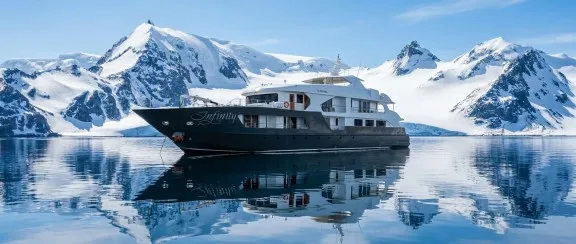
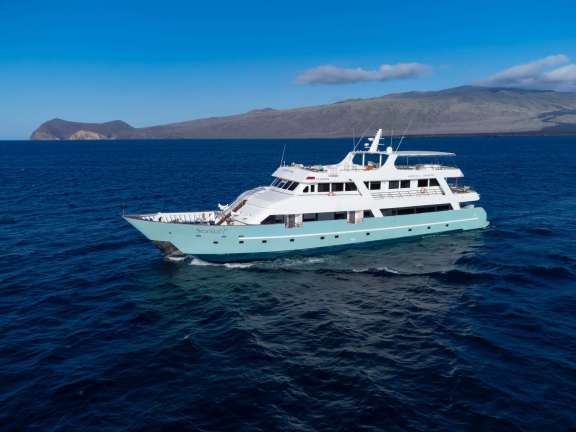
- The standard Galápagos charter boat: a private expedition power catamaran, 27–45m, up to 16 guests.
- Why charter privately: you take the whole vessel and naturalist guide, so you reach restricted sites like Genovesa and Fernandina without sharing the route with a shipload of strangers.
- Routes are fixed: the Galápagos National Park assigns your eastern or western itinerary — no one designs a free private route here.
- Guides scale with guests: the park requires roughly one certified naturalist for every 16 guests. A 16-guest private boat has one guide for the whole party; smaller groups mean more time ashore and up to 3 landings a day.
- Best months: December to May for calm crossings and snorkeling; June to November (the garúa) for cooler, choppier seas and the richest marine life.
For most families and groups, the right Galápagos charter is a private expedition catamaran or motor yacht carrying up to 16 guests — not a berth on a 50-to-100-passenger tour ship. You get the same park-licensed naturalist and the same protected sites, but the whole boat, the guide’s full attention, and the freedom to linger at an anchorage after the day boats have gone.
The large ship wins on one thing only: cost per person if you are travelling as a couple and happy to share. Everyone else — families, multi-generation groups, friends chartering together — is better served by taking the whole vessel.
 C.J. Coetzee, Charter Broker at DMA Yachting
The fleet reality
What an expedition yacht actually is here
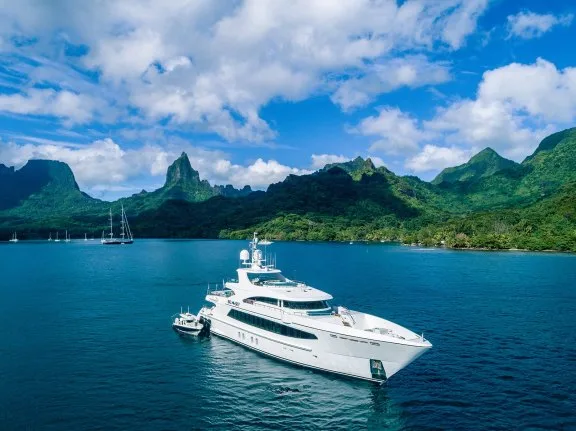
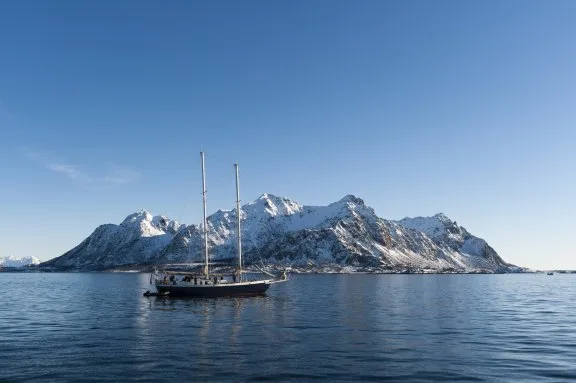
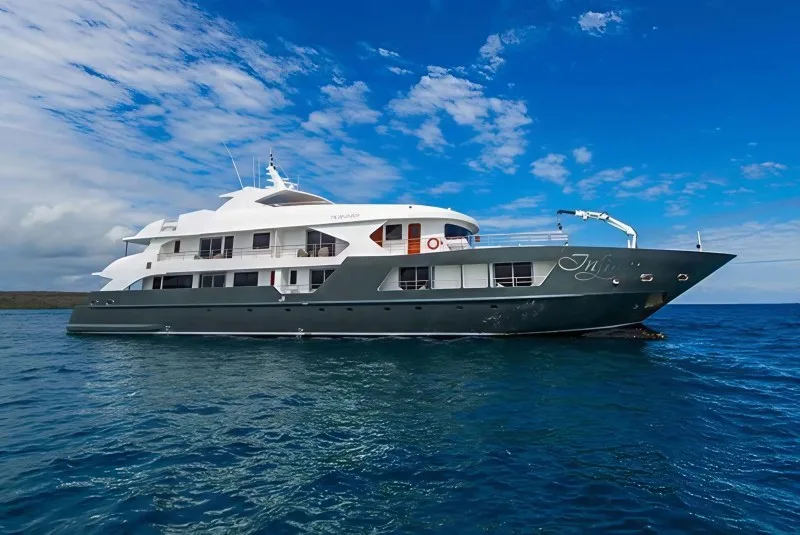
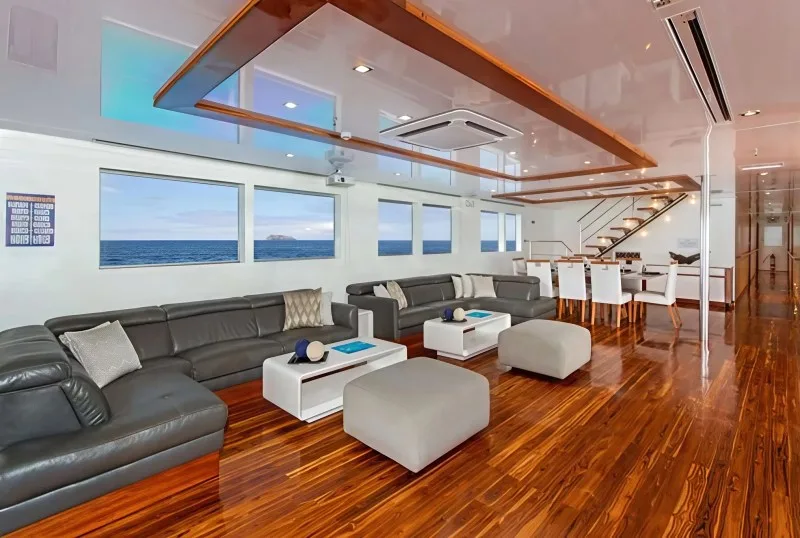
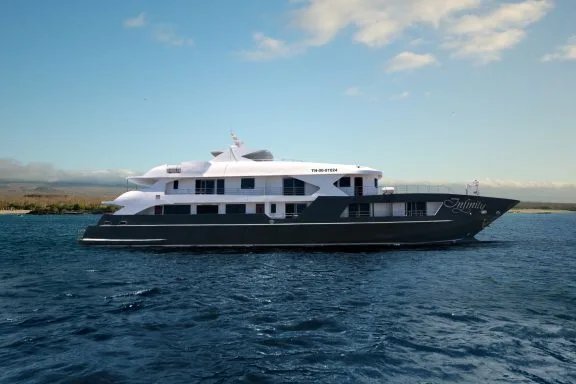
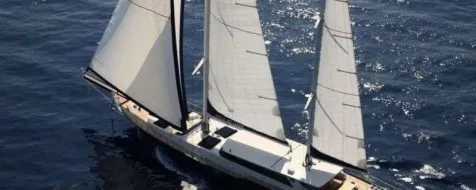
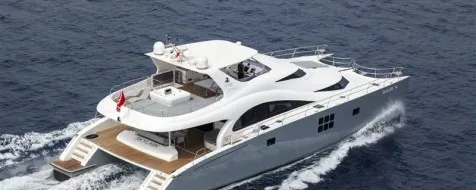
Galápagos has a deliberately limited fleet — strict park regulation means you are choosing mainly between expedition power catamarans and bigger motor yachts, not a sprawling open market. The number of licensed vessels is capped and small by design, and most charter boats are built to the 16-guest level so one naturalist can supervise the group.
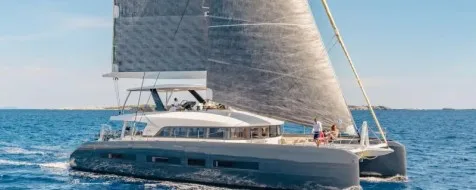
The catamaran is the workhorse: stable across the inter-island crossings, shallow enough for tricky anchorages, and reliable on tender launches. Larger motor yachts add range and comfort. Every shore landing here is fully crewed and guided — a certified naturalist and a park permit are required for any landing, full stop.
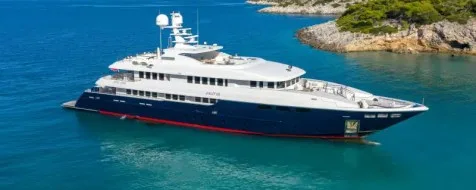
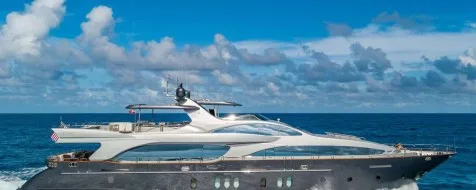
Galápagos Motor Yachts →
Private yacht vs large tour ship
| Option | Best for | Not ideal for | Typical cost (whole boat, per week) |
|---|---|---|---|
| Private expedition catamaran (up to 16) | Families, friend groups, whole-boat exclusivity, 3 landings/day | Couples wanting lowest per-person cost | From around $63,000 |
| Larger private motor yacht (up to 16) | Multi-gen groups wanting range and comfort | Couples wanting lowest per-person cost | From around $120,000 up to roughly $650,000 |
| Shared large tour ship (50–100+) | Couples splitting a cabin, lowest cost per person | Restricted-site access, time ashore, privacy | Roughly $6,000–$12,000 per person for a 7-night berth (≈$800–$1,700 per person, per day) |
To compare fairly: a shared tour-ship cabin sells per person, so a 7-night berth lands somewhere around $6,000–$12,000 a head depending on the ship and cabin. A private yacht sells as the whole boat — the figures above are the full charter for up to 16 guests, not a per-person rate. Split the whole-boat cost across a full group of family or friends and a private catamaran often lands close to, or below, a comparable shared berth.
The access gap is the real point. Larger vessels carrying 50 or more guests are restricted at some of the more sensitive visitor sites and give you less time ashore at the ones they can reach. A small private boat does up to 3 shore excursions a day where a big ship typically manages 2.
 Louis Lamprell, Charter Broker, Active CYBA Member at DMA Yachting
What the private crew delivers that a tour boat can’t
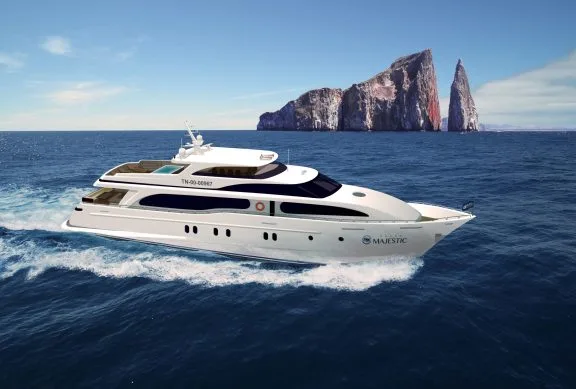
Crew is the single biggest factor in whether a Galápagos charter works — more than the yacht’s age or fittings. On a private boat the naturalist guide is yours alone: no waiting for dozens of other passengers to load tenders, no fixed wake-up bell, no fighting for the front of the panga.
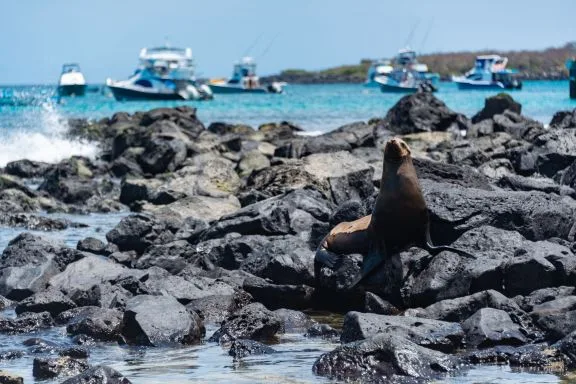
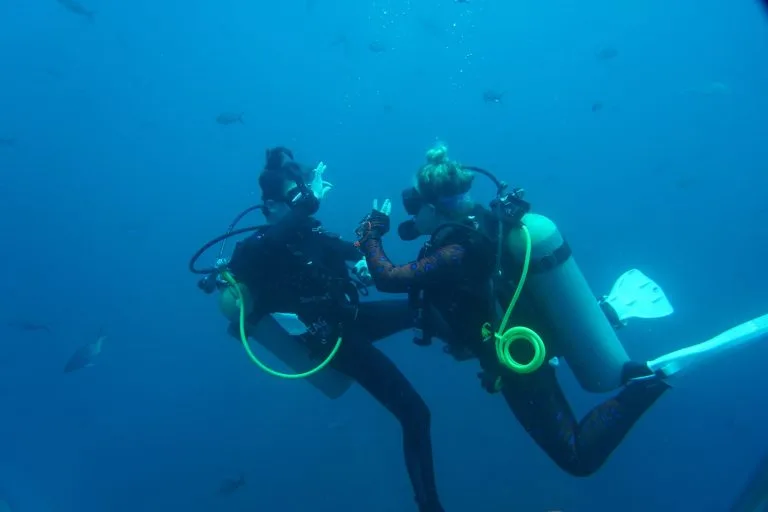
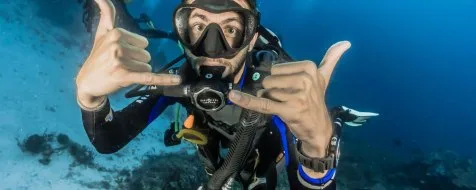
A private chef provisions for your group, not a buffet line. Snorkeling and diving here delivers sea lions, turtles, rays and reef sharks, with seasonal hammerheads and whale sharks — and on a small boat you go in the water when conditions are right, not when the schedule says. Look for boats with scuba diving onboard if that matters to you.
Galápagos Motor Yachts →
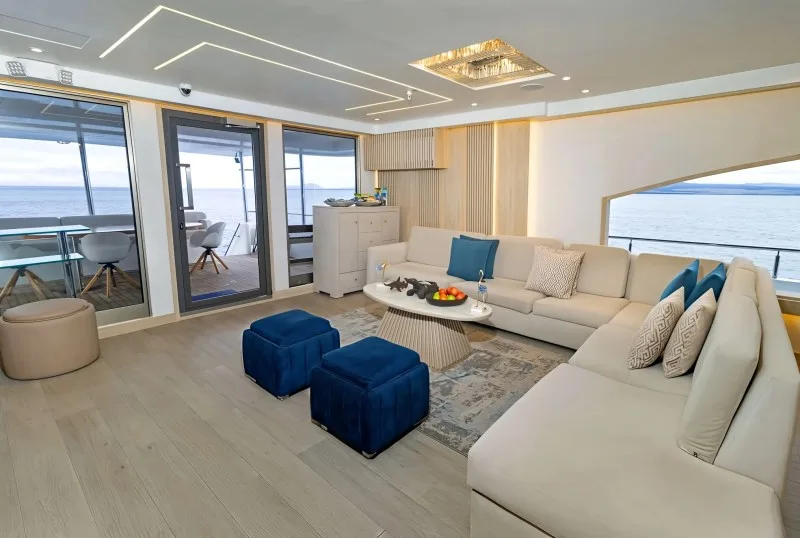
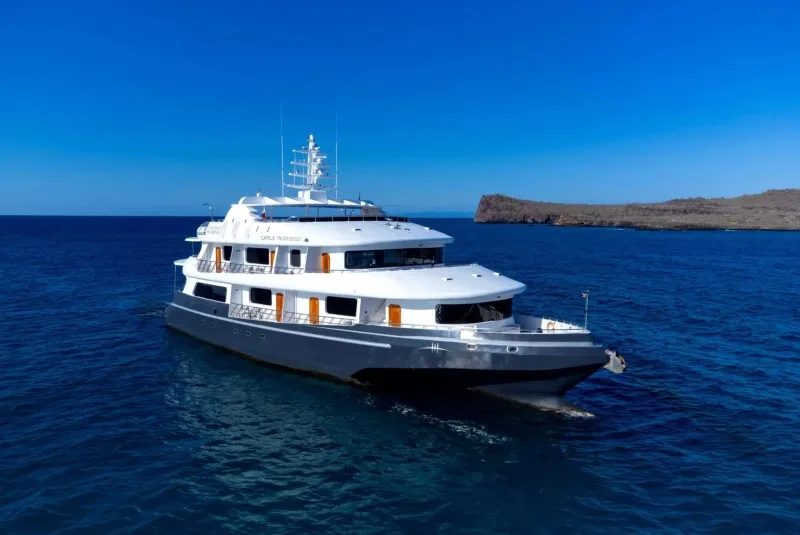
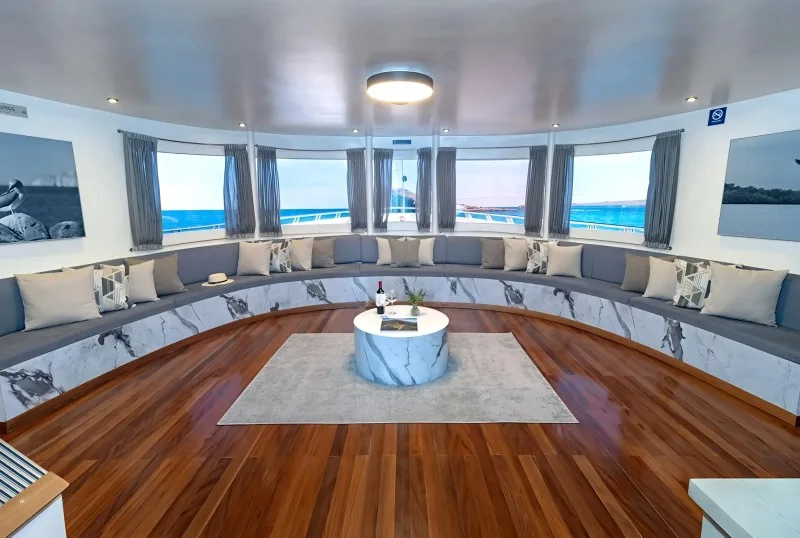
Galapagos Horizon
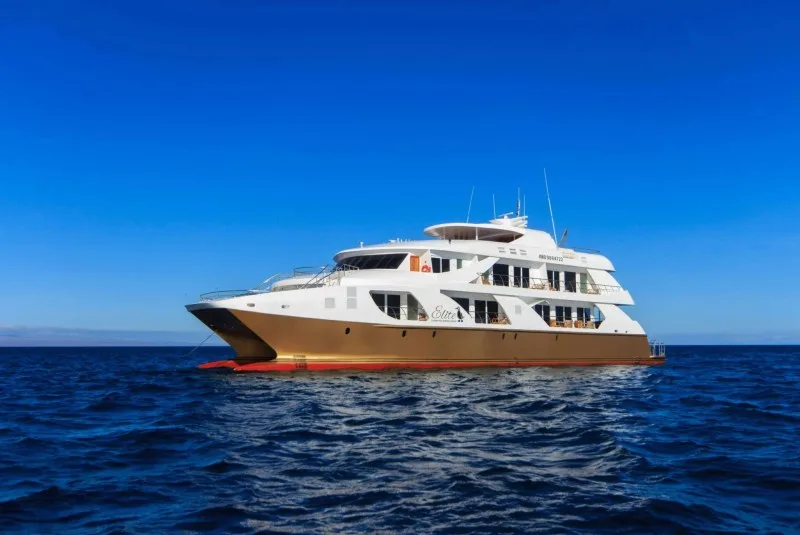
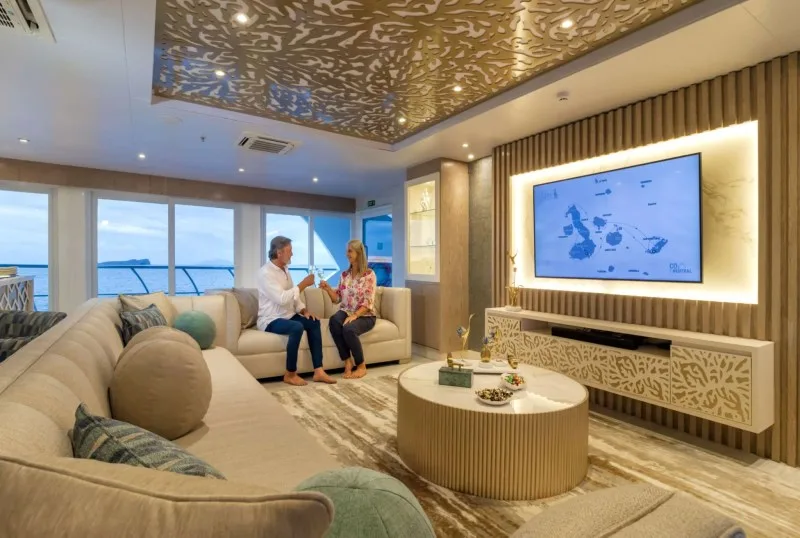
ELITE
What it costs, honestly
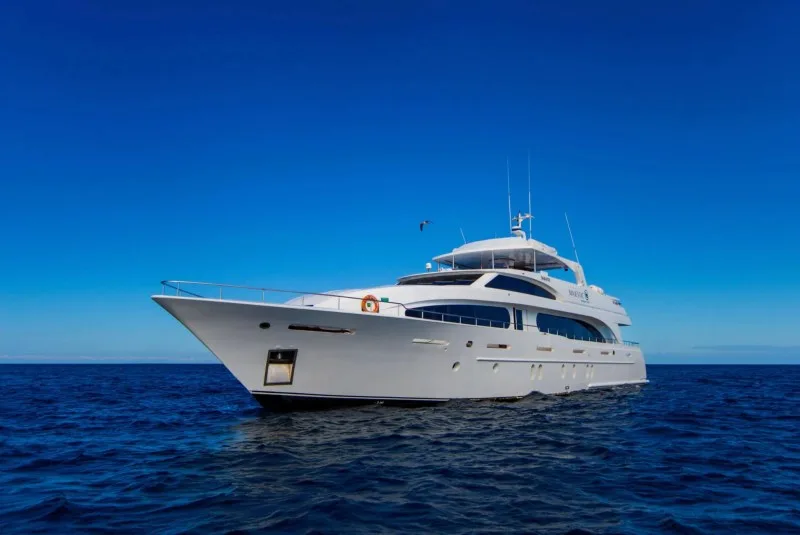
Private crewed yachts in Galápagos start from around $63,000 per week for an expedition catamaran at the fleet floor. Larger motor yachts begin higher — roughly $120,000 per week — and run up to about $650,000 per week for the biggest vessels. The bigger boats buy you range, space and comfort across the inter-island crossings rather than access to extra sites — the park rules apply equally to every boat. We will match you to the specific yacht that fits your group size, dates and budget once we know your window.
Chartering the whole boat usually works out cheaper per person than booking individual berths at the same standard, and booking 8–12 months before you sail gives you first call on the strongest boats and dates. For groups of up to 16 travelling together, that early reservation is the difference between getting the boat you want and taking what is left.
 Daniel Asmus, Owner, Charter Broker, Active CYBA Member, IYBA, ECPY at DMA Yachting
FAQ
Can I design my own route around the Galápagos?
No. Every yacht follows an eastern or western itinerary assigned by the Galápagos National Park. Small tweaks can sometimes be requested in advance, often with an approval fee, but free-roaming private routes are not permitted. A private charter buys you exclusivity and timing, not a custom map.
When is the best time to go?
December to May brings calmer seas, warmer water and easier snorkeling — the better window for first-timers and families. June to November (the garúa season) is cooler and choppier, but the Humboldt current makes it the richest period for marine life. Shoulder months such as April–May and September–November tend to be quieter and a little kinder on price.
Can a land-based hotel match a yacht charter?
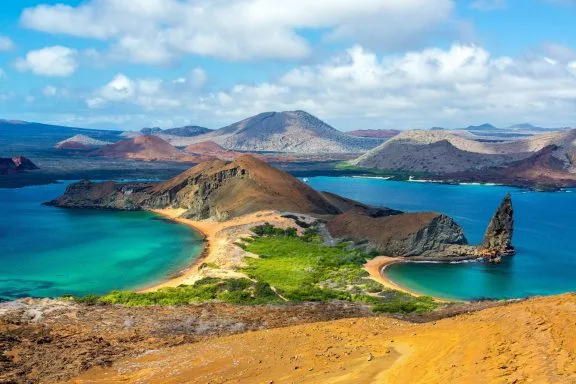
Not for the full archipelago. Sites like Genovesa — often called “Bird Island” for its seabird colonies — can only be reached by boat, and no land-based traveller gets there. Hotels on Santa Cruz or Isabela work for a short add-on, but the western volcanic islands and the best wildlife sites need a cruising vessel.
How many guests can a Galápagos yacht take?
The park requires roughly one certified naturalist for every 16 guests, so most expedition catamarans and motor yachts cap at 16 — one guide for the whole boat. Larger tour ships carry far more passengers but must staff multiple guides to keep that ratio, which is part of why a small private boat with a single dedicated guide gives you so much more time ashore. There is no overwater-bungalow option here — they are banned for conservation reasons.
More yachts available in Galápagos
Motor yachts
ELITE
Galapagos Horizon
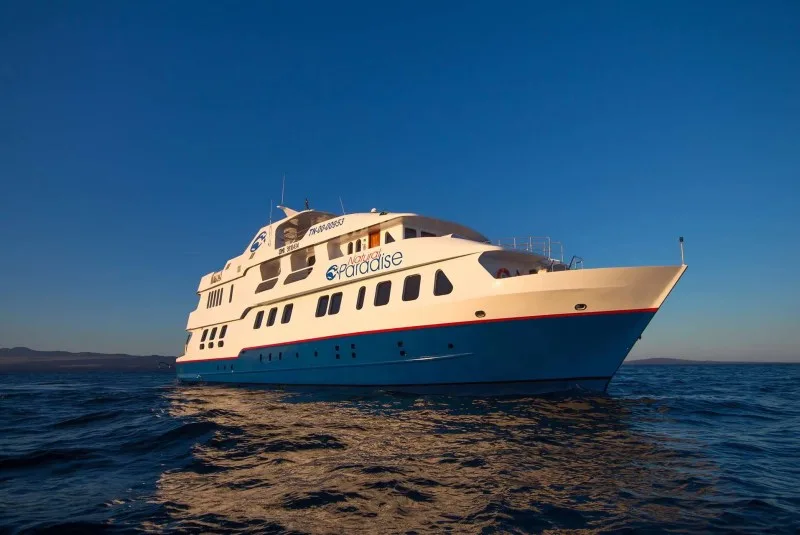
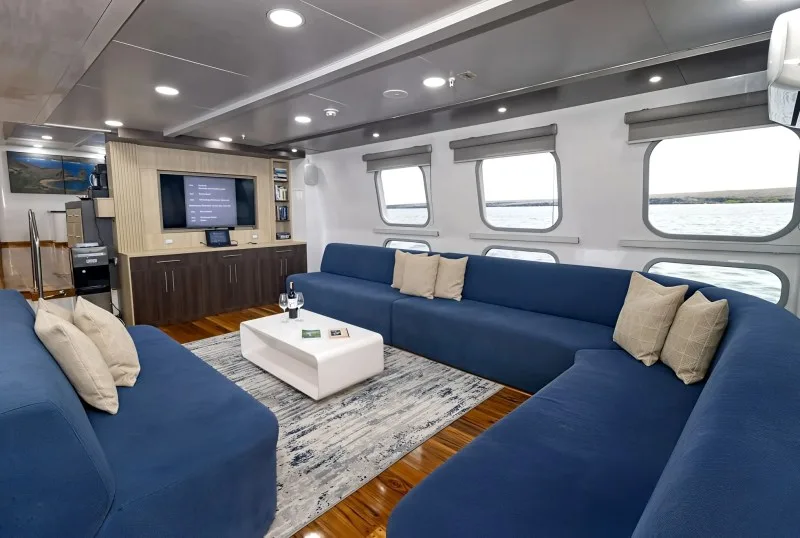
Plan Your Galápagos Charter With Real Experts
Tell us how you like to travel and our charter team will hand-pick the right crewed yachts, dates and route — no obligation.
Our Top Galápagos Recommendations
We put these shortlists together because most travellers don’t need to weigh up every yacht on the water — just the handful that consistently get this kind of trip right. Each guide below digs into the boats, the best months to go, and the trade-offs worth knowing before you book.








 iMessage
 WhatsApp