Quick answer
- Best all-round months: April, May, and November — the transition weeks between seasons, with settled seas and active wildlife.
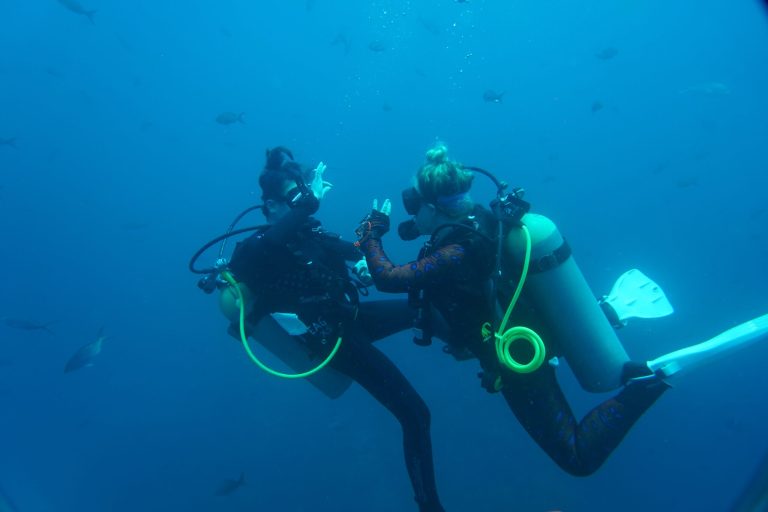
- Best for divers: June to November, when the cold Humboldt Current brings hammerheads, whale sharks, and Galápagos penguins.
- Calmest crossings: December to May (warm/wet season) — warmer water and the smoothest runs between islands.
- Choppiest seas: July to September (garúa season) — cool, grey, and the most exposed passages to Fernandina and Isabela.
- The route is not yours to choose: every yacht follows a park-approved itinerary with a mandatory naturalist guide onboard.
- Book early: Christmas week and the June to September peak sell out 12 to 18 months before you sail.
 Daniel Asmus, Owner, Charter Broker, Active CYBA Member, IYBA, ECPY at DMA Yachting
When is the best time to charter a yacht in the Galápagos?
For most first-time guests, we recommend April, May, or November. These are the transition weeks between the two Galápagos seasons — you get calmer water, active land and marine wildlife, and better yacht availability than the packed peak windows. They are the months we steer families and couples toward when they have no strong bias one way or the other.
The real decision is not “which month is perfect” — there isn’t a bad month here. It is which tradeoff fits you: warmer, calmer water in the wet season, or cooler, richer, choppier water in the dry season. Everything else — the route, the sites, the guide — is fixed by the park, not by you.


Warm season vs cool season: the real tradeoff
The Galápagos runs on two seasons, and they behave very differently at sea. The warm/wet season (December to May) brings warmer water and the calmest crossings — this is the season we recommend for anyone who is nervous about sea state or travelling with children. Expect short, heavy showers, with February the wettest month. The cool/dry garúa season (June to November) is cooler and greyer, with a nutrient-rich Humboldt Current that makes the diving exceptional but the passages choppier.
| Season | Best for | Not ideal for | Sea state |
|---|---|---|---|
| Warm/wet (Dec–May) | Families, calm crossings, snorkelling in warm water, land wildlife | Serious divers chasing big pelagics | Calmest |
| Cool/dry garúa (Jun–Nov) | Divers, hammerheads and whale sharks, penguins | Guests prone to seasickness | Choppier, exposed |
| Transition (Apr, May, Nov) | First-timers, all-round wildlife, availability | Nothing in particular — the safe pick | Settled |
 Marcelle Hailwax, Charter Broker at DMA Yachting
Wildlife by month
What you’ll actually see, month by month
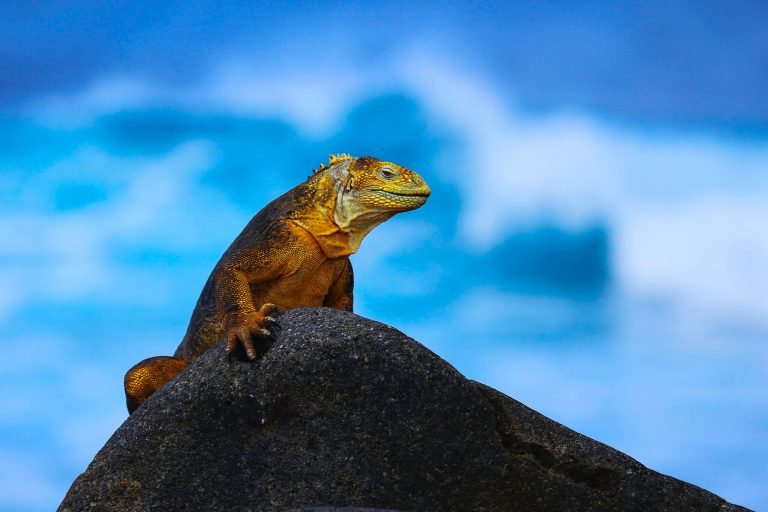
February to April is the strongest window for land birds, sea lions, turtles, and the giant tortoises around Santa Cruz. December and January are the best weeks to catch the red-and-green “Christmas iguanas” on Española. If your trip is built around a wildlife priority, tell your broker first — it changes which season we advise.
Why the season matters less than the rules
This is where first-time guests get caught out. In the Galápagos you do not design your own route. Every licensed yacht runs a fixed itinerary approved by the National Park, with a certified naturalist guide onboard for the whole trip. Trip lengths vary by vessel and cruise permit — you’ll commonly see 4, 5, 7, 8, or 15-day itineraries — but within any given cycle a vessel cannot revisit the same site twice, apart from the Charles Darwin Research Station on Santa Cruz.
That means “when to go” is really about weather comfort and wildlife timing, not access. Self-designed private routes are not permitted, and the individual landing sites are set by the park. The month you pick decides the sea state and the marine life — the park decides where you land. Set that expectation early if flexibility matters to you; it’s a different arrangement from a French Polynesia or Maldives charter.
 Chris de Kock, Charter Broker, Sales Broker, Active CYBA Member at DMA Yachting
When to book — and what it costs
Book 12 to 18 months before you sail, especially for Christmas week and the June to September peak, when occupancy and prices are highest. Christmas is the single most contested week of the year and rarely comes free. The transition months we recommend are also where you’ll find better availability, which is part of why they’re our default advice.
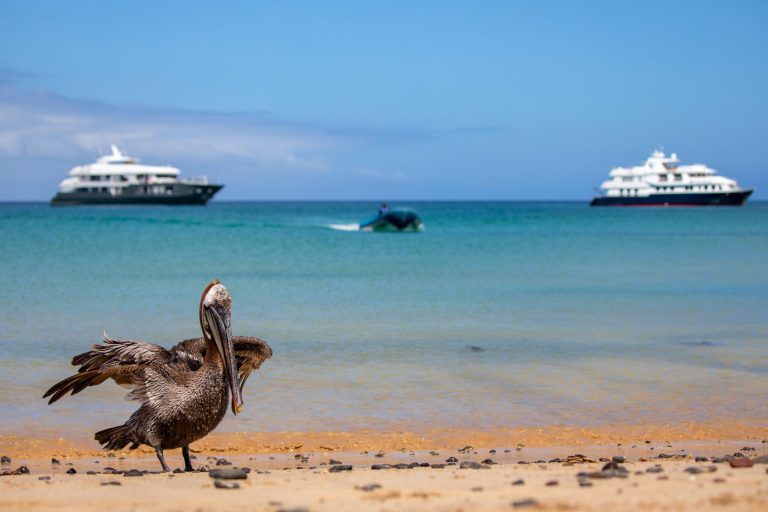
The Galápagos fleet is small and almost entirely expedition motor yachts. Weekly rates run broadly from the low tens of thousands for smaller vessels up into the high six figures for the largest expedition yachts, before expenses — the exact figure depends on the boat, the season, and guest numbers. Tell us your group size, season, and whether diving is a priority, and we’ll match you to the resident yachts that suit, with live pricing on each — see the wider Galápagos charter range for the current fleet.
On top of the base rate, budget the National Park entry fee (currently set at $200 per foreign adult and $100 for under-12s following the 2024 increase — we’ll confirm the rate that applies to your dates), the Transit Control Card, APA (typically 30–35% for motor yachts, covering fuel, provisions and excursions), and crew gratuity of 15–20%. As a rough guide, expenses commonly add 45–55% on top of the base rate, so a $100,000 charter often lands somewhere around $145,000–$170,000 all-in — we’ll give you a precise figure once we know the yacht and group.
FAQ
What is the single best month to charter in the Galápagos?
For a first trip with no strong wildlife bias, May. It sits at the end of the calm warm season, land wildlife is active, seas are settled, and availability is better than the June to September peak. April and November run a very close second.
When is the best time for diving in the Galápagos?
June to November. The cold Humboldt Current brings nutrient-rich water and your best chance of hammerheads, whale sharks, and penguins around Fernandina and Isabela. Accept choppier seas as the price of the marine life.
Can I choose my own route in the Galápagos?
No. Every yacht follows a fixed itinerary approved by the National Park, with a mandatory naturalist guide onboard. Trip lengths vary by vessel — commonly 4, 5, 7, 8, or 15 days — and you choose the yacht and the season, but not the individual landing sites.
How far ahead should I book a Galápagos charter?
12 to 18 months before you sail. The fleet is small and highly regulated, so Christmas week and the June to September peak sell out first. Transition months like April, May and November hold availability a little longer.
Is a private yacht worth it over a luxury expedition cruise?
A licensed expedition cruise ship delivers most of the experience with far less bureaucracy. We recommend a private charter when you want the boat entirely to your own group, control over pace and dining, and the flexibility a crew gives within the park’s fixed sites.
More yachts available in Galápagos
Motor yachts


Plan Your Galápagos Charter With Real Experts
Tell us how you like to travel and our charter team will hand-pick the right crewed yachts, dates and route — no obligation.
Our Top Galápagos Recommendations
We put these shortlists together because most travellers don’t need to weigh up every yacht on the water — just the handful that consistently get this kind of trip right. Each guide below digs into the boats, the best months to go, and the trade-offs worth knowing before you book.




















 iMessage
 WhatsApp




































