Quick answer
- For most serious divers: a fully crewed private charter wins — your own captain, chef and dive guide, and the freedom to anchor at Wayag or Misool without a fixed schedule.
- The real choice is exclusivity: book the whole boat for your group, or buy single cabins on a fixed-schedule shared trip. Exotica places only fully crewed private charters.
- Cost flips at 8 guests: with a group of 8 or more, the per-person cost of a private charter lands close to a premium shared cabin — with the whole boat to yourselves.
- A shared liveaboard still suits some people: solo divers, couples on a tighter budget, or anyone who wants the diving without paying for the whole vessel.
- Same vessel types either way: both run on phinisi and purpose-built dive boats — the difference is exclusivity and control, not luxury level.
- Real diving aboard: compressors, tanks, gear and dedicated guides for Dampier Strait, Manta Sandy and Misool’s soft-coral walls.
- Book early: peak January–February dates go 8 to 12 months before you sail; the most sought-after boats go 12 to 18 months before you sail.
 Louis Lamprell, Charter Broker, Active CYBA Member at DMA Yachting
Crewed charter vs liveaboard: the real difference
For affluent divers, we recommend a private crewed charter in Raja Ampat. You get the whole boat — captain, chef, crew and dive guide working only for your group — plus the freedom to set your own route through Dampier Strait, Misool and the Fam Islands. A shared liveaboard sells single cabins on a fixed schedule alongside other guests; it reaches the same reefs, but it is a different kind of trip, and not one we place.
The confusion is understandable, because both products often use the same kind of vessel. Raja Ampat is explored almost entirely by boat — traditional Indonesian phinisi and purpose-built dive liveaboards — because navigating from one part of the archipelago to another can eat 8 to 10 hours of cruising. A resort can’t reach the whole region. The boat is the trip.
So the question isn’t phinisi versus motor yacht. It’s whether you book the entire boat for your group, or buy cabins on a fixed-schedule trip alongside other guests. That single decision changes your privacy, your route, your pacing and your dive plan.
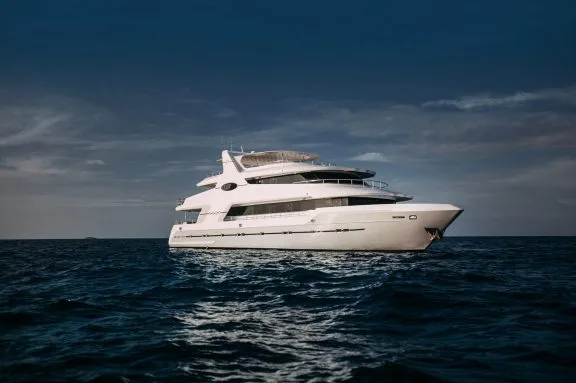
What changes when you book the whole boat
A shared liveaboard runs a fixed itinerary on fixed dates with other guests. The dive deck operates on the group’s schedule, the chef cooks one menu for everyone, and the route is set before you board. It works, and the diving is the same reefs — but you are one cabin among many, and your week bends to the boat’s plan.
A private Raja Ampat charter is yours. You decide whether to dive Manta Sandy at dawn or sleep in. You hold an anchorage at Wayag’s karst lagoon to yourselves. The chef cooks to your table, not a buffet line. If the group wants three dives one day and a beach and a village walk at Arborek the next, that’s the plan.
 YANNA PRISTAS, Yacht Charter Broker with DMA Yachting
When a shared liveaboard is the honest choice
We don’t place shared cabins, but we won’t pretend they have no place. A fixed-schedule shared liveaboard genuinely suits three kinds of guest, and it’s worth being clear about who they are.
Solo divers are the obvious one. If you’re travelling alone and want serious diving without funding an entire vessel, buying a single cabin on a shared boat is the sensible route — you pay for one berth, not the whole charter, and the dive operation is built for divers like you.
Couples and pairs on a tighter budget are the second. Two people on a shared boat will almost always pay less than two people privately chartering even a small catamaran. Divers who simply want the reefs, and don’t care about route control, privacy or the menu, are the third. For them, the shared schedule is a feature, not a compromise.
If you’re one of those three, a private charter is the wrong recommendation, and we’ll tell you so. The rest of this guide is for groups who want the boat to themselves.
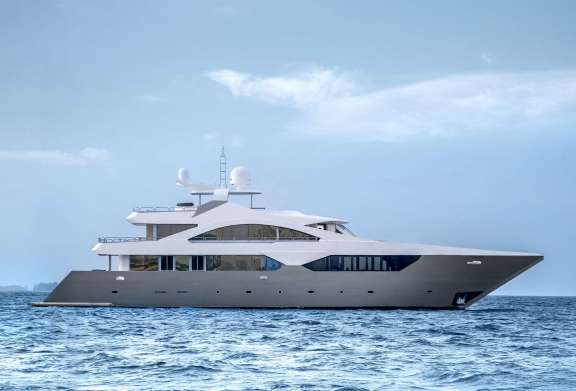
Private crewed charter at a glance
| Option | Best for | Not ideal for | Typical cost (whole boat, per week) |
|---|---|---|---|
| Private crewed catamaran | Couples and small families wanting comfort and stability | Large groups needing more cabins and deck space | ~$20,000–$60,000 |
| Private crewed phinisi | Groups of 8+, families, couples wanting full control | Anyone chasing only the lowest per-cabin price | ~$60,000–$120,000 |
| Ultra-luxury private phinisi | Buyers wanting the best crew, chef and cabins on the water | Anyone who only cares about dive count, not the boat | $150,000–$200,000+ |
On a private charter, most onboard costs roll into the advance provisioning allowance — typically 30–35% of the charter fee, covering fuel, food, park fees and dive services, with the unspent balance refunded. Equipment, nitrox and a crew tip sit on top.
 Susannah Deehan, Charter Broker & CYBA Member at DMA Yachting
Where the cost flips
When a private charter makes financial sense
The break-even is groups of 8 or more. A premium shared cabin in Raja Ampat runs roughly $5,000–$7,000 per person for a week. Eight guests on a shared boat is therefore $40,000–$56,000 in fares — which lands squarely inside the $60,000–$120,000 you’d pay to take a whole mid-to-high-range phinisi privately. Split eight ways, the private boat is in the same per-person territory, and you get the entire vessel to yourselves.
That’s the moment we tell clients to stop comparing cabins and start comparing whole boats. Below 8 guests the maths still favours shared cabins; at 8 and above, exclusivity costs little extra and you control the trip.
To put a ladder on it, whole-boat charter fees run roughly: a private catamaran for 2–6 guests at $20,000–$60,000 a week; a mid-to-high-range phinisi at $60,000–$120,000; and an ultra-luxury phinisi from $150,000 upward. On top of the charter fee, budget Indonesian VAT and the Raja Ampat marine park entry. We confirm the exact charter rate, VAT and current park fees for each specific boat before you commit.
Which boat suits which trip
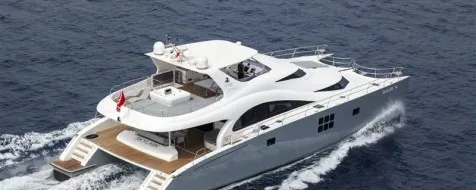
For couples and small families, a modern crewed catamaran out of Sorong is the easy call — stable, shallow-draft, with diving gear and a compressor aboard. Most are configured for two couples or a small family. Browse the full catamaran fleet if that’s your lean, and we’ll confirm the exact cabin layout for any boat you’re considering.
For groups of 8 to 20 who want the classic Raja Ampat feel, a traditional phinisi is the best way to explore the archipelago. The wooden sailing ships carry serious dive operations and the deck space for a real group. Larger parties should look at large group charters or yachts with scuba diving onboard.
How long, and when to go
We recommend 7 nights for a focused program around one area, and 14 nights for an immersive, dive-heavy route that reaches both the north (Wayag, Penemu, the Fam Islands) and the remote south at Misool. Resort-based trips can’t do this — the 8 to 10 hours between regions makes a single base impractical for seeing the whole archipelago.
The prime window is October to April, with January and February the peak for manta aggregations at Manta Sandy and in Dampier Strait. Visibility runs 30+ metres and seas are calmest. From May to September the southeast winds make the north rougher, so itineraries shift south where Misool stays sheltered — and rates drop 30–40% in the June–August green season, with visibility down to 15–20m the tradeoff.
Book peak dates 8 to 12 months before you sail; the most sought-after boats go 12 to 18 months before you sail. For more on routing, see our itinerary guides and the wider Indonesia charter collection. If you’re still weighing destinations, the best locations overview compares Raja Ampat against the Galápagos and French Polynesia.
The bottom line
For most guests — families, couples and any group of 8 or more — book the whole boat. A private crewed charter gives you the route, the pacing, the menu and the anchorages on your terms, and from 8 guests the per-person cost meets premium shared-cabin rates anyway. That’s the version of Raja Ampat we sell, and the one that holds up.
If you’re a solo diver, a couple watching the budget, or someone who just wants the reefs and doesn’t care who’s in the next cabin, a shared liveaboard is the honest answer — and we’ll say so rather than sell you a private boat you don’t need. What we’d avoid in either case is booking any vessel before you’ve confirmed crew quality and the boat’s licence, because in a place this remote those decide the trip more than the brochure does.
FAQ
Is a private crewed charter much more expensive in Raja Ampat?
Per person, it depends on group size. A premium shared cabin runs roughly $5,000–$7,000 per person per week. At 8 guests or more, taking a whole mid-range phinisi privately ($60,000–$120,000 for the boat) splits down to a similar per-person figure — and you get the entire vessel. Below 8 guests, shared cabins are cheaper per head.
Can I dive properly from a private crewed charter?
Yes. Both catamarans and phinisi here carry tanks, compressors, gear and dedicated dive guides. The diving capability is built in — Dampier Strait, Manta Sandy and Misool’s soft-coral walls are all standard. The difference from a shared dive boat is exclusivity, not access.
Is a shared liveaboard ever the better choice?
Yes, for three types of guest: solo divers who don’t want to fund a whole boat, couples on a tighter budget, and divers who care only about the reefs and not about route control or privacy. For them the fixed schedule and single-cabin price are the right fit. We don’t place shared cabins, but we’ll tell you when one suits you better than a private charter.
How many days do I need in Raja Ampat?
Seven nights covers a focused program around one area. Fourteen nights lets you reach both the northern karst islands — Wayag, Penemu, the Fam Islands — and the remote south at Misool without rushing the 8 to 10 hour crossings between them.
When are the manta rays most active?
January and February are the peak, within the wider October to April season. At a cleaning station like Manta Sandy you can see several mantas at once on a morning dive — shallow enough for snorkellers to watch from the surface.
How far ahead should I book?
For October–April peak dates, book 8 to 12 months before you sail. The most in-demand boats for January and February go 12 to 18 months before you sail, so if your dates are fixed, start early.
More yachts available in Raja Ampat
Motor yachts


Catamarans

Plan Your Raja Ampat Charter With Real Experts
Tell us how you like to travel and our charter team will hand-pick the right crewed yachts, dates and route — no obligation.
Our Top Raja Ampat Recommendations
We put these shortlists together because most travellers don’t need to weigh up every yacht on the water — just the handful that consistently get this kind of trip right. Each guide below digs into the boats, the best months to go, and the trade-offs worth knowing before you book.


















 iMessage
 WhatsApp