Quick answer
- Calmer seas and better snorkel visibility: December to May, when the warm season flattens the swell between Santa Cruz and Bartolomé.
- Richer marine life on the Humboldt current: June to November, when cold-water upwelling around Isabela and Fernandina pulls in bigger pelagic species.
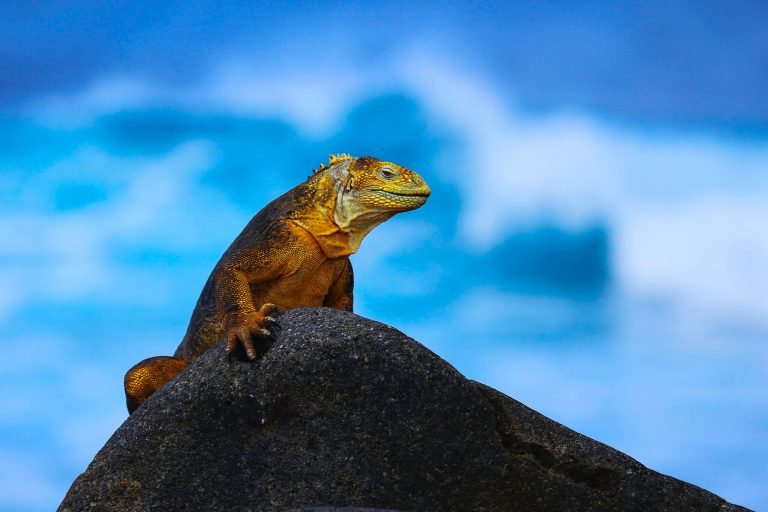
- Courtship season: land iguana mating on Santa Cruz and blue-footed booby courtship on Española peak from December to June.
- Sea lion pupping: most active October through December.
- The route is fixed either way: your charter is locked to one of two park-approved loops, eastern or western, and it cannot be changed once you’re underway.
- A licensed naturalist guide is mandatory year-round and takes up a cabin, which cuts your usable guest capacity on every charter regardless of season.
For most first-time charter guests, we recommend the warm season, December through May. It gives you calmer crossings between the islands, warmer water for snorkeling with sea lions and turtles, and the peak of the courtship displays, iguana mating on Santa Cruz, booby dancing on Española, that make for the strongest wildlife photography of the year.
We steer serious divers and photographers chasing big pelagic encounters toward the cool season, June through November, sometimes called garúa season for the misty overcast that settles over the highlands. Colder, nutrient-rich water off Fernandina and Isabela draws in penguins, marine iguanas feeding at the surface, and better odds with hammerheads and whale sharks. Neither season is a compromise. They are two different trips, and the right one depends on whether your guests want comfort and color or cold water and volume.
Availability is the other constraint worth naming early. The Galápagos fleet of licensed charter yachts is small, and popular weeks in both seasons, particularly the warm-season peak around Christmas and New Year and the cool-season peak in September, get reserved well before the season starts. If your trip is less than six months away, the choice of season may end up being made for you by whichever boat still has open dates, rather than by preference alone. If a specific season and yacht type matter to your group, we recommend booking 12 to 18 months before you sail, and quietly reserving the boat you want as soon as your dates are set.


Onboard comfort
Sea conditions and comfort: warm season vs cool season
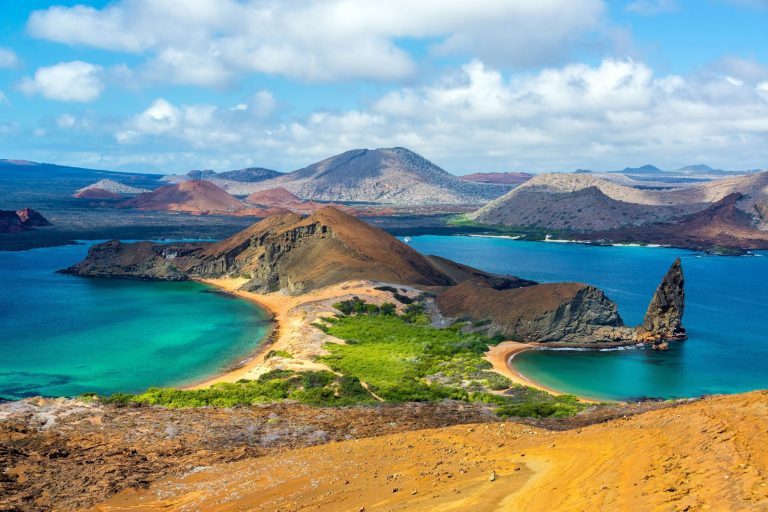
This is the variable that decides whether your guests spend the crossing from Santa Cruz to Isabela on deck with a camera or below with a seasickness patch. From December to May, air and sea temperatures rise, skies clear, and the trade winds that stir up chop the rest of the year ease off. Water temperatures in the low-to-mid 70s°F make snorkeling with sea lions off Santa Fé or Genovesa comfortable without a full wetsuit.
From June to November, the Humboldt current cools the water into the 60s°F and stirs up more swell, especially on the western route near Isabela and Fernandina. This is the trade-off: the same current that makes the diving and snorkeling more productive also makes the boat move more. Guests prone to seasickness, older travelers, or families with young children fare better in the warm season.
Tender launches are also easier to time in the warm season. Flatter water at anchor off sites like Bartolomé and Santa Fé means faster, drier transfers to shore, which matters more than most first-time guests expect when a day’s itinerary includes four or five separate landings.
| Factor | Warm season (Dec–May) | Cool season (Jun–Nov) |
|---|---|---|
| Sea state | Calmer crossings, easier for first-timers | More chop, especially on the western loop |
| Water temperature | Low-to-mid 70s°F, comfortable snorkeling | Upper 60s°F, wetsuit recommended |
| Visibility | Clearer surface light, good for photography | Better nutrient density, more marine life in the water column |
| Not ideal for | Divers wanting cold-water pelagics | Guests prone to seasickness or young children |
Wildlife timing: what you’ll actually see in each season
Galápagos wildlife does not disappear in either season, but behavior changes enough to matter for a photography-focused itinerary. Land iguanas on Santa Cruz mate from December into March, and blue-footed booby courtship displays on Española run strongest from December through June. Sea lion pupping colonies, especially on Española and San Cristóbal, are most active October through December, which sits right at the seasonal handover.
The cool season rewards guests focused on the water rather than the beach. Marine iguanas feed more actively at the surface off Fernandina when the current is cold, and this is the window with the better chances of hammerhead sharks and whale sharks further offshore. Year-round, expect sea lions, green turtles, rays, and reef sharks on both the eastern and western routes; the seasonal shift is about volume and species mix, not presence or absence.
Genovesa, on the eastern route, is worth flagging separately. Its seabird colonies, red-footed boobies, frigatebirds, short-eared owls, are active year-round, but nesting activity is denser in the first half of the warm season, before chicks fledge. Guests building an itinerary specifically around bird photography should ask which loop and which month line up with nesting, not just pick a season and assume Genovesa will be included.
Who the warm season suits
We usually recommend December through May for families, first-time Galápagos guests, and anyone building a multi-generational itinerary around comfort. Calmer water means less risk of a rough day ruining a short trip, and warmer conditions make snorkeling accessible to guests who would otherwise sit it out. If courtship photography, boobies, iguanas, land birds in full display, is the priority, this is the only window that delivers it.
This is also the season we point toward guests pairing Galápagos with a broader South Pacific run, since the calmer window overlaps with easier positioning for onward travel. If your group includes anyone who gets seasick on an open crossing, this is the season, not the boat, that solves the problem. It is also the season we recommend to older travelers who want full days of activity without a demanding sea day in between; shorter, calmer crossings mean more time at anchor and less time recovering from the passage.
Who the cool season suits
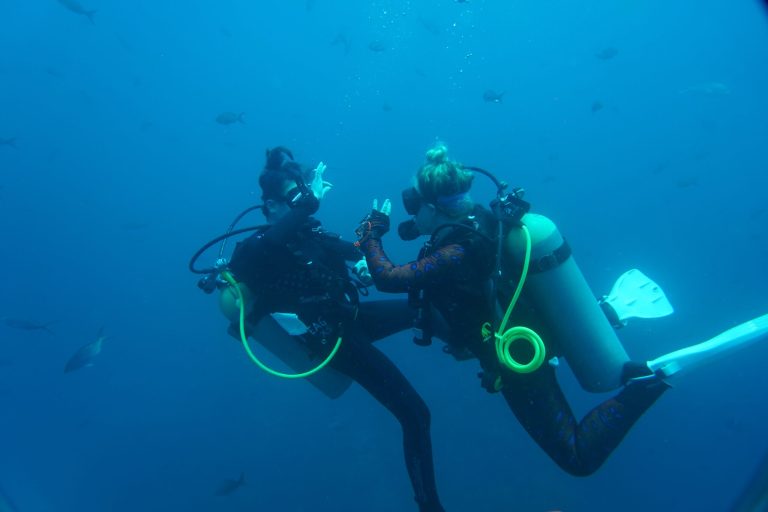
June through November is the season we build around for serious divers, underwater photographers, and guests who have already done a warm-season Galápagos trip and want the version with more marine life in the water column. The Humboldt current is the reason to come, not a condition to tolerate. Expect more chop on the crossings and a genuine need for a wetsuit, but also the best odds at hammerheads and whale sharks and the most active marine iguana feeding of the year off Fernandina.
Guests should also expect cooler air temperatures on deck and in the highlands, so pack layers even though the islands sit on the equator. The misty garúa overcast that gives the season its nickname keeps daytime temperatures noticeably lower than the tropical picture most first-time guests have in mind.
The fixed itinerary and why season doesn’t change the rules
Whichever season you choose, the Galápagos National Park controls the route, not you or the captain. Every charter is assigned to one of two approved loops, eastern or western, and that itinerary is locked before you board. There is no improvising around a wildlife tip or a weather day once the trip has started, in either season.
A licensed naturalist guide is mandatory on every charter and takes up a cabin, which reduces the usable guest capacity compared to a similarly sized yacht elsewhere. The cruising permit itself typically costs close to what the charter costs, and if you’re bringing a private yacht into the islands rather than chartering a resident boat, budget an additional $3,000 to $4,000 for the hull repainting and fumigation required to clear entry. This is one reason a full loop, covering the volcanic western islands and the lusher eastern islands over roughly 8 days and 300-plus nautical miles, works better as a single well-planned charter than as something pieced together on the fly.
Guests who want to see both loops, eastern and western, in one trip should plan on two separate charters rather than expecting an extended single itinerary to cover both. The park does not issue combined-route permits, and trying to stretch one boat across both loops is the kind of request that stalls in the permitting office rather than at sea.
It’s worth being honest about the competition here too. A shared luxury cruise ship delivers a large share of the wildlife and scenery value with a fraction of the permit paperwork. What a private crewed charter buys you is control over pacing, group size, and privacy on the same regulated route, not a different route. If that trade-off matters to your group, a charter is worth it. If it doesn’t, a cruise ship is a reasonable alternative, and we say that plainly rather than oversell the private option. For more on how Galápagos charters compare to other regulated expedition destinations, see our regional comparisons.
Which yacht type fits each season
The Galápagos fleet is narrow by design. Regulation limits it mostly to expedition-style power catamarans and expedition motor yachts, typically 27 to 45 meters, carrying up to 14 guests, running roughly $40,000 to $60,000-plus per week. You will not find the broad range of yacht styles brokers offer in the Mediterranean or the Caribbean here; the selection is smaller because the park controls who can operate.
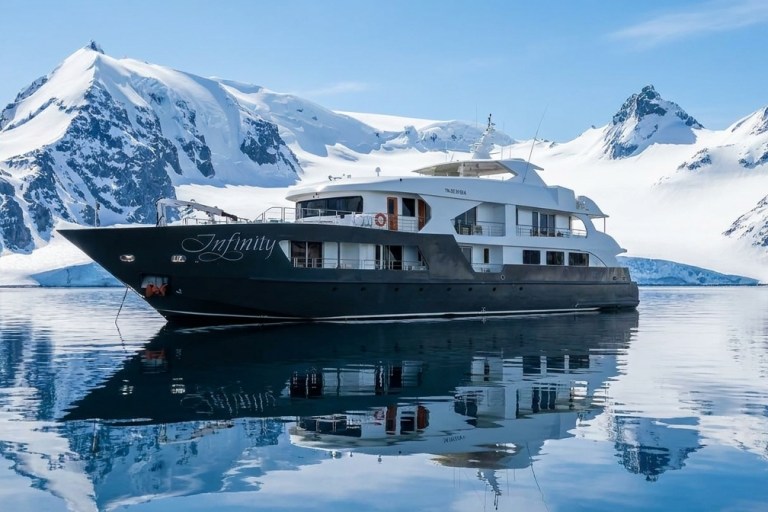
For the warm season, a stabilized power catamaran is usually the right call, since the flatter platform suits families and first-timers who value comfort over range. For the cool season, an expedition motor yacht with strong tender operations and good range, the same class we place in Patagonia, handles the chop better and gets divers to the water faster. A small number of licensed expedition ships also take full-ship charters here, the same model we use for Antarctica, which suits larger groups wanting more onboard space without sacrificing naturalist access. You can browse the current Galápagos charter fleet by season and class before deciding.
Because the fleet is small, the specific yacht that suits your season, a stabilized catamaran for the warm months or a stronger-tendered expedition yacht for the cool ones, often has only a handful of weeks open each year. We routinely reserve boats quietly for clients as soon as dates and season are confirmed, since the right yacht for a cool-season, dive-focused trip can be gone from the calendar within weeks of being released.
Conclusion: which season wins
For most guests, book December through May. It’s the easier trip: calmer seas, warmer water, and the peak of the courtship displays that make for the best photography most people actually want. Book June through November if your group is diving-focused or has already done the warm season and wants the colder, richer water and the better odds with hammerheads and whale sharks.
We would not build a family trip around the cool season purely for wildlife volume, and we would not send serious divers in the warm season expecting Humboldt-current conditions. Whichever window fits your group, the route itself won’t change, so the decision that actually matters is season and yacht class, not itinerary design. Decide on the season first, then let that choice narrow the yacht list, not the other way around. Get in touch through our contact page or read more charter planning guides before you lock in dates, since Galápagos permits fill up well ahead of the season you want.
Is the wet season or dry season better for snorkeling in the Galápagos?
The warm, wet season from December to May is better for snorkeling comfort, with water in the low-to-mid 70s°F and calmer conditions around sites like Santa Fé and Genovesa. The cool, dry season from June to November has colder water in the 60s°F but more marine life in the water column, which favors experienced snorkelers and divers over casual swimmers.
What is the best month to see Galápagos wildlife courtship displays?
Blue-footed booby courtship on Española and land iguana mating on Santa Cruz both peak between December and June, making the early warm season the strongest window for courtship photography specifically.
Can I customize my Galápagos yacht itinerary depending on the season?
No. Every charter is assigned to one of two park-approved routes, eastern or western, before departure, and this itinerary cannot be changed underway regardless of season, weather, or wildlife sightings.
Does a Galápagos charter always require a naturalist guide?
Yes, every charter carries a licensed naturalist guide by law, in every season. The guide occupies a cabin onboard, which reduces the number of guest cabins available compared to a similarly sized yacht chartered elsewhere.
Is the cool season rougher at sea than the warm season in the Galápagos?
Yes. The Humboldt current that arrives from June to November brings more chop, particularly on the western route near Isabela and Fernandina, compared to the calmer crossings typical of the December to May warm season.
Plan Your Galápagos Charter With Real Experts
Tell us how you like to travel and our charter team will hand-pick the right crewed yachts, dates and route — no obligation.
Our Top Galápagos Recommendations
We put these shortlists together because most travellers don’t need to weigh up every yacht on the water — just the handful that consistently get this kind of trip right. Each guide below digs into the boats, the best months to go, and the trade-offs worth knowing before you book.


















 iMessage
 WhatsApp




































