Quick answer
- Choose Patagonia if: this is your first extreme-latitude charter — sheltered Chilean fjords, glaciers and Torres del Paine overland, no ice-class vessel required.
- Choose Antarctica if: you want the Peninsula proper — ice, penguins, whales — and are prepared for the Drake Passage and an ice-strengthened, polar-code ship out of Ushuaia.
- Season for both: November to March. December to January is peak for Antarctic access and the hardest to book.
- The vessel gap: Patagonia runs on a range-capable expedition motor yacht; Antarctica demands an ice-strengthened hull, IAATO compliance and expedition staff.
- Real cost: expedition motor yachts here start around $595,000–$650,000 per week base, before APA, VAT and crew gratuity. We quote and contract in the currency each specific yacht is priced in — usually USD or EUR — and confirm that before you commit.
- Book: 12+ months before you sail for December–January; shoulder months (November, February–March) run 30–40% below peak.
 Chris de Kock, Charter Broker, Sales Broker, Active CYBA Member at DMA Yachting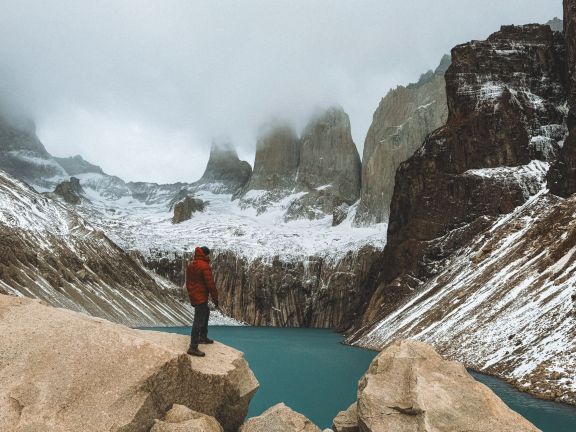
Patagonia or Antarctica: which one first?
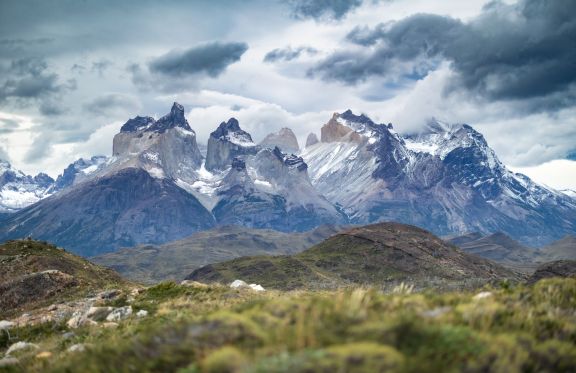
For a first extreme-latitude charter, we recommend Patagonia. It delivers glaciers, fjords and mountains without a true ocean crossing, without an ice-class vessel, and without the regulatory weight of the Antarctic Peninsula. It is the more forgiving introduction to high-latitude cruising, and it pairs cleanly with land — Torres del Paine — so guests who tire of the water always have somewhere to go.
We steer guests to Antarctica when the Peninsula itself is the point: the ice, the penguin colonies, the whales feeding under 16-hour daylight. That trip is worth every dollar for the right guest, but it is not the softer option. You cross the Drake Passage, you charter an ice-strengthened ship, and you accept a stricter operating envelope. If that appeals rather than daunts, go straight to Antarctica.
 Miles Froelicher, Charter Broker at DMA Yachting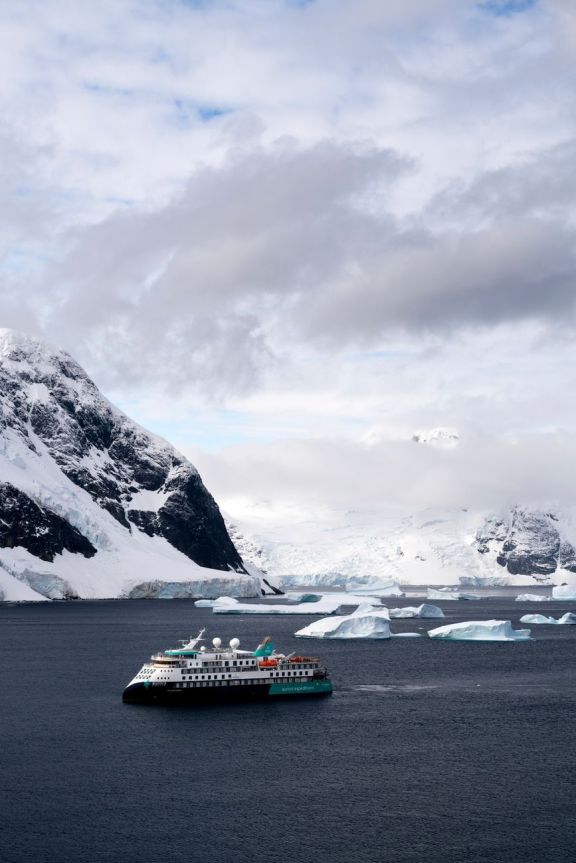
How the two trips actually compare
| Option | Best for | Not ideal for | Typical cost |
|---|---|---|---|
| Patagonia | First high-latitude charter, sea-and-mountains combos, mixed-interest groups, families | Guests set on penguins and pack ice as the headline | Expedition motor yachts from $595k–$650k/week base |
| Antarctica | The Peninsula, ice, wildlife density, guests who want the real thing | Anyone nervous about the Drake or wanting an overland fallback | Ice-strengthened full-ship charter, priced per vessel — expect a meaningful premium over Patagonia |
Chilean fjords
What Patagonia gives you
Patagonia is a maze of channels and inlets running nearly 1,300 nautical miles from Puerto Montt down to Puerto Williams. Inside the fjords, sea state rarely dictates your day the way it does in open Antarctic water — comfortable anchorages, reliable tender operations at glacier faces, and a route you can flex around weather.
The one honest exception is the Golfo de Penas, the open-water gap between the northern and southern fjord systems on a full Puerto Montt–Puerto Williams route. It is exposed Pacific water, and it can hold you up for a day or two waiting on a weather window. It is nothing like the Drake, but it is the one stretch where a captain plans around the ocean rather than the channels — worth knowing before you assume the whole trip is sheltered.
The land component is the other reason we like it as a first charter. You can build a combined itinerary with Torres del Paine and lodges like Awasi or Explora inside the park, so the trip is not all-or-nothing on the water. Between glacier viewing you can add heli-skiing, fly-fishing, horseback riding or kayaking. It is the more varied trip, and it suits a group where not everyone is a hardened expedition enthusiast.
Chris de Kock, Charter Broker, Sales Broker, Active CYBA Member at DMA YachtingWhat Antarctica gives you — and demands
Antarctica is the Peninsula: ice, penguins and whales at a density Patagonia simply cannot match. The trade is exposure and rules. You depart Ushuaia, cross the Drake Passage, and operate in open, ice-heavy water where the day belongs to the sea and the weather. This is where guests get caught out — they picture the wildlife and forget the crossing that comes first.
Peak is December to January, with the most stable temperatures — around 1 to 2°C — and up to 16 hours of daylight. It is also the busiest and hardest window to secure, which is why we ask serious Antarctica guests to commit early.
The right vessel for each
For Patagonia, a range-capable expedition motor yacht with good tenders is enough — no ice class required, because you are cruising temperate, sub-Antarctic water rather than polar ice. For Antarctica you need an ice-strengthened, polar-code expedition yacht or a licensed small expedition ship taken as a full-ship charter. The critical difference is the hull and the paperwork, not the styling.
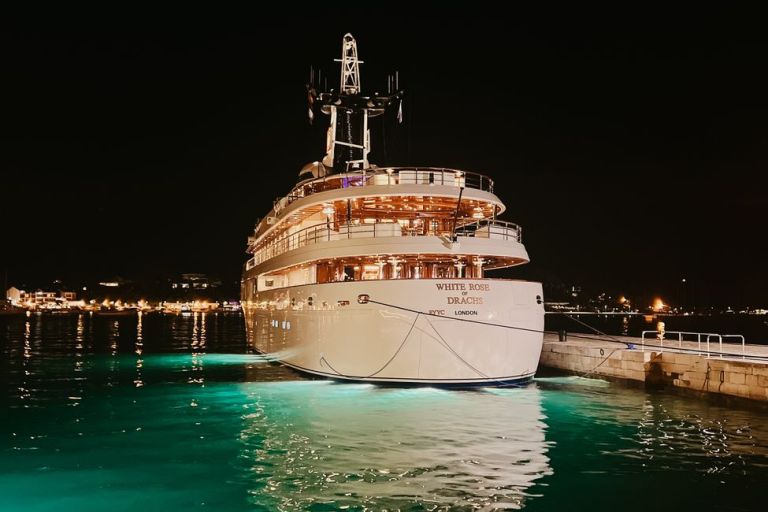
Guest capacity varies widely by vessel, so we match the boat to the group rather than the other way round. At the larger end, the 90m MY Lauren L (built by Cassens-Werft) can take up to 36 guests and is one of the options we look at for bigger parties — always subject to confirming her availability and, for any Antarctic leg, her ice classification before we present her. For groups of 12–20, our large-group charter list is the sensible starting point, and the wider luxury fleet shows the full range of sizes.
Sherakhan is another motor yacht we can look at for the far south, with availability we track for the winter 2026/2027 Antarctic season — again, subject to confirming her ice suitability for any Peninsula work at the time of booking.
What it really costs
Base weekly rates for expedition motor yachts here start around $595,000–$650,000. Larger ships run well above that. One point to be clear on up front: individual yachts are priced in their own currency — some in USD, some in EUR — and APA, VAT and gratuity are all charged in that same contract currency. We confirm which currency applies to your chosen boat before anything is signed, so there are no surprises.
The base rate is never the all-in number. Budget an Advanced Provisioning Allowance (APA) — the fund covering fuel, food and drink — at roughly 30% of the base, plus crew gratuity of 10–15%. VAT depends on where you sail: Chilean Patagonia carries 19% VAT; the Antarctic Peninsula itself sits outside any national VAT regime.
Here is how a Patagonia charter stacks up, working in EUR on a €695,000 base for a large ship. APA at ~30% is roughly €208,500; Chile’s 19% VAT adds around €132,050; gratuity at 10–15% is €69,500–€104,250. That lands you near €1.1M–€1.14M for the week. An Antarctic charter of the same base would carry APA and gratuity but no Chilean VAT — though your Ushuaia embarkation and any time in Argentine waters can carry Argentine port and customs charges, which we cost out per itinerary rather than assume away.
Shoulder months — November, February and March — can run 30–40% below peak, especially on repositioning voyages. If budget is the real constraint, sail the shoulder and let us watch for repositioning windows.
FAQ
Is Patagonia easier than Antarctica for a first expedition charter?
Yes. Patagonia keeps you inside sheltered fjords with no true ocean crossing, no ice-class vessel requirement, and an overland fallback at Torres del Paine. The only real open-water stretch is the Golfo de Penas, which is nothing like the Drake. Antarctica adds the Drake Passage, an ice-strengthened polar-code ship and IAATO compliance. First-time high-latitude guests almost always start with Patagonia.
When is the best time to charter Patagonia or Antarctica?
November to March for both. December and January are peak for Antarctic access — most stable temperatures and up to 16 hours of daylight — and the hardest to book. November, February and March are quieter and cheaper.
Can I do Patagonia and Antarctica on one trip?
Yes, with the right vessel. Many Antarctic ships reposition through southern South America between seasons, so a combined or back-to-back itinerary is workable — but any Antarctic leg needs a confirmed ice-strengthened, polar-code vessel and careful sequencing. Plan it well ahead.
How far ahead should I book?
For December and January, book 12+ months before you sail — peak availability is genuinely scarce. Shoulder months give you more room, and repositioning voyages can open at short notice with meaningful discounts.
Do I need a special yacht for Antarctica?
Yes. Antarctica requires an ice-strengthened, polar-code vessel or a licensed small expedition ship, with expedition staff and IAATO compliance. We verify a specific yacht’s ice classification before presenting her. Patagonia does not require ice class — a range-capable expedition motor yacht with good tenders handles the fjords.
Plan Your Charter With Real Experts
Tell us how you like to travel and our charter team will hand-pick the right crewed yachts, dates and route — no obligation.
Our Top Recommendations
We put these shortlists together because most travellers don’t need to weigh up every yacht on the water — just the handful that consistently get this kind of trip right. Each guide below digs into the boats, the best months to go, and the trade-offs worth knowing before you book.





















 iMessage
 WhatsApp




































