Quick answer
- What they do: A marine biologist briefs every snorkel and dive, identifies species in the water, runs evening talks, and helps the captain choose where you anchor based on tides, currents and wildlife timing.
- Where it matters most: The Galápagos, Raja Ampat, the Maldives and remote expedition waters — places where what you swim over changes week to week.
- Not a gimmick: A good biologist reshapes the itinerary around manta aggregations, hammerhead cleaning stations and healthy reef, not a fixed brochure route.
- Boat size threshold: Above 30m they focus only on science and guiding; on smaller yachts the role may be shared with diving or guiding duties.
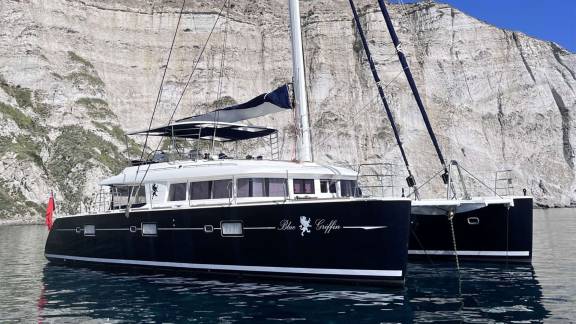
- Cost reality: The catamarans we list for this kind of wildlife-led week run roughly $11,000–$96,000 per week base; the biologist is usually an added cost, not a free crew slot.
- What we’d avoid: Booking a “marine biologist charter” in a flat, low-life lagoon week — the expertise needs something to point at.
A marine biologist on a crewed yacht is a working guide and scientist, not a decorative title. For most guests heading to the Galápagos, Raja Ampat or the Maldives, the role is genuinely transformative: they turn a pretty snorkel into a session where you understand what you are looking at, and they steer the boat toward the right reef on the right tide. We only consider it overkill if your week is built around beaches, bars and short dips rather than the water itself.
The honest framing matters here. A knowledgeable captain can tell you “those are reef sharks.” A marine biologist can tell you why the sharks are there, what the coral underneath them is doing, and where you should be tomorrow morning to see something better. That gap — between a confident answer and a real one — is the whole reason the role exists.
 John Boullin, Charter Broker at DMA Yachting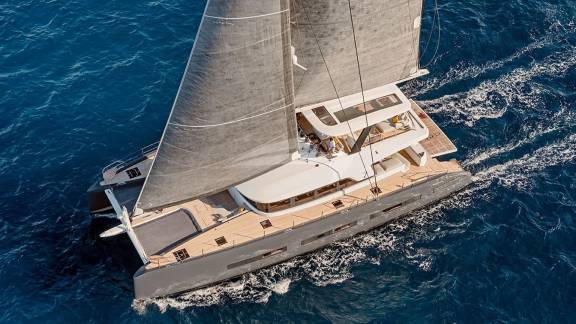
The day-to-day
What a marine biologist actually does on board
The work breaks into three parts: briefing, guiding, and teaching. Before each excursion, the biologist gives a short brief — what you are likely to see, how to behave around it, and what makes this site worth the time. That sounds minor until you have wasted a morning kicking over dead reef because nobody told you the good wall was 200m east.
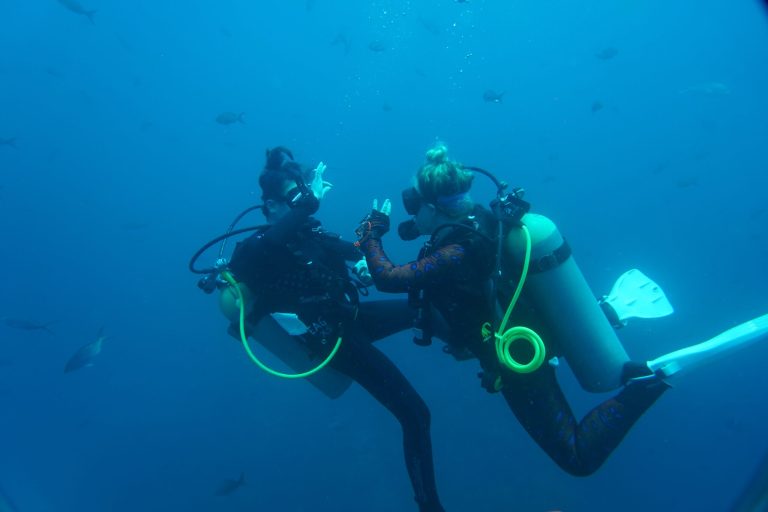
In the water, they guide. They point out what you would swim straight past: a juvenile in camouflage, a cleaning station, an octopus changing colour in real time. On the better expedition operations, the biologist conducts dive surveys, collects water samples, identifies and photographs species, and records behaviour as part of ongoing citizen-science work.
Back on board, they teach. Evening talks and photo reviews are where the day’s wildlife gets context — coral health, migration timing, why a bleached patch looks the way it does. This is the part guests consistently remember, because it converts a swim into knowledge you keep.
Catamarans



Marine biologist vs a knowledgeable captain — what’s the real difference?
This is the question we get most, and it deserves a straight answer. Plenty of expedition captains are serious divers — we routinely place clients with masters who hold rebreather, nitrox and rescue dive qualifications, and that depth of in-water competence is a real crew asset. A captain like that keeps you safe, reads conditions, and knows the local sites well.
But a captain’s job is the vessel and the safety of everyone on it. Their attention is split across navigation, weather, anchoring and the whole guest list. A marine biologist’s only job is the marine environment and your understanding of it. They go deeper on identification, behaviour and ecology, and they have the time to.
| Role | Best for | Not ideal for | Where it shows |
|---|---|---|---|
| Dive-certified captain | Safe in-water leadership, local site knowledge | Deep species ID, dedicated teaching, survey work | Getting you to good water safely |
| Marine biologist | Identification, ecology, evening talks, itinerary shaping | Running the boat — they don’t | Understanding what you saw and why |
| Both on board | Galápagos, Raja Ampat, expedition wildlife weeks | Beach-and-bar Caribbean weeks | The strongest wildlife charters we place |
The short version: for a wildlife-led week, the two roles are complementary, not interchangeable. The captain gets you there; the biologist makes it mean something.
 Miles Froelicher, Charter Broker at DMA Yachting
Where a marine biologist is genuinely worth it
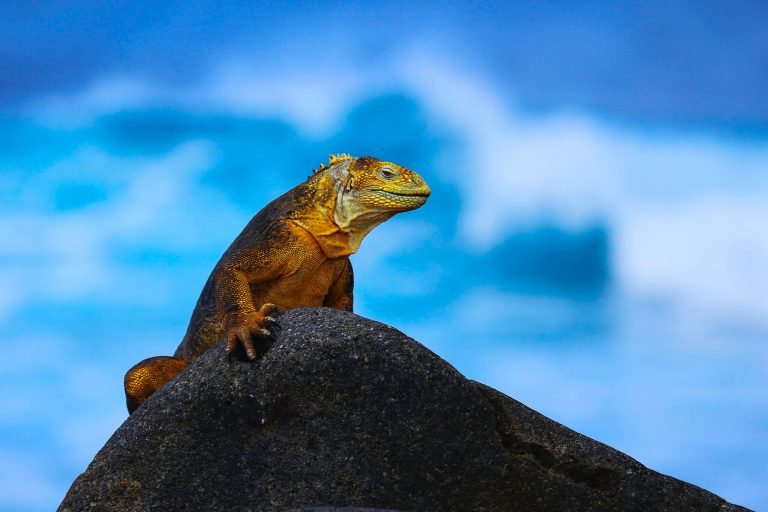
The role earns its place where the marine life is the reason you are there and where it changes week to week. The clearest case is the Galápagos, where guests snorkel with sea lions, turtles, rays and reef sharks, and where seasonal hammerheads and whale sharks make timing everything. The park’s structure rewards expert guiding — and only a small, permitted fleet of expedition yachts is authorised to explore the archipelago in depth, each built around exactly this kind of naturalist-led programme. If you want to match the season to your itinerary, our Galápagos charter season guide is the place to start.
Raja Ampat is the other obvious case. The reefs around Misool and the Dampier Strait are among the most biodiverse on the planet, and a biologist who knows the sites turns an overwhelming amount of life into something you can actually follow. A shallow-draft catamaran reaches the limestone labyrinths and hidden lagoons that most large motor yachts simply cannot get into — but draft varies by boat, so it’s worth checking the specific yacht before assuming it can tuck into the tight stuff.
The Maldives rounds out the list. Manta and whale-shark aggregations in the southern atolls and Hanifaru-style sites are seasonal and current-driven — precisely the conditions a biologist reads better than anyone else. The Baa Atoll UNESCO Biosphere area is so manta-rich that resort and research science teams there identify and track individual rays — the kind of work a good onboard biologist can plug straight into.
Catamarans


How the biologist works with the captain and chef
A good wildlife week is a three-way conversation. The biologist flags the marine hotspots and the timing — a tide window for a manta cleaning station, a dawn slack for a particular wall. The captain decides whether the boat can get there safely and comfortably, factoring sea state, anchorage and fuel range. The chef plans meals around the schedule, because if the best dive is at first light, breakfast moves.
This coordination is where the role stops being a lecture series and becomes operational. On the better expedition charters the biologist effectively co-authors the week with the captain, and the itinerary flexes daily around what the water is actually doing rather than a printed plan.
On smaller yachts, expect overlap. Below 30m, a specialist crew member often assists with deck duties or interior service alongside their expertise; above 30m they tend to focus exclusively on the science and guiding. Neither is wrong — but it’s worth knowing which you’re getting before you assume a dedicated, full-time biologist.
 Louis Lamprell, Charter Broker, Active CYBA Member at DMA Yachting
What it costs to add a marine biologist
The biologist is almost always an added cost on top of the charter, not a standard crew slot included in the base rate. The catamarans we list as suitable for this kind of wildlife-led week run roughly $11,000 to $96,000 per week base, with the motor yachts in this category from $42,000 to $80,000 per week — all before APA and expenses.
On those numbers, remember how charter pricing works. APA — the Advanced Provisioning Allowance, the running float for fuel, food and permits — typically runs 25–35% of the base on a catamaran and 35–40% on a motor yacht. Add local taxes and a 10–15% crew gratuity, and the all-in total on a $100,000 week often lands near $155,000.
That range is wide for a reason: a four-cabin sailing catamaran at the accessible end and a fully specced expedition cat at the top do very different jobs, and the right one depends on your group size, destination and how much time you’ll spend in the water. Rates and availability move through the season, so we confirm current numbers against the live listing before we hold anything. Where draft matters — Raja Ampat especially — we check the specific boat’s draft rather than assume every catamaran can reach the shallow lagoons, because that’s the practical detail that decides whether you get into the coral a deep-keeled yacht can’t.
If you want to anchor a budget first, our yachts under $60k and yachts under $100k pages are the cleanest way to see what your number actually buys before we layer in the specialist crew.
What credentials a serious biologist actually holds
Not every “naturalist guide” is a marine biologist, and the gap is real. The strongest expedition leaders we see in this space combine an academic marine-science background with serious field experience — often a certified divemaster qualification, years leading expeditions, published photography, and active conservation work. Recognised affiliations with established scientific or exploration societies are the kind of marker that signals the genuine article rather than a well-read guide.
This matters because the value scales with the person. A top-tier biologist will run survey dives, contribute to research and read a reef with a depth a casual naturalist cannot match. We treat the individual, not just the boat, as part of what we’re placing — and we’ll tell you plainly if a yacht’s “marine biologist” is really a keen divemaster with good patter.
Who should add one — and who shouldn’t bother
Add a marine biologist if your week is built around the water and you want to understand it, not just float over it. Families with curious teenagers get enormous value — the role turns a charter into something closer to a private expedition, and kids who snorkel with a biologist remember it for years. Keen divers and underwater photographers are the other natural fit, since the biologist puts them on the right sites at the right time.
Skip it if your trip is fundamentally a relaxed cruise with occasional swims, or if you’re chartering somewhere the marine life isn’t the headline. We’d also gently note: one specialist activity often sits outside standard crew duties. Fishing, for instance, is usually handled by specialist operators rather than the yacht’s own crew — and the same honesty applies to assuming any boat comes with a real biologist as standard. It rarely does. You request it, and we arrange it.
If you’re weighing destinations, our best locations overview and the scuba-diving yachts and power catamarans pages are the most useful starting points for a wildlife-led charter.
FAQ
Is a marine biologist on a yacht charter a gimmick?
No, provided you’re somewhere worth it. In the Galápagos, Raja Ampat or the Maldives a genuine biologist reshapes the itinerary around real wildlife events and turns snorkels into something you understand. In a flat, low-biodiversity week it adds little — that’s where it can feel like a gimmick, so we’d advise against it there.
Does the marine biologist come with the yacht or do I add them separately?
Usually separately. A handful of dedicated expedition yachts have naturalist programmes built in, but on most charters the biologist is an arranged addition on top of the base rate. We coordinate the right specialist for your destination rather than assume the boat supplies one.
Will the biologist dive with us or only brief from the boat?
The good ones get in the water with you. Top-tier biologists are typically certified divemasters who guide snorkels and dives directly, point out species in real time, and run survey work. Always confirm their dive qualifications before booking if in-water guiding matters to you.
How far in advance should I book a wildlife charter with a biologist?
For the Galápagos, book at least 12 to 18 months before you sail, and closer to 2 years for holiday weeks — the permitted fleet is small. Other regions are more flexible, but securing both the right boat and the right specialist takes time, so earlier is always better.
What boat size do I need for a biologist to focus only on science?
Above 30m, specialist crew typically focus exclusively on their area of expertise. Below that, the biologist may also help with deck or interior duties. For a fully dedicated, full-time biologist, lean toward the larger end of the wildlife-capable fleet.
More yachts available for this charter
Motor yachts


Catamarans


Plan Your Charter With Real Experts
Tell us how you like to travel and our charter team will hand-pick the right crewed yachts, dates and route — no obligation.
Our Top Recommendations
We put these shortlists together because most travellers don’t need to weigh up every yacht on the water — just the handful that consistently get this kind of trip right. Each guide below digs into the boats, the best months to go, and the trade-offs worth knowing before you book.



















 iMessage
 WhatsApp




































