Quick answer
- Alaska charter boat season dates: Mid-May to mid-September only. Outside that window, Alaska charter is effectively closed.
- Practical start: Most operators open mid-May; a few list April departures from Sitka, but weather is unreliable.
- Peak wildlife: Mid-June to mid-August for reliable humpback feeding pods and salmon-run bear activity.
- Glacier Bay reality: It is permit-controlled. The few yachts with access, and the best dates, go a year ahead.
- Budget floor: From around $50,000 per week; expedition and robust motor yachts only — this is cold-water cruising, not a swim-platform holiday.
- Book early: Plan 12 months ahead to secure the right vessel, dates and Glacier Bay access.
For most guests, the Alaska yacht charter season starts in mid-May and the best departures run from then through mid-September. A handful of operators list April departures out of Sitka, but we do not normally build a first Alaska charter around them — the weather is too unsettled and the wildlife has not yet arrived in force.
If your priority is whales, bears and salmon, target mid-June to mid-August. If you want fewer boats and lower rates, the shoulder months of May and September reward you — with the tradeoff of cooler, wetter days and fewer feeding pods. The one constraint that overrides all of this is Glacier Bay: access is permit-controlled, the qualifying yachts are few, and the prime dates disappear early.
 John Boullin, Charter Broker at DMA Yachting
The real season
When does the Alaska charter season actually open?
Most operators treat mid-May as the practical opening of the season, with one common full-season window quoted as May 15 to September 15. That is the honest answer for a first charter. Earlier departures exist — some operators list custom April departures out of Sitka — but those are for hardy repeat clients who understand they are buying scenery and solitude, not guaranteed wildlife or warm afternoons.
The reason the season is so tightly bound is daylight and weather, not the calendar. By mid-May you have nearly 18 hours of usable light, the Inside Passage is settling, and the wildlife migration is underway. By late September the light is fading fast, the weather turns and the operators reposition out. There is no winter Alaska charter to speak of.


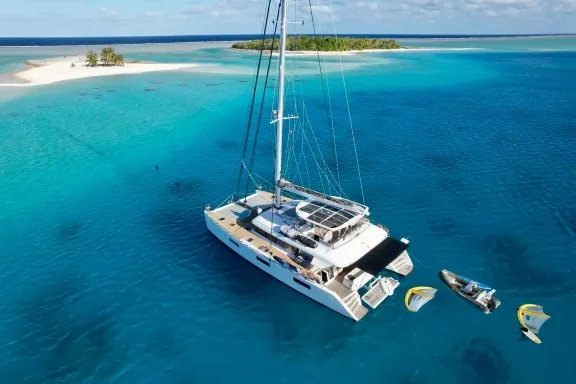
Month-by-month: matching your priorities to the window
The mistake most first-timers make is assuming Alaska’s season mirrors a normal summer holiday window. It does not. Each month delivers a different set of conditions, and the right month depends entirely on what you came to see.
| Window | Best for | Not ideal for | Conditions |
|---|---|---|---|
| May (shoulder) | Quiet anchorages, lowest rates, driest cruising month | Reliable whale feeding, warmth | 40s–50s°F, nearly 18 hrs daylight |
| June (early peak) | Long light, fresh landscapes, up to 19 hrs sun | Peak salmon-run bears | Warming, whales building |
| July (peak) | Warmest, sunniest, full wildlife | Solitude, lower prices | Highs mid-60s°F, busiest |
| August (peak) | Whales, bears, salmon all active | Budget-conscious trips | Warm, wetter than July |
| September (shoulder) | Fall colour, quieter anchorages, lower fares | Warmth, peak feeding | Cooling, darker evenings returning |
If whale watching is the centerpiece — and for most clients it is — humpback sightings are most reliable from mid-June to mid-August, when feeding pods form around the plankton blooms driven by long summer days. Watching humpbacks feed off the bow near Glacier Bay is the signature Alaska moment, and it is a peak-season experience.
A word on the Northern Lights: do not book a September charter expecting them. Alaska’s summer daylight is too long for reliable aurora until later in autumn, after the charter fleet has repositioned out. If September delivers a brief show on a dark, clear night it is a bonus, not a feature to plan around. For a true aurora trip, look to Norway in the winter season instead.
 Louis Lamprell, Charter Broker, Active CYBA Member at DMA Yachting
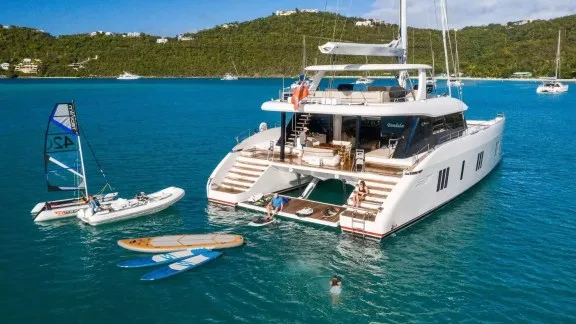
Why Glacier Bay permits decide your booking window
This is the single factor that catches clients out. Glacier Bay National Park is permit-controlled during the season, and only a small number of vessels hold the permits to cruise it. That scarcity is the reason Alaska is not a last-minute destination.
If Glacier Bay is the part of the trip you care about — the calving faces, the whales, the big-landscape scenery — your dates and your choice of yacht are effectively chosen for you by permit availability. Wait too long and you either lose the access or get pushed into dates that do not suit you.
Tracy Arm and Endicott Arm offer dramatic glacier cruising without the same permit pressure, and they make a strong alternative or addition when Glacier Bay dates are tight. But they are an addition, not a true substitute, for the Glacier Bay experience itself.

The route reality: Inside Passage, Juneau and Sitka
The core route is Southeast Alaska and the Inside Passage — protected waterways, forested islands and strong wildlife density. Most charters run between Juneau and Sitka, with Icy Strait and Glacier Bay as the headline cruising grounds. The Inside Passage’s sheltered character is exactly why Alaska suits guests who want wilderness without constant open-water exposure.
Rainfall varies sharply by port and matters more than people expect. Ketchikan averages over 150 inches of rain a year, one of the wettest places in the US. Juneau sits around 57 inches, while Skagway is far drier at about 29 inches. Plan for weather, layer up, and treat a grey day as part of the experience rather than a failure of the trip.
Repositioning between gateways carries a real cost. A Juneau-to-Sitka repositioning, or similar, can run an estimated $8,000, so decide your start and end points early rather than treating them as flexible. Kenai Fjords is a further reach to the west and changes the logistics of a trip significantly — discuss it with your broker before assuming it fits a standard week.
For more on building the days around wildlife and weather windows, our itinerary planning guides and the dedicated Alaska charter section are the right next stop.
 Melissa Rondeau, Charter Broker at DMA Yachting
Which yacht suits Alaska?
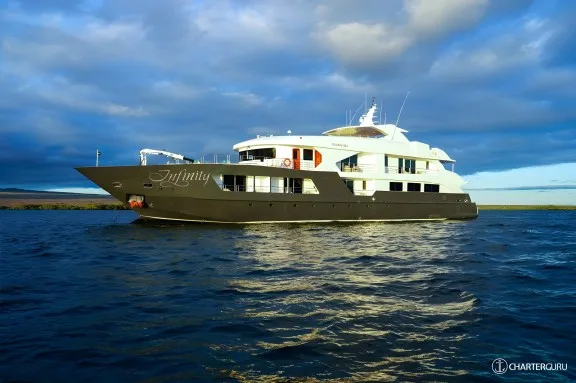
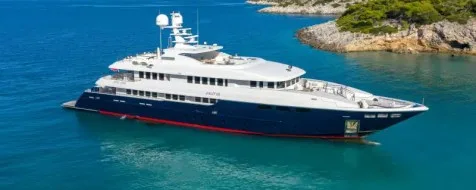
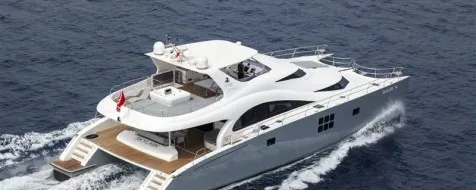
Alaska is expedition territory. Most yachts that cruise here are purpose-built expedition vessels, with robust motor yachts and ice-class-capable boats making up the rest. This is not a place for a light tropical catamaran or a swim-platform-focused build. You want enclosed deck space, heating, a capable tender operation and a crew that knows cold-water cruising.
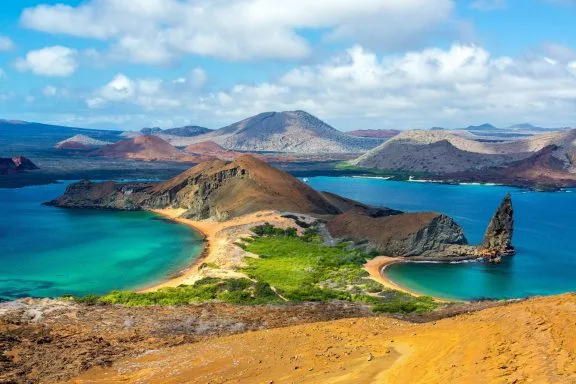
The yachts that work here mirror the kind of expedition platforms we place in other remote regions. The same robust, wilderness-ready build philosophy we look for in the Galapagos expedition yachts translates well to cold-water cruising. Clients moving between warm and cold expedition charters often weigh Alaska against tropical options like Raja Ampat when deciding what kind of expedition they want first.
A representative Alaska build would be a roughly 100-foot motor yacht with four ensuite cabins for 8 guests, a crew of four, an enclosed aft deck for all-weather dining and a flybridge lounge with a fireplace — that combination of comfort and weather protection is what the cruising ground demands. To browse by size, our yachts under 125ft and luxury yacht pages are a sensible starting filter.
What an Alaska charter actually costs
Expect a floor of around $50,000 per week for a crewed luxury charter in Alaska. From there, 80–120 ft motor yachts run roughly $30,000 to $100,000 per week, with newer builds at $50,000 to $120,000 and older models from $30,000. Larger 100–150 ft superyachts sit in the $150,000 to $300,000 per week range.
Season drives price. Peak July and August rates run roughly 30 to 40 percent higher than May and September shoulder sailings. As an illustration, a representative 100-foot yacht might be quoted around $80,000 per week in the June or September shoulder and closer to $85,000 in August, plus expenses — a clear example of the peak premium.
Budget for extras on top of the base rate. The Advance Provisioning Allowance — covering fuel, food, beverages and port fees — typically runs 20 to 30 percent of the base fee, with any unspent balance refunded. Crew gratuity of 15 to 20 percent is standard. Together, extras can add 30 to 40 percent to the advertised rate. On an $80,000 week, that brings the all-in budget to roughly $104,000 to $112,000. Compare across price bands on our yachts under $100k and yachts under $250k pages.
Who Alaska suits — and who should look elsewhere
Alaska suits guests who want wilderness, wildlife and dramatic landscape with onboard comfort — and who accept cool, often wet weather as part of the deal. Families and couples who enjoy kayaking and paddleboarding in quiet anchorages, fishing, and watching humpbacks, bears, sea otters, puffins and bald eagles will get exactly what they came for.
If you want warm water, swim-platform days and short, flat hops between beaches, Alaska is the wrong charter and you should look at warmer expedition grounds instead. The Galapagos, Raja Ampat, French Polynesia and the Maldives all deliver warm-water expedition and cruising experiences that Alaska simply does not.
- Layered clothing and proper waterproofs — weather changes fast in the Inside Passage
- Patience for grey days; Ketchikan alone sees over 150 inches of rain a year
- A flexible mindset on wildlife timing — peak feeding is mid-June to mid-August
- Early booking, ideally 12 months ahead, especially for Glacier Bay access
- An expedition or robust motor yacht, not a tropical build
How early should you book?
Plan at least 12 months ahead. Alaska is a short-season, supply-limited destination, and the best dates, cabins and itineraries sell out well in advance. When Glacier Bay access matters, a year is the minimum — the permitted yachts are few and their prime weeks go first.
Booking early also lets your broker quietly reserve the right boat and have first call on the dates that suit you, rather than reacting to whatever is left. Because boats relocate between regions each season, the yachts that suit Alaska are only there for the May-to-September window — miss it and you wait a full year.
If your trip is less than six months away and you still want Alaska this season, you can sometimes find availability in the May or September shoulder weeks, but expect compromise on vessel and access. For a wider view of where to point your charter, our best locations and charter insights pages help frame the decision.
FAQ
What is the earliest you can charter a yacht in Alaska?
Some operators list custom April departures out of Sitka, but most treat mid-May as the practical start. For a first Alaska charter, we recommend mid-May onward, when weather settles and wildlife arrives.
When is the best time to charter a yacht in Alaska for whales?
Mid-June to mid-August. That is when humpback feeding pods form around the summer plankton blooms, making sightings near Glacier Bay nearly reliable. It is also peak season, so book early and expect higher rates than the May or September shoulders.
When does the Alaska charter season end?
Early to mid-September. Some operators run through September 15, after which the light fades, weather turns and yachts reposition out. Outside the May-to-September window, Alaska charter is effectively closed.
Do you need a permit for Glacier Bay?
The yacht does — Glacier Bay National Park is permit-controlled during the season, and only a few vessels hold access. This is why Glacier Bay itineraries must be booked well ahead; the qualifying yachts and the best dates sell out a year or more in advance.
Can you see the Northern Lights on an Alaska charter?
Rarely, and not reliably. Alaska’s long summer daylight runs through most of the charter season, so the aurora is not a feature you can plan a trip around. For a genuine Northern Lights charter, look to Norway in winter instead.
How much does an Alaska yacht charter cost?
From around $50,000 per week as a floor. Mid-size 80–120 ft motor yachts run roughly $30,000 to $120,000 per week depending on age, rising 30 to 40 percent in peak July and August. Add 30 to 40 percent for APA and gratuity to get the all-in figure.
More yachts available in Alaska
Motor yachts
Catamarans
Expedition yachts
Plan Your Alaska Charter With Real Experts
Tell us how you like to travel and our charter team will hand-pick the right crewed yachts, dates and route — no obligation.
Our Top Alaska Recommendations
We put these shortlists together because most travellers don’t need to weigh up every yacht on the water — just the handful that consistently get this kind of trip right. Each guide below digs into the boats, the best months to go, and the trade-offs worth knowing before you book.



















 iMessage
 WhatsApp