Quick answer
- Entry point: A fully crewed luxury Alaska charter starts around $50,000 per week base. Most guests should budget $70,000 to well over $150,000 all-in.
- All-in rule: Add roughly 40 to 50 percent on top of the base for fuel, food, taxes and crew gratuity. A $50,000 base lands near $70,000 to $75,000 all-in.
- Season: May to September only. June and July are peak. Early June saves 15 to 20 percent for near-identical conditions.
- What drives the price: Expedition-grade vessels, remote-port fuel, crew quality and repositioning between regions — not luxury for its own sake.
- Region: Southeast Alaska and the Inside Passage — Glacier Bay, Tracy Arm, Sitka and Juneau — is where the charter fleet works.
- Book early: Reserve peak July and August dates 6 to 12 months before you sail.
 Yanna Pristas, Senior Charter Broker, Active CYBA Member at DMA Yachting
How much does an Alaska crewed charter cost in 2026?
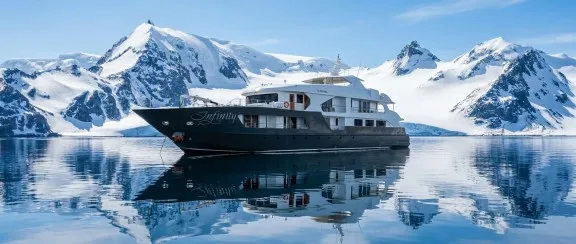
A fully crewed luxury Alaska yacht charter starts around $50,000 per week base for a capable 80 to 100 ft expedition or motor yacht, then adds roughly 40 to 50 percent for fuel, provisioning, taxes and gratuity — so budget $70,000 to $180,000 all-in. Larger 100 to 150 ft yachts run $150,000 to $300,000 per week base.
That is the Alaska private yacht charter weekly rate most first-time guests should plan around. The reason Alaska costs more than a comparable Mediterranean or Caribbean week is simple: you are chartering a robust, self-sufficient vessel and a crew who can work cold water, glacial fjords and remote anchorages where fuel and provisions are expensive and far apart. This is cold-water expedition cruising, not a warm swim-platform holiday, and the boat and crew are priced accordingly. If you want the wider picture on the region itself, our Alaska charter guide covers routes, wildlife timing and where the fleet actually works.


Crewed expedition yacht Alaska charter fees: what the base rate includes
The weekly base rate covers the yacht itself, the full crew — captain, chef, deckhands and, on the better expedition boats, a naturalist guide — plus insurance on the vessel. It does not cover the things that actually get you into Glacier Bay and keep you fed in Sitka.
- Fuel — significant in Alaska given the distances between Juneau, Icy Strait and Tracy Arm
- Food and beverages for guests
- Dockage and port fees, plus local sales tax where it applies — the City and Borough of Sitka levies a 6 percent sales tax, so confirm the current rate for your itinerary at the time of booking
- Crew gratuity — a real line, not optional in practice
These variable costs are collected through the APA — the Advance Provisioning Allowance, an upfront running-cost float that the captain spends on your behalf and reconciles at the end. Across the Alaska fleet the APA typically runs 25 to 40 percent of the base rate. On a heavier displacement motor yacht, which burns more fuel over the long glacial-fjord runs, expect the upper part of that range, around 30 to 35 percent. There is no federal VAT in the United States, which is one genuine saving over the Mediterranean.
 C.J. Coetzee, Charter Broker at DMA Yachting
The levers that move the bill
What actually drives the price up
Four things swing an Alaska quote by tens of thousands. Understanding them is where a broker earns their keep.
| Cost driver | Why it matters in Alaska | Not ideal for | Typical impact on the total |
|---|---|---|---|
| Vessel size & spec | Expedition-grade hulls and full crew command a premium | Budgets under $50,000 | Sets the base; the single biggest number in the quote |
| Season | July and August peak; early June is 15–20% cheaper | Guests set only on midsummer dates | 15–20% swing between shoulder and peak |
| Fuel via APA | Remote ports, long glacial-fjord runs | Small motor yachts, which burn through the APA | 25–40% of base, higher on heavy displacement yachts |
| Repositioning | Boats relocate between regions each season | Off-route vessels | Adds delivery fuel or a flat surcharge; varies by operator |
Repositioning is the one clients most often miss. If a yacht has to be moved into Southeast Alaska for your week, that relocation cost can land on you. Some operators structure it as a flat surcharge — Bear Paw Charters, for example, adds a fixed fuel charge of around $4,000 when a charter starts or ends in a different port. That is one operator’s published approach, not an industry standard, so we always check how each yacht handles it. We steer clients toward yachts already heading to the region, which is often where the value sits.

What a realistic Alaska week looks like
For a family of 6 wanting the classic Inside Passage run — Glacier Bay, Tracy Arm, whales feeding off the bow, kayaking in quiet anchorages — a well-found expedition yacht in the 80 to 100 ft range gives you a $50,000 to $120,000 base. Add APA and gratuity and the all-in figure is closer to $70,000 to $180,000.
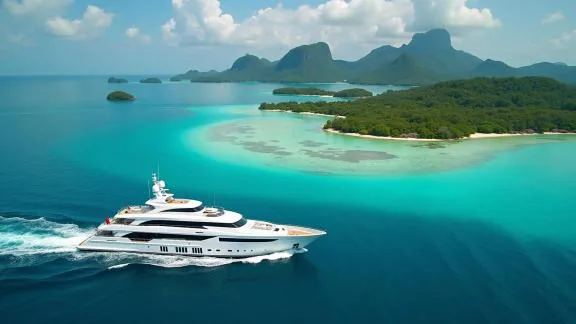
Stepping up to a 100 to 150 ft luxury motor yacht for a larger group or higher comfort level moves the base to $150,000 to $300,000 per week. The expedition-style boats we favour for this cruising ground are the same category as our Alaska charter yachts and the wider Pacific Northwest fleet — vessels genuinely built for cold water. If you want to sanity-check budget tiers, the yachts under $100k and yachts under $250k pages are useful reference points.
 John Boullin, Charter Broker at DMA Yachting
Gratuity, permits and the mistakes to avoid
Crew gratuity in Alaska customarily runs 10 to 15 percent of the charter rate, though some crews now expect more. Whatever the figure, it is a real line in your total — quoting the base rate alone is the classic way first-time charterers underestimate the trip. Combined with the APA, that is why the honest all-in multiplier sits around 40 to 50 percent on top of the base, not the base rate on its own.
The single most valuable factor in a successful charter is not the yacht’s age — it is the crew. A strong captain who knows Glacier Bay’s permitted entry, where the humpbacks are working, and which anchorage stays calm overnight is worth far more than a newer hull with a weaker team. This is where a broker’s judgement, and the licensing and itinerary work behind it, actually pays for itself.
FAQ
What is the cheapest way to charter Alaska?
Book a shoulder month and choose the smallest crewed yacht that still suits your group. May or late September is meaningfully cheaper than peak July, and a smaller fully crewed motor yacht will carry a lower base than a 100 ft-plus vessel. We do not build these trips around bareboat or self-skippered budget boats — Alaska is cold-water expedition cruising, and the crew is the part you do not want to save on.
Why is Alaska more expensive than the Caribbean?
Cold-water expedition cruising needs a more capable vessel and crew, fuel over long remote runs, and provisioning in far-flung ports. The premium buys self-sufficiency in places like Kenai Fjords and Endicott Arm where there is no marina infrastructure to fall back on.
How far ahead should I book?
Reserve peak July and August dates 6 to 12 months before you sail. The Alaska season is short — May to September only — so the good expedition boats book out well in advance.
What is APA and do I get it back?
The Advance Provisioning Allowance is an upfront float, typically 25 to 40 percent of the base rate, that the captain spends on fuel, food and port costs. Unspent funds are returned at the end; if fuel runs over — common on smaller motor yachts pushing long fjord runs — you top it up.
Can I charter Alaska outside summer?
No. The season runs May to September for daylight and navigable conditions. Outside those months the season is effectively closed, and you should look at a warm-water expedition region instead.
More yachts available in Alaska
Motor yachts
Catamarans
Expedition yachts
Plan Your Alaska Charter With Real Experts
Tell us how you like to travel and our charter team will hand-pick the right crewed yachts, dates and route — no obligation.
Our Top Alaska Recommendations
We put these shortlists together because most travellers don’t need to weigh up every yacht on the water — just the handful that consistently get this kind of trip right. Each guide below digs into the boats, the best months to go, and the trade-offs worth knowing before you book.

















 iMessage
 WhatsApp