Quick answer
- Base weekly rates: scale with yacht size and season. A well-appointed 100- to 140-foot expedition motor yacht sits at the more accessible end of the market; a 190-foot-plus vessel with a larger crew and more range commands a materially higher weekly rate. Ask your broker for a written quote tied to your exact dates rather than relying on a published figure.
- Best months: June to August for peak wildlife density; May and September are shoulder months with softer rates but colder, quieter anchorages.
- Base rate covers: the yacht, captain, chef, and full crew running a route through the Inside Passage, Glacier Bay National Park, and Tracy Arm or Endicott Arm.
- Add an APA: typically 25-35% of the base rate, covering fuel, provisioning, park fees, and dockage.
- Gratuity is separate: plan for roughly 15-20% of the base rate for the crew, settled at the end of the charter.
- Remote transfers cost extra: float-plane or helicopter connections into Juneau or another gateway town are rarely bundled into the weekly rate.
- The fleet is small and seasonal: Alaska charters run May through September only, so quotes tighten fast for June-August dates.
For most guests, the weekly base rate on an Alaska yacht charter buys the yacht itself, a full professional crew including captain and chef, and a planned Inside Passage itinerary running through Glacier Bay National Park, Tracy Arm, and Endicott Arm. It does not buy fuel, food, dockage, park fees, or crew gratuity, and it does not buy the float-plane or helicopter transfer that gets many guests from a gateway airport to the yacht in the first place.
Budget roughly 45-55% on top of the quoted weekly rate once the advance provisioning allowance (APA) and gratuity are added. If a quote looks unusually low against that math, ask what has been left out before you sign anything.
The core number
How much does an Alaska yacht charter cost?
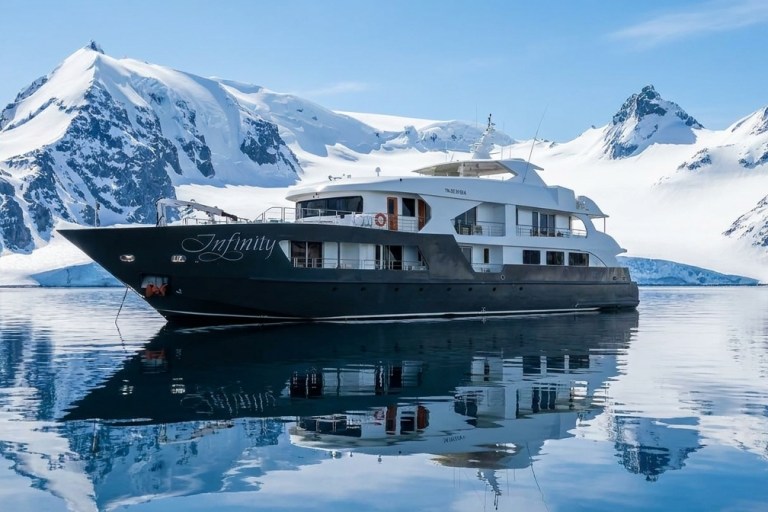
Base weekly rates in Alaska break roughly into two tiers, and the tier matters more than the destination when you are comparing quotes. A well-run expedition motor yacht in the 100- to 140-foot range, carrying 6 to 9 crew and 8 or fewer guests, sits at the more accessible end of the market at the peak of summer. Move up to a 190-foot-plus expedition vessel, and the weekly base rate climbs well beyond that, with a crew of 10 to 14 supporting more guests, more tender capacity, and more range for longer days on the water. Exact numbers move year to year and yacht to yacht, so treat any published range as a starting point and ask your broker for a written quote tied to your specific dates.
Neither tier is the full cost of the trip. Both sit before the APA and gratuity are added, and both assume a peak-season week. A shoulder-season charter on the same yacht can quote meaningfully lower, but the tradeoff is real, and we cover it below.


The starting point
What the base weekly rate actually covers
The headline number on your quote covers the vessel and the people running it. That means the captain, an onboard chef, and the rest of the crew appropriate to the yacht’s size, plus the standard equipment used every day on the water: tenders and zodiacs for glacier approaches and wildlife viewing, kayaks and paddleboards for quiet anchorages, and the vessel’s own insurance.
It also covers the crew’s route planning. A typical Southeast Alaska charter runs through the Inside Passage, into Icy Strait, through Glacier Bay National Park, and along Tracy Arm or Endicott Arm, sometimes extending toward Sitka or south to Kenai Fjords depending on charter length. That planning, and the permits that come with entering a national park by boat, sit inside the base price. Glacier Bay National Park caps the number of vessel entries per day, and the crew is the one securing that entry slot on your behalf, not something you arrange yourself.
- The yacht and its standard onboard equipment
- Captain and full crew, including an onboard chef
- Tenders, kayaks, and paddleboards for glacier and wildlife approaches
- Route planning across the Inside Passage, Glacier Bay, and Tracy Arm or Endicott Arm
- Glacier Bay National Park entry coordination
- Vessel insurance
The real math
What gets added to your Alaska yacht charter cost
The base rate is the starting number, not the number you actually pay. Every serious crewed charter, in Alaska or anywhere else, carries an advance provisioning allowance, gratuity, and a handful of logistics fees that sit outside the headline figure. None of this is unique to Alaska; it is standard crewed charter practice, and the same math applies regardless of which yacht or size tier you book.
The APA is the biggest of these. It is an allowance, not a flat add-on, typically 25-35% of the base rate, held by the crew and drawn down over the trip to cover fuel, food, park fees, and dockage. Whatever is not spent is returned; whatever runs short gets billed. This is where clients get caught out if nobody explains it up front. Added to a typical weekly base rate, that percentage alone can mean tens of thousands of dollars before gratuity is even considered.
- APA: typically 25-35% of the base rate, covering fuel, food, park fees, and dockage
- Gratuity: typically 15-20% of the base rate, paid to the crew at the end of the trip
- Relocation or re-delivery fees: charged if you embark in one Alaska port and disembark in another
- Cancellation insurance: worth pricing given Alaska’s short 5-month season and weather-dependent scheduling
- Any tax written into your specific charter agreement: confirm this in writing, it is not always folded into the headline rate
Ask your broker to confirm the exact APA and gratuity percentages in writing before you sign. They vary by yacht management company, and a quote that quietly assumes the low end of each range can look several thousand dollars cheaper than it actually is.
The Alaska-specific costs that catch first-time guests out
Two things make an Alaska charter budget different from a Caribbean or Mediterranean one, and both come from geography, not from the yacht itself.
First is getting to the boat. Juneau is the primary commercial gateway for Southeast Alaska charters, and some itineraries also arrange embarkation or a mid-trip transfer near Sitka, though this varies by operator and should be confirmed directly. The last leg, from the gateway airport to a remote anchorage or a mid-charter meeting point, is often a float plane or helicopter, and that is rarely bundled into the base rate or the APA. Ask specifically how guests join and leave the yacht before you compare two quotes against each other, and get a written figure for the transfer rather than assuming it is minor.
Second is the climate itself. This is cold-water expedition cruising, not a tropical swim-platform trip. Guests provide their own layered clothing and cold-weather gear; it is not a charter cost, but it is a planning cost that first-timers underestimate.
Two ways brokers quote this
All-inclusive vs captain-only: which pricing model fits you
Most Alaska charter quotes are built one of two ways, and the difference matters more than the headline number.
An all-inclusive rate bundles food, fuel, dockage, and gratuity into one figure, so what you are quoted is close to what you pay. On a smaller expedition yacht that might mean a single all-in figure for the week, with no separate APA reconciliation required. A captain-only, or base-plus-APA, structure covers just the yacht and crew, with everything else billed against the APA account and reconciled at the end of the trip. We usually advise first-time Alaska guests toward the all-inclusive model. It removes the guesswork from a destination where guests are already managing a lot of new logistics, from park permits to float-plane timing.
| Pricing model | Best for | Not ideal for | How it’s billed |
|---|---|---|---|
| All-inclusive | First-time Alaska guests who want one number and no surprises | Groups who want to control provisioning choices or spend below the norm on toys and extras | Single rate covering yacht, crew, food, fuel, and tip |
| Captain-only / base plus APA | Repeat charterers comfortable reconciling an APA account at the end of the trip | Guests who want full price certainty before they sail | Base rate plus a separate APA account settled onboard or after |
Either model can work well on the same expedition-capable yacht. What matters is knowing which one you are being quoted, and asking the broker to spell it out line by line rather than reading it off a single total. If you are choosing between two specific routes rather than two pricing models, our breakdown of Inside Passage vs Glacier Bay covers how the route itself changes what a week actually includes.
Why the month you choose changes your Alaska yacht charter cost
Alaska’s charter season runs May through September. Outside that window, the season is effectively closed, so every quote you see is anchored to one of 5 months.
June through August is peak wildlife season and peak rate, generally the top 10-15% of a yacht’s seasonal price range. Daylight is longest, more boats are on the water, and availability for the strongest weeks tightens early, often a year or more before the season starts. May and September are shoulder months, with softer rates and quieter anchorages, but shorter wildlife windows and a real chance of rougher weather affecting the run into Glacier Bay or Tracy Arm. We would not normally compare a shoulder-season quote against a peak-season quote for the same yacht. The number moves for a reason, and it is not just demand.
Last-minute and end-of-season weeks do sometimes move on price when a yacht has an open week close to departure, but we do not recommend building a first Alaska trip around chasing that kind of discount. For most guests weighing a first Alaska trip, we recommend booking a June, July, or August week, accepting the higher rate, and building the rest of the budget around it rather than trading away daylight and wildlife density for a lower number. If cold-water fjord cruising interests you beyond Alaska, Norway’s fjords run on a similar logic, with season and month driving the price just as directly.
How much does an Alaska yacht charter cost?
Base weekly rates scale with yacht size, with 100- to 140-foot expedition motor yachts at the more accessible end of the market and 190-foot-plus vessels commanding a materially higher rate in peak season. On top of the base rate, add 25-35% for APA and 15-20% for gratuity, plus transfer costs, for the real total. Ask your broker for a written quote tied to your dates rather than relying on a published range.
How much APA should I budget for an Alaska charter?
Plan for 25-35% of the base weekly rate. This covers fuel, food, park fees, and dockage, and is reconciled at the end of the trip, with unused funds returned to you. The exact percentage is set by the yacht’s management company, so confirm it in writing rather than assuming the low end applies.
Is gratuity included in an Alaska yacht charter quote?
No. Gratuity is paid separately from the base rate, typically 15-20% of that rate, and is handed to the crew at the end of the charter, usually in cash or by wire arranged in advance with the captain.
What size yacht should I choose for an Alaska charter?
For most families and groups of 6 to 8 guests, a 100- to 140-foot expedition motor yacht is the right fit and the more economical base rate. Larger groups, or guests who want more onboard space for glacier-viewing lounges and multiple tenders, should look at 180-foot-plus vessels, where the higher weekly rate buys a bigger crew and more range for longer Inside Passage days.
Do I need to arrange my own flights to Alaska?
Yes. You fly commercially into Juneau, the primary gateway for Southeast Alaska charters. Flights are not part of the charter fee, and the connection from the airport to the yacht, sometimes by float plane, is a separate cost worth confirming ahead of time. See our charter planning FAQ for how this compares with other regions.
Does the price change much between June and September?
Yes. June through August commands the top of the rate range, with the strongest wildlife activity and longest daylight. May and September sit lower but come with shorter wildlife windows and a higher chance of weather affecting the itinerary.
How far ahead should I book an Alaska charter?
For a June, July, or August week, book 12 months or more before you sail. Alaska’s fleet is small and the season is only 5 months long, so the strongest peak-season weeks on the larger yachts are usually reserved well before winter ends. Shoulder-season dates in May or September can sometimes be arranged with less lead time.
What’s the cost guests most often forget to budget for?
Remote transfer logistics. The float plane or helicopter connecting the gateway airport to the yacht, or moving guests between anchorages mid-charter, is usually billed separately from the base rate and the APA. For a broader look at how these line items compare across other expedition regions, our charter planning insights cover the same costs region by region.
Plan Your Alaska Charter With Real Experts
Tell us how you like to travel and our charter team will hand-pick the right crewed yachts, dates and route — no obligation.
Our Top Alaska Recommendations
We put these shortlists together because most travellers don’t need to weigh up every yacht on the water — just the handful that consistently get this kind of trip right. Each guide below digs into the boats, the best months to go, and the trade-offs worth knowing before you book.




















 iMessage
 WhatsApp




































