Quick answer
- Best for first-time expedition guests: Alaska’s Inside Passage, sailed out of Juneau or Sitka, with easier commercial-flight access than Norway’s northern legs.
- Best for guests who have already chartered a cold-water region: Norway, with an extension north to Svalbard for polar bears and true Arctic scenery.
- Season for both: May through September only. Peak wildlife density runs June to August. Neither destination operates as a year-round charter ground.
- Wildlife: Alaska offers strong density (humpbacks, sea otters, bald eagles, bears) around calm anchorages near Glacier Bay and Icy Strait; sightings are never guaranteed even in peak weeks.
- Fleet maturity: In our experience, Alaska has a deeper roster of dedicated expedition and motor yachts. Norway’s fleet at the true luxury tier is newer and smaller.
- What neither trip is: a warm-water, swim-platform charter. Both are layered-clothing, cold-water expedition cruising.
The Alaska vs Norway yacht charter decision comes down to how much cold-water expedition experience you already have, not just which coastline looks better in photos. For most first-time luxury charter guests, we recommend Alaska. It has a more mature dedicated expedition and motor yacht fleet, easier gateway airports at Juneau, Sitka, and Ketchikan, and wildlife concentrated in protected water that does not require open-ocean crossings. We recommend Norway, and specifically an extension north to Svalbard, for guests who have already done one cold-water expedition charter and want a wilder, more remote itinerary with real Arctic scenery.
Both destinations run a hard May to September season. Outside that window, neither region operates a meaningful crewed charter fleet, and we do not build itineraries around either one outside it. The real decision in the Alaska vs Norway yacht charter question is not scenery, since both deliver on that. It is fleet depth, crossing character, and how much remoteness you actually want on this trip.


Who Alaska fits
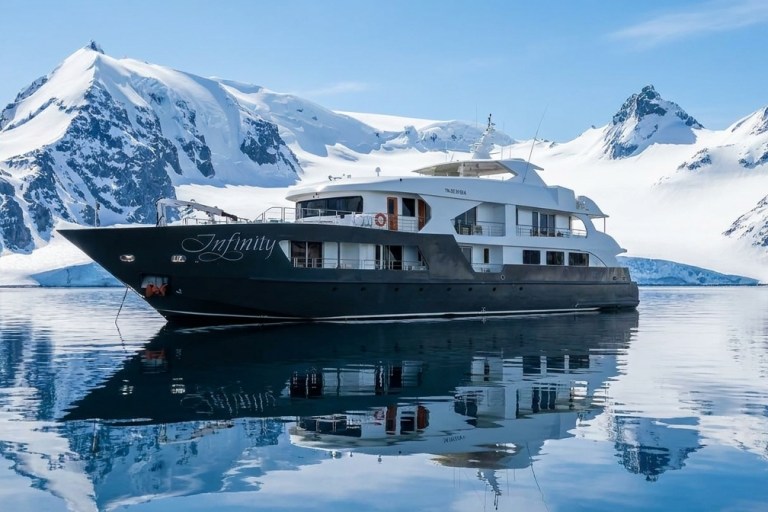
Alaska is the destination we point most first-time expedition charter guests toward. The Inside Passage is protected water, sailed between forested islands rather than across open ocean, and the wildlife density around Sitka, Juneau, and Icy Strait is among the highest concentration in the region.
Sitka and Juneau are the focal embarkation ports, and both connect to major US carriers, so there is no float-plane transfer or multi-leg regional flight standing between your guests and the yacht. Icy Strait is usually paired with a run into Glacier Bay National Park for the classic big-landscape day: tidewater glaciers calving into the water, with the yacht holding well back from the ice face. Glacier Bay entry is permit-limited, so our team checks availability against your dates early rather than assuming it will simply fit the itinerary. Tracy Arm and Endicott Arm, closer to Juneau, deliver a similar fjord profile on a shorter run when Glacier Bay does not line up with your window.
This works best for:
- Families or couples on their first cold-water expedition charter
- Guests who want kayaking, paddleboarding, and fishing from calm anchorages rather than open-water sailing
- Anyone who wants a straightforward commercial flight in and out, without a remote polar-gateway connection
Kenai Fjords, further south near Seward, is a wildlife-rich subregion we sometimes suggest adding for guests with more time who want a second focal area rather than a straight there-and-back Inside Passage route. The full Alaska expedition yacht fleet is built around this protected-water format, which is exactly why it is the easier region to get right on a first attempt.
Norway
Who Norway and Svalbard fit
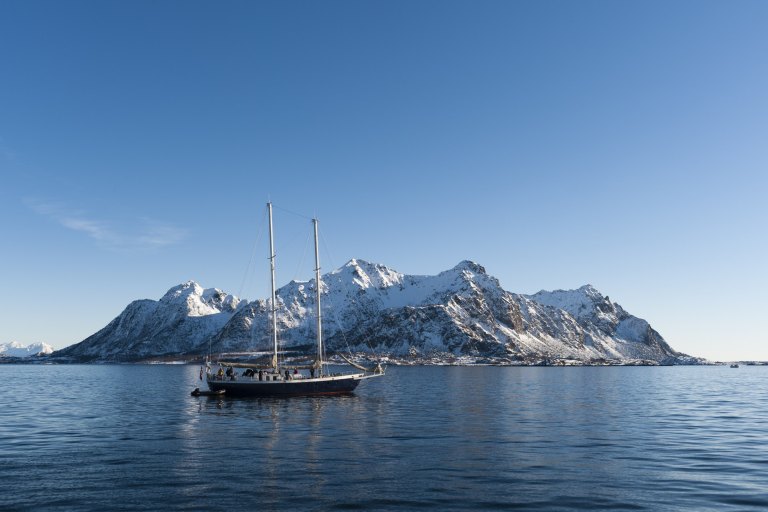
Norway in summer is a different kind of cruising than Alaska, not just a colder version of it. The mainland coast gets reliable sailing wind and close to 20 hours of daylight in high summer, so guests who want to feel a yacht actually sail, rather than glide through protected fjords under power, tend to prefer it.
Scandinavia is a region we have seen more yachts positioning to this season as an alternative to a crowded Mediterranean summer, which means more inventory is arriving. That said, in our experience the fleet is still newer and less proven at the true luxury tier than Alaska’s. That is a scarcity point worth taking seriously: fewer dedicated vessels means less flexibility on dates if you are set on a specific week.
Svalbard is Norway’s next-level option, not a mainland extension you tack on lightly. It runs as its own round trip out of Longyearbyen, separate from a standard mainland Norwegian coastal charter, and it delivers something Alaska cannot: polar bears, sea ice, and a genuinely Arctic landscape. This suits guests who have already chartered a cold-water region and want the itinerary to feel more remote, not first-timers testing whether expedition cruising suits them at all.
Explore the Norway charter destination guides if the mainland fjord run fits your dates, or the Arctic and Nordic expedition fleet if Svalbard is the trip you actually want.
The tradeoffs that actually matter
Crew quality matters more than the yacht in both regions, and it matters differently in each. In Alaska, crew need to read tide and weather windows inside narrow channels and know which anchorages hold calm overnight. In Norway, and especially on a Svalbard leg, crew need open-water sailing judgment plus, for the far north, experience around sea ice and bear-safety protocols during shore and zodiac landings.
Onboard motion is the other real difference. Alaska’s Inside Passage is protected water for almost the entire route, so evenings at anchor are calm and the yacht rarely feels the open sea. Norway’s mainland coast has genuine open-water legs with real swell, which some guests want and others do not.
| Region | Best for | Not ideal for | What it costs you |
|---|---|---|---|
| Alaska (Inside Passage) | First-time expedition guests, families, wildlife density, easy flights | Guests who want to feel real open-water sailing | Deeper fleet choice, but still peak-season pricing throughout |
| Norway mainland | Guests who want to sail, not just cruise scenic fjords | First-timers unsure about cold-water expedition life | Fewer proven luxury vessels, more schedule flexibility required |
| Svalbard extension | Repeat cold-water guests wanting true Arctic wildlife and ice | Anyone treating this as a casual first cruise | Highest logistics and crew-experience bar of the three |
Provisioning follows a similar pattern. Juneau, Sitka, and Ketchikan support a shoreside supply chain built specifically around the luxury expedition fleet, so restocking mid-charter is straightforward. In our experience, Norway’s Nordic charter fleet is growing fast this season, but the shoreside network around it is still catching up, which is one more reason we treat Norway as the destination for a second cold-water charter rather than a first one.
Cost and booking timeline
An Alaska vs Norway yacht charter quote is driven by the same core factors in both regions: the base charter fee for the yacht and crew, fuel, and the Advance Provisioning Allowance (APA), which covers food, dockage, park or permit fees, and fuel used during the trip. The base fee scales with yacht size and crew size, not destination, so a larger crewed motor yacht in Alaska and a comparably sized sailing yacht in Norway sit in a similar bracket before you factor in the specifics below.
Where the two regions diverge is in what drives cost above that baseline. Norway’s mainland legs cover more open water under sail, and provisioning a yacht from a smaller Nordic supply network can push APA costs up compared with the well-established Juneau, Sitka, and Ketchikan chain. A Svalbard extension adds a further premium on top of a standard Norway charter: an ice-aware vessel and crew experienced in Arctic operations cost more to book than a standard mainland yacht, and that difference should be built into your budget from the start rather than treated as a surprise later.
Do not compare Alaska and Norway pricing without checking the season on both sides. Neither region has a meaningful shoulder-season discount the way the Mediterranean does, because both effectively run one short summer window. A quote for late June in either destination is a peak-week quote, full stop.
Alaska’s larger roster of dedicated expedition and motor yachts gives you more choice at a given budget and a given week, simply because there are more vessels built specifically for the Inside Passage. Norway’s fleet is newer and thinner at the luxury tier, so in our experience a specific week can sell out faster even though overall interest in the region is smaller than Alaska’s.
- We generally advise booking 12 to 18 months before you sail if you want first pick of dates in either region, especially peak June to August weeks
- If your trip is less than 6 months away, go into the search with flexible dates rather than a fixed week
- We usually push clients toward at least 10 days as a realistic minimum for either region; a single week rarely allows for weather days and unhurried wildlife mornings
- If Svalbard is part of the plan, confirm the vessel is built for ice-aware Arctic operations, not a standard mainland charter yacht, and budget for the added crew and vessel premium
We usually push clients toward at least 10 days in either region. A 1-week Inside Passage or Norwegian coastal run tends to feel rushed once you build in a weather day or two and the slower mornings that good wildlife viewing actually requires. If you are still deciding between regions entirely, our guide to comparing wilderness charter destinations and broader charter planning insights are worth a read before you commit to either one.
FAQ
Is Alaska or Norway better for a first cold-water expedition charter?
Alaska. The Inside Passage is protected water, embarkation runs through Juneau or Sitka with straightforward commercial flights, and the dedicated expedition and motor yacht fleet is more mature than Norway’s. Save Norway, and especially Svalbard, for a second cold-water charter once you know what this style of trip is like.
When is the best time to charter Alaska or Norway?
May through September for both, with peak wildlife density from June to August. Outside that window, neither region runs a meaningful crewed charter season, and we do not recommend building a trip around the shoulder months.
Can I combine mainland Norway with a Svalbard extension?
Yes, but treat it as two distinct legs rather than one seamless route. Svalbard runs as its own round trip out of Longyearbyen and needs an ice-aware vessel and crew with Arctic experience, separate from a standard mainland Norwegian coastal charter.
Do Alaska and Norway charters both need ice-class yachts?
No. Alaska’s Inside Passage and mainland Norway are both sailed on standard robust expedition or motor yachts. Only the Svalbard extension into Arctic ice requires a reinforced-hull, ice-aware vessel.
How far in advance should I book an Alaska or Norway yacht charter?
We generally advise booking 12 to 18 months before you sail if you want first pick of peak June to August dates. If your trip is less than 6 months away, you can still find a boat in either region, but you will need flexible dates rather than a fixed week, especially in Norway where the luxury fleet is smaller.
Plan Your Alaska Charter With Real Experts
Tell us how you like to travel and our charter team will hand-pick the right crewed yachts, dates and route — no obligation.
Our Top Alaska Recommendations
We put these shortlists together because most travellers don’t need to weigh up every yacht on the water — just the handful that consistently get this kind of trip right. Each guide below digs into the boats, the best months to go, and the trade-offs worth knowing before you book.




















 iMessage
 WhatsApp




































