Quick answer
- Base rate, peak season: A capable 100ft+ expedition-grade motor yacht for 8 guests in Alaska runs roughly $80,000 to $85,000 per week.
- All-in, peak season: Budget $115,000 to $135,000 per week once you add APA, gratuity and repositioning — about $14,000 to $17,000 per guest.
- Best months: Late May to late July for daylight, salmon runs and bears around Glacier Bay; August carries roughly a $5,000-a-week premium.
- The real pitfall: Glacier Bay National Park is permit-controlled in summer — the right boat with the right access for your dates matters more than the rate.
- No state sales tax: Alaska charges no statewide sales tax, though some ports add local sales tax — confirm the departure port before you budget.
- Entry floor: Smaller crewed yachts in the Inside Passage start from around $50,000 per week base.
For most guests chartering Alaska in peak season — late May to late July — plan on $115,000 to $135,000 per week all-in for a capable 100ft+ motor yacht sleeping 8. That is base rate plus fuel and provisioning, crew gratuity, and any repositioning. The base rate alone sits at roughly $80,000 to $85,000 for a yacht like that; everything on top of it is what surprises first-time charterers.
If your budget is tighter, the Inside Passage has smaller crewed yachts from around $50,000 per week base. We would steer larger groups and anyone wanting deck space, stabilizers and a serious tender program toward the higher tier — Alaska is cold-water expedition cruising, and the boat earns its keep here in ways it does not in the tropics.
The short answer
What an Alaska crewed charter costs in peak season
Alaska is one of the most expensive crewed charter grounds in the world, and the reason is structural, not marketing. Fuel is costly, provisioning a remote region takes effort, and the whole season is squeezed into a narrow summer window of high demand.
Peak season runs from late May to late July — that is the window with the strongest daylight, salmon runs and bear activity, and the heaviest demand on the fleet. Here is the honest breakdown for a typical 8-guest, 100ft+ motor yacht in that window:
| Cost line | Typical figure | What it is |
|---|---|---|
| Base rate (June) | ~$80,000/week | Yacht, crew, insurance, maintenance |
| Base rate (August) | ~$85,000/week | About $5,000 over a June or September week |
| APA (30–35%) | ~$24,000–$29,750 | Fuel, food, drink, port fees |
| Crew gratuity (15–20%) | ~$12,000–$17,000 | Discretionary, paid to the crew |
| Repositioning (e.g. Juneau–Sitka) | ~$8,000 | Only if the route demands it |
| All-in | ~$115,000–$135,000/week | What you should actually budget |
That works out to roughly $14,000 to $17,000 per guest for a full week with 8 aboard. It is not a holiday price — it is an expedition price. Browse what fits at our Alaska Yacht Charter collection.



What the base rate actually includes
The weekly base rate buys you the yacht and the people who run it. That is more than it sounds, and it is where the value sits in a region this demanding.
- The yacht itself and all permanently installed equipment
- Crew wages, crew food and uniforms
- Insurance — hull, P&I and liability
- Routine maintenance and consumable stores
- Ship’s linen and towel laundering
What the base rate does not include is everything that varies with how you actually use the boat: fuel, your food and drink, port and docking fees, and crew gratuity. Those sit in the APA and the tip, covered below.
APA and gratuity, explained plainly
APA stands for Advance Provisioning Allowance. It is a pool of money you pay before the charter — typically 30% to 35% of the base rate on a motor yacht — that the captain spends on fuel, food, drink and port fees as the week unfolds.
At the end of the charter the captain shows you the accounts. Whatever was not spent is refunded; if you ran the boat hard or drank well, you top it up. On an $85,000 base rate, that APA lands around $25,500 to $29,750.
Gratuity is separate and discretionary. The customary range is 15% to 20% of the base rate, weighted toward the upper end for a crew that delivers an exceptional week. On an $85,000 week, expect to set aside roughly $12,750 to $17,000.

What changes the total
A handful of levers swing the bill by tens of thousands. Understand these and you can budget accurately instead of guessing.
Season. August carries a premium — about $5,000 a week more than June or September on the same yacht. Shoulder weeks in late May and early September run cheaper than the late-May-to-July peak. If your dates are flexible, that is the easiest saving available.
Yacht class and length. The entry floor for crewed Alaska charters is around $50,000 per week, but those are smaller, simpler boats. A full-spec expedition or robust motor yacht with stabilizers, a heated interior, multiple tenders and kayaks sits higher. See the spread across our yachts under $100k and yachts under $250k lists.
Group size and layout. Eight guests is the sweet spot for the 100ft+ tier. Push toward 10 or 12 and you move into larger, more expensive vessels — explore large group charters if that is you.
Repositioning. If your itinerary ends in a different port than it starts — say Juneau to Sitka — expect a repositioning fee, often around $8,000. Always confirm where the yacht already is before you commit; a boat already in the region saves you a costly delivery.
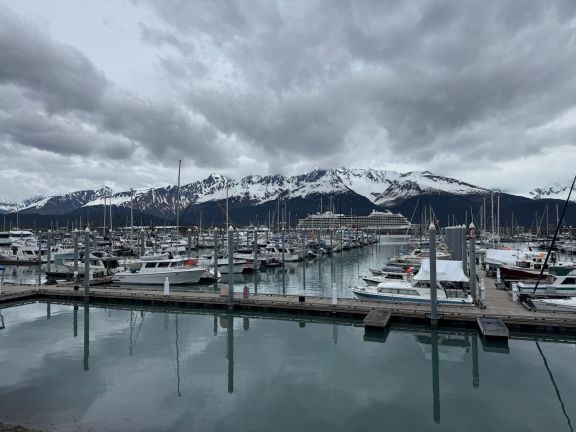
The Glacier Bay access problem
This is the single biggest peak-season pitfall, and it is not about money. Glacier Bay National Park controls how many vessels can enter during summer, so access for your week is something the yacht arranges in advance — not a decision you can make on the water.
The practical effect is simple: confirm with us whether a given yacht can take you into Glacier Bay for your dates before you fall for it. Some boats are set up for it; some are not.
This is why we say the right boat with the right access for your dates matters more than the headline price. It is also why the most sought-after Alaska yachts and weeks go early — book ahead while the boats that can deliver your route are still open.

Concrete examples
Three realistic scenarios to anchor your budget. None of these are quotes — they show the shape of the cost so you arrive at the conversation informed.
A family of 6 in late June, Inside Passage. A mid-size crewed motor yacht, base around $80,000, plus roughly 30% APA and a 15% to 20% tip. All-in you are in the $115,000 to $130,000 range for the week — Juneau out and back, Tracy Arm, whale watching in Icy Strait, kayaking in quiet anchorages.
A group of 8 in August. The 100ft+ tier at $85,000 base, full APA loading for fuel-heavy distances, a strong gratuity, and a Juneau-to-Sitka repositioning. Budget the upper end, $130,000 to $135,000. This is the trip-of-a-lifetime configuration and it is priced like one.
A couple or small party in early September, shoulder. Fewer boats around, and rates below the late-May-to-July peak. A smaller crewed yacht from the entry tier keeps the all-in toward the lower end of the range — the smart-money window if peak wildlife density is not your priority.
Either way, Alaska sits at the top of the cost ladder among the grounds we charter. Compare it against warm-water destinations like French Polynesia or the Maldives and the drivers are different — fuel, logistics and the short season all push Alaska higher.
How Alaska compares on tax and fees
One piece of good news. Alaska has no statewide sales tax, so a charter here is not loaded with the kind of combined state rate you would face departing somewhere like Washington State.
The caveat: some Alaskan municipalities and ports levy their own local sales tax, so it is not blanket tax-free. Confirm the departure port with us before you finalise the budget — we will tell you what applies to your specific itinerary.
It does not make Alaska cheap. But the tax picture is generally lighter than many charter grounds, which means the number you budget tends to land closer to the number you pay.

How to keep the budget sane
You will not make Alaska a budget trip, but you can avoid overpaying for the version you actually want.
- Move your dates to early September — below the late-May-to-July peak for the same yacht.
- Choose a yacht already positioned in the region to avoid an $8,000-plus repositioning or delivery charge.
- Build a round-trip route from Juneau rather than a one-way Juneau-to-Sitka, unless the one-way truly improves the trip.
- Confirm Glacier Bay access first, rate second — re-shopping later costs far more.
- Book ahead to have first call on the boats that can take your dates and your route.
- Never compare a yacht’s low-season rate to its peak rate and assume you can negotiate the gap — those are different markets.
For the structural side of how crewed pricing works across regions, our yacht charter insights pieces and the broader best locations guides are worth reading before you commit.
The right boat for cold water
This is not the swim-platform, warm-shallows cruising you get in the tropics. Alaska is layered clothing, cold water, glacial fjords and weather that turns. The yacht needs to handle it.
That means a robust, full-spec expedition or motor yacht with a heated interior, good stabilizers for open stretches, and a tender and kayak program built for cold-water exploration. Many of the best-suited boats relocate between regions each season, so the yacht you fall for may be in the Galápagos or Southeast Asia outside the Alaska window.
The right platform here is rugged enough for cold water and weather, with the interior comfort to keep a week enjoyable when it turns grey outside. Our brokers will tell you plainly which boats actually hold Alaska dates, which can take you into Glacier Bay, and which are wrong for the conditions. Browse current options in our Alaska collection and we will narrow it from there.
FAQ
What is the cheapest way to charter Alaska?
Charter in early September on a smaller crewed yacht, outside the late-May-to-July peak. The entry floor for crewed Alaska charters is around $50,000 per week base, and shoulder weeks sit below peak rates. You trade some peak wildlife density for a lower bill.
How much do I tip the crew on an Alaska charter?
The customary range is 15% to 20% of the base rate, weighted to the upper end for a crew that delivers an exceptional week. On an $85,000 base, that is roughly $12,750 to $17,000, paid at the end of the charter.
What does APA cover, and is it refundable?
APA covers fuel, your food and drink, port and docking fees and miscellaneous expenses. On a motor yacht it is 30% to 35% of the base rate, paid before you sail. The captain accounts for spending at the end and refunds whatever was not used.
When should I book Alaska to lock the best yacht and dates?
Book well ahead. The season is short, demand is high, and the yachts that can take you into Glacier Bay for your specific week get reserved early. The deposit and the APA are separate payments: a deposit secures the booking under your contract, while the APA is a separate advance for running costs that is accounted for and refunded at the end if unused. Confirm exact deposit and refund terms in writing before you sign.
Why is Alaska more expensive than a tropical charter?
Three reasons: high fuel costs over real cruising distances, the logistics of provisioning a remote region, and a short high-demand window concentrated from late May to late July. You also need a more capable, expedition-grade vessel and crew than warm, sheltered waters require — and that capability is part of the cost.
Plan Your Alaska Charter With Real Experts
Tell us how you like to travel and our charter team will hand-pick the right crewed yachts, dates and route — no obligation.
Our Top Alaska Recommendations
We put these shortlists together because most travellers don’t need to weigh up every yacht on the water — just the handful that consistently get this kind of trip right. Each guide below digs into the boats, the best months to go, and the trade-offs worth knowing before you book.























 iMessage
 WhatsApp




































