Quick answer
- Best months: June to August, for the longest daylight, the most active wildlife, and the surest access into Glacier Bay National Park.
- Season limits: Alaska charters run May through September only. Outside that window the fleet is not operating and the region is closed to crewed yacht cruising.
- Shoulder case: May and September trade wildlife density and daylight for quieter anchorages and lighter charter traffic through the Inside Passage.
- Glacier Bay access: The National Park Service caps the number of vessels allowed into Glacier Bay each day, and a private yacht needs a permit arranged by the operator well before you sail. This is not something you can improvise dockside.
- No guarantees: Even in peak season, sightings of humpbacks, bears, or puffins are not certain. Alaska rewards patience, not promises.
- Book early: Book 12 to 18 months before you sail if you want a specific week in July or August. The yachts suited to this region are a small, specialized fleet, and the good dates go first.
For most guests, we recommend chartering Alaska between June and August. That is when the Inside Passage, Glacier Bay, and Kenai Fjords deliver the longest daylight, the most active wildlife, and the calmest window for tender operations into narrow inlets like Tracy Arm and Endicott Arm. For the full comparison between the two ends of that window, see our June versus August breakdown.
We only steer guests toward May or September if they specifically want fewer boats on the water, are flexible on daylight and temperature, or are trying to fit a charter around a fixed set of dates. Outside May through September, the season is closed. There is no meaningful winter charter option in this region, and we would not try to build one around it.


When does the Alaska charter season actually run?
The Alaska crewed charter season runs from May to September. Inside that window, the days are long enough, the water is navigable, and the wildlife has arrived for the summer. Outside it, ice, weather, and shrinking daylight make cruising impractical, and the crewed fleet in the region simply is not operating. For the mechanics of exactly when the first and last charters go out each year, see our piece on when the season actually opens and closes.
This is a firm boundary, not a soft one. If your only available week falls in October or April, Alaska is not the right region for that trip. We would move that conversation toward a different itinerary rather than force a charter into a month the season does not support.
Most Alaska charters embark and disembark in Juneau, which sits at the hub of the Inside Passage and gives the shortest run to Glacier Bay, Tracy Arm, and Endicott Arm. Sitka and Ketchikan work as alternate ports for one-way itineraries, which is worth knowing if you want to cover more ground in a single week rather than looping back to the same dock. Route choice is tied to gateway choice more than most guests expect; see our Glacier Bay versus Prince William Sound comparison for how that plays out.
The peak window
June to August: the month range we build most itineraries around
June through August is peak season in Alaska, and it earns that position operationally, not just by reputation. Daylight runs close to eighteen to twenty hours at this latitude in June, which gives an itinerary room to cover more ground between the Inside Passage, Sitka, and Kenai Fjords without rushing the anchorages or pushing a late-evening transit in fading light.
Wildlife activity is at its highest through this stretch. Bald eagles, sea otters, puffins, and bears are commonly sighted from calm anchorages, and Frederick Sound and Chatham Strait, both reachable from a Juneau-based itinerary, are known for humpback whales bubble-net feeding in cooperative groups through July and August, one of the more striking things to watch from a tender.
Glacier Bay National Park access is also at its most workable in these months, and this is where the planning has to happen early rather than on the water. The National Park Service limits the number of vessels permitted into the bay each day, across cruise ships, tour boats, and private yachts, and a charter yacht needs an entry permit arranged through the operator in advance. This is not a same-week booking. A knowledgeable operator secures the Glacier Bay date as part of building the itinerary, then routes the rest of the week, including stops like Reid Glacier, Margerie Glacier, and Johns Hopkins Inlet, around that fixed point.
We want to be clear about one thing: none of this is a guarantee. Wildlife in Alaska is unpredictable even at the height of summer. What June through August gives you is the best odds and the most active conditions, not a certainty.
The shoulder case
May and September: who the shoulder season actually suits
May and September are real options, not compromises, for guests who understand the tradeoff. Anchorages in the Inside Passage are quieter, other charter and tour traffic is lighter, and Glacier Bay permits are easier to secure on shorter notice because fewer operators are competing for the same daily quota. For guests who have already done Alaska in peak season and want a calmer return trip, or who are booking with less than six months to go and cannot get a June or July date, the shoulder months are often the honest answer rather than a downgrade.
What you give up is daylight and warmth. Days run several hours shorter at both ends of the season, mornings are colder, and wildlife density drops compared to the June through August stretch, particularly the bubble-net feeding activity that peaks in mid-summer. This works well for guests prioritizing privacy and pace over maximum wildlife exposure. It becomes a problem for guests who booked Alaska specifically for whale watching and are disappointed when September activity looks thinner than what a June charter would have delivered.
| Window | Best for | Not ideal for | What changes onboard |
|---|---|---|---|
| June to August | First-time guests, wildlife-focused trips, families wanting long days | Guests wanting minimal boat traffic | Longest daylight, highest wildlife activity, fullest Glacier Bay access |
| May | Returning guests, quieter anchorages, flexible schedules | Guests set on peak whale activity | Cooler mornings, shorter days, lighter wildlife density |
| September | Guests prioritizing solitude over sightings | First-time visitors wanting the classic season | Fastest-shortening daylight, coolest conditions, easier Glacier Bay permit, quieter Inside Passage |
What kind of yacht makes sense in Alaska?
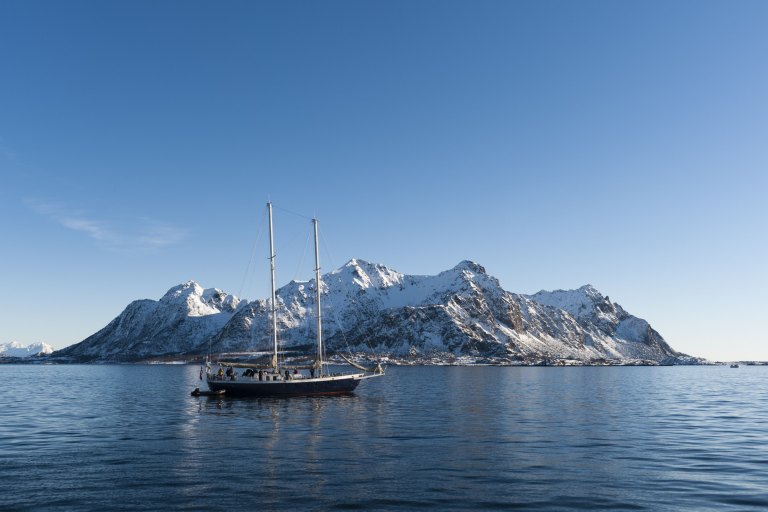
The boat matters more here than people expect. Alaska is a cold-water expedition ground, and the yachts that suit it are expedition-capable or robust motor yachts, typically in the 100 to 150-foot range, built for layered, active cruising rather than a tropical swim-platform trip. Guests coming from warm-water charters sometimes underestimate how different the onboard experience feels: fewer hours in the water, more time on deck watching for wildlife, and gear geared toward wind and cold rather than sun.
Look for a yacht with a proper mudroom or gear locker near the tender bay, heated cabins, and a crew who carry cold-water safety gear as a matter of course, not an add-on. Kayaking and paddleboarding from calm anchorages are part of the standard Alaska experience, and they work best off a yacht with a stable RIB tender and crew who know how to launch and recover kayaks safely in cold water and shifting current, particularly near glacier faces where calving ice changes conditions with no warning.
Crew quality matters as much here as the yacht itself. An experienced captain knows how to read conditions in Tracy Arm and Endicott Arm, time the approach into Glacier Bay against the day’s permit window, and adjust the route around Sitka or Kenai Fjords when weather shifts. This is not a region where you want a crew running their first Alaska season.
What goes wrong when guests book the wrong month?
The most common mistake is treating Alaska like a year-round destination and trying to fit it into a trip planned for October or April. The season is closed then, and no amount of flexibility on the yacht side changes that.
The second mistake is booking a shoulder-season week expecting peak-season wildlife density, then feeling let down by quieter sightings in May or September. We flag this at the enquiry stage precisely because it is avoidable: if whale activity is the priority, the itinerary needs to sit inside June through August, not adjacent to it.
The third mistake is waiting too long to book June through August and then losing the Glacier Bay date. Because park entry is capped and permits are arranged by the operator ahead of time, a late booking can mean the yacht is available but the Glacier Bay slot is not, which forces a route built around Tracy Arm, Endicott Arm, and Kenai Fjords instead. That is still a strong week, but it is not the itinerary most guests pictured when they booked Alaska. We recommend booking 12 to 18 months before you sail for a July or August departure. If your trip is less than six months away, expect a shorter list of available yachts and a real chance that Glacier Bay is already fully booked for your dates, though the rest of the Inside Passage remains a strong fallback.
The fourth is not building slack into the schedule. Weather in the fjords can close a specific glacier approach for a day, and a route with no spare day to reroute around Tracy Arm or Endicott Arm turns a minor weather delay into a missed highlight.
How does Alaska compare to other cold-water expedition regions?
Alaska is one of a handful of cold-water expedition regions we place guests into, and it is usually the one we recommend first among them, for a straightforward reason: it is the easiest to reach and the shortest season to plan around, which makes it the best fit for a first cold-water charter.
Norway’s fjords run a similarly long season, roughly May through September, but the draw is different: fjord scenery, the midnight sun above the Arctic Circle, and coastal culture rather than the dense marine wildlife that drives most Alaska bookings. We steer guests toward Norway when the priority is landscape and long summer light over whale and bear sightings.
Patagonia asks more of the guest. The channels around the Chilean fjords and the approach to the Beagle Channel are more exposed, the season is shorter and colder, and getting a yacht and crew into position adds real cost and lead time. We recommend Patagonia to guests who have already done a milder cold-water charter, in Alaska or Norway, and want something rawer.
The Arctic and Nordic charter routes go further still. These trips run a compressed summer window, require ice-classed vessels, and put pack ice and polar bears ahead of the more accessible wildlife Alaska offers.
South Georgia and the Russian Far East sit at the far end of this list. Both require a multi-leg positioning voyage or a fly-in connection well outside normal charter logistics, and both are built around wildlife concentrations, king penguins on South Georgia, brown bears on the Kamchatka coast, that Alaska does not attempt to match. We only recommend these to guests who have already chartered at least one accessible cold-water region and know they want the harder trip.
For most first-time cold-water guests, this is why Alaska wins: a defined season, a workable gateway in Juneau, and wildlife-viewing that does not require days of transit to reach the good part. If you are weighing Alaska against the rest of that shortlist, our best locations guide and the Pacific Northwest charter page are useful starting points, and the Alaska yacht charter category covers the region in more depth once you have settled on the month.
Is Alaska a year-round yacht charter destination?
No. The charter fleet operates from May to September, and Juneau-based operators typically confirm the exact opening and closing dates each year based on ice and weather. Outside that window the crews and yachts have moved on or gone into maintenance, so there is no fallback charter to book even for guests with flexible dates.
Will I definitely see whales or bears on an Alaska charter?
No sighting is guaranteed. What you can rely on is that late June through August puts you in the right places at the right time, including Frederick Sound and Chatham Strait for humpback bubble-net feeding, but an experienced crew and a route with built-in slack do more for your odds than the calendar alone.
Is September a bad time to charter Alaska?
Not bad, but different, and it is often the better fit for anyone who has already had a June or July charter. Cooler mornings and shorter days trade against a quieter Inside Passage and a much easier path to a Glacier Bay permit, since fewer operators are competing for the same daily entry quota.
How far in advance should I book an Alaska yacht charter?
Book 12 to 18 months before you sail if you want a specific July or August week, and earlier still if Glacier Bay is a must-have, since park entry is capped and permits go to whoever secures the date first. With less than six months to go, you can still charter Alaska, but expect the shortlist of available yachts to be smaller and Glacier Bay less certain.
What kind of yacht is used for Alaska charters, and does it matter which one I book?
Yes, more than guests expect. Expedition-capable and robust motor yachts around 100 to 150 feet dominate the fleet, with the tender setup, cold-water gear, and crew experience mattering as much as the itinerary. A crew that has run several Alaska seasons will read weather and time the Glacier Bay approach in a way a warm-water crew simply has not had to learn.
Plan Your Alaska Charter With Real Experts
Tell us how you like to travel and our charter team will hand-pick the right crewed yachts, dates and route — no obligation.
Our Top Alaska Recommendations
We put these shortlists together because most travellers don’t need to weigh up every yacht on the water — just the handful that consistently get this kind of trip right. Each guide below digs into the boats, the best months to go, and the trade-offs worth knowing before you book.


















 iMessage
 WhatsApp