Raja Ampat, Indonesia
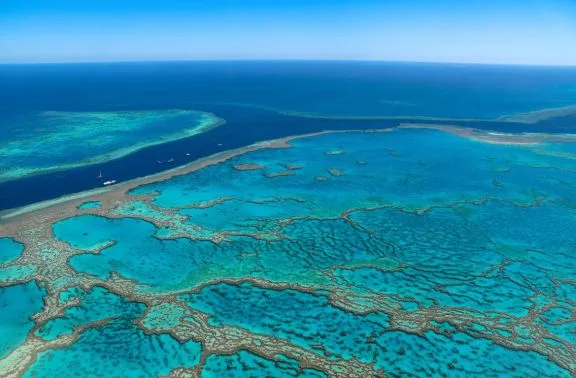
Raja Ampat sits in the heart of the Coral Triangle and holds the record for some of the highest marine biodiversity anywhere on the planet – more coral and reef fish species than almost anywhere else on earth.
It’s also one of the most exclusive tropical cruising grounds: tourism is still relatively new and limited, and once you leave Sorong behind, it feels like another world of jungle, limestone islands, and tiny villages.
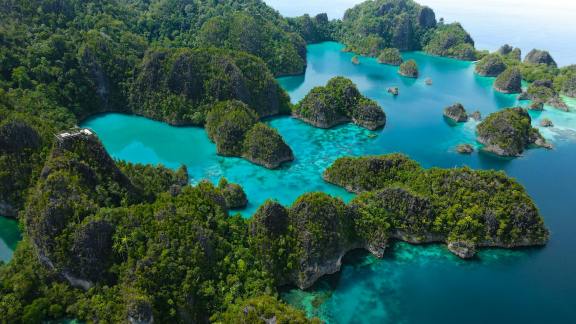
I’ve sailed Raja Ampat twice on my own boat, and it’s still the wildest, most overwhelming diving I’ve ever seen. Wayag, Arborek, the Fam Islands, Freewin and especially Misool are a maze of rainforest-topped rock towers and deep, clear channels when you hit the season right. There are no marinas and very little infrastructure – you live entirely on the water.
-
Why it’s special: Avatar-level scenery, manta cleaning stations, soft corals, and fish life so dense it is like you are in a National Geographic shot.
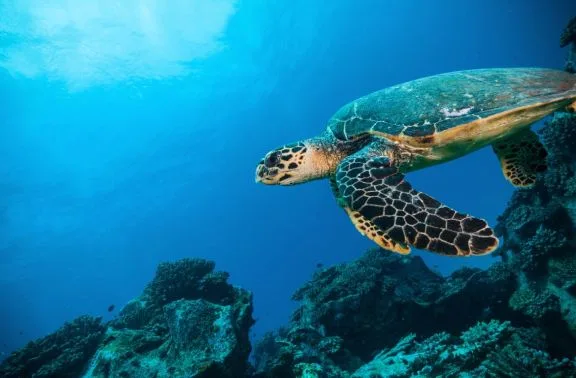
- Marine life you are likely to see: huge schools of fusiliers and snappers, reef sharks, big manta rays, carpets of soft coral and sea fans, plus macro life like pygmy seahorses and nudibranchs.
-
Why you need a yacht: The good sites are spread over huge distances; you live on the water and move with the tides, light, and conditions.
How to charter here:
Most visitors join Indonesian phinisi liveaboards by cabin or as a full-boat charter with a dive guide and scuba gear onboard. True private yachts (catamarans and motor yachts) are rare here because of flag rules, but we know the ones worth enquiring about.
Northern Atolls, Maldives
The Maldives are the cliché postcard made real: tiny white-sand islands ringed by turquoise water, spread out as long chains of coral atolls in the middle of the Indian Ocean. It’s one of the flattest countries on Earth – the highest natural point is only around 2.4 m above sea level – so life here is completely tied to the sea.
All of the Maldives are a diving heaven, but the further north you go, the more remote and alive it feels. The resorts thin out, the atolls feel wilder, and you’re sharing the water more with fish and locals than with other yachts.
I stopped in Uligan in the far north on my own sailboat while crossing the Indian Ocean, and even after years of sailing tropical Australia and Southeast Asia, the water here blew me away. On our very first freedive we saw sharks, stingrays and turtles, and that night we were catching lobster with our bare hands and sharing grilled fish on the beach with the local community. It’s the kind of place where a private yacht doesn’t just make logistics easier – it plugs you directly into island life.
-
Why it’s special: Far north atolls like Haa Alif and Haa Dhaalu feel like an older version of the Maldives – clear water, lively reefs, and small, low-key islands instead of big resort complexes.
-
Why you need a yacht: The best channels, reefs and sandbanks are spread over multiple atolls. Living on a yacht means you move with the tides and conditions, pick quieter sites, and stay clear of the busier central routes.
-
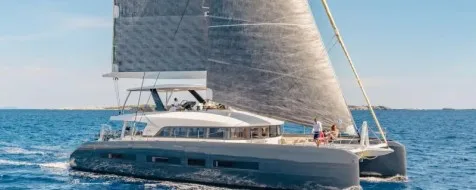
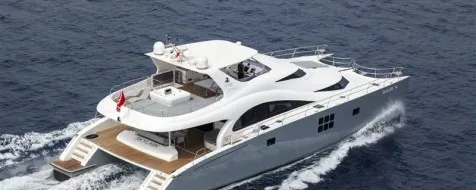
Catamaran vs motor yacht: A catamaran is perfect for shallow anchorages and laid-back lagoon living; a motor yacht adds speed and range if you want to cover more atolls or combine the north with other regions in a week.
How to charter here:
Most divers see the Maldives on fixed-route liveaboards out of Malé. A private, fully crewed yacht in the far north is different: it’s your schedule, your anchorages, your mix of diving and downtime. We can help you choose between catamarans and motor yachts and plan a route that fits your group’s experience and dates, then link this section to your Maldives landing page for full details.
Tuamotu Archipelago, French Polynesia
French Polynesia is one of the most isolated parts of the planet – over a hundred islands and atolls scattered across more than 2,000 km of the South Pacific, thousands of kilometres from the nearest continents.
Most people know the postcard names – Tahiti, Bora Bora – but for serious divers who want remote passes and wild water, we recommend the Tuamotus instead.
The Tuamotus are low coral atolls in the middle of nowhere: a ring of reef, a lagoon, a few motus and a lot of ocean. Fakarava, Rangiroa and their neighbours are home to some of the best shark diving on earth – think passes filled with grey reef sharks, walls of fish and fast drifts where the reef just keeps going.
During our years living aboard and sailing the South West Pacific and Indian Ocean, we met a lot of circumnavigators. When you asked them for their single favourite water, French Polynesia came up again and again – mostly because of what they’d seen in places like Rangiroa and Fakarava.
- Why it’s special: Remote sharky passes (Fakarava’s “wall of sharks”, Rangiroa’s dolphin-filled Tiputa Pass), clear blue water and sparsely populated atolls that still feel far from mass tourism.
- Marine life you are likely to see: grey reef, lemon and white-tip sharks, big schools of jacks and snappers, rays, turtles and dolphins in the passes; in the right season you can sometimes hear or even see humpback whales further west in French Polynesia.
- Why you need a yacht: The good passes and motus are spread across multiple atolls. You fly into Tahiti (Papeete) on an international flight, then connect on a domestic hop to Rangiroa, Fakarava or another Tuamotu atoll.
From there, your yacht is your home, dive platform and way to move with tides and conditions. - Catamaran vs motor yacht: A catamaran based in the Tuamotus is ideal for slow, lagoon-focused trips and hopping between a few nearby atolls. A motor yacht suits more ambitious itineraries, longer crossings and guests who want to cover more ground in a week.
How to charter here:
There are small pensions and dive centres on some atolls, but the most flexible way to dive the Tuamotus is on a fully crewed yacht that can time the passes properly and anchor off quieter motus. In our Tuamotus & French Polynesia charter guide we go deeper into routes, seasons and which yachts work best for advanced divers who want those remote, sharky passes.
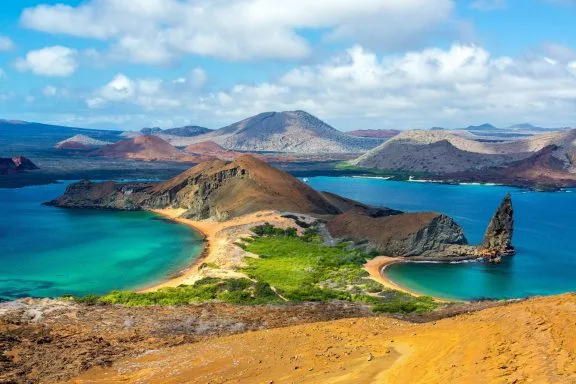
Galapagos Islands, Equador
If you’re choosing Galápagos, you’re not coming for marble bathrooms – you’re coming for one of the most unique dive adventures on the planet.
This is pure expedition territory: cooler water, strong currents, strict park rules and mind-bending wildlife above and below the surface.
- Why it’s special: Remote volcanic islands in the Pacific where almost everything is endemic. You’re diving in the middle of a living laboratory, with big animals in the water and dinosaurs-on-legs on land. It feels wild, regulated, and very different from classic “resort diving”.
- Marine life you are likely to encounter: schooling hammerheads, Galápagos and silky sharks, rays, turtles, huge schools of fish, playful sea lions and, in the right season, whale sharks and other whales at the more exposed offshore sites.
- Why you need a yacht: The best dive sites and wildlife locations are spread across the archipelago and are strictly boat-access only. You fly into the islands, then your vessel becomes a moving basecamp that follows approved routes to different islands and offshore seamounts.
How to charter here:
The most common way to charter in the Galapagos is by booking a cabin on one of their standard expedition power catamarans. These boats follow a regulated route, either “eastern” or “western” focused, rotating on a park-controlled calendar.
Or, you book a private deluxe yacht charter, where you get a private luxury motor yacht for you and your group. The route still has to follow approved Galápagos itineraries, but a private charter gives you far more control over pace, daily rhythm, and the balance of diving vs land excursions.
Talk to a Yacht Charter Expert
Our team is made up of ex-captains, charter crew, professional divers, and water toy enthusiasts who’ve spent years sailing the world. When you inquire, you’re connected with a broker who knows the destination firsthand—so you get advice that’s accurate, personal, and based on real experience.
Discover more locations

Best Yacht Charter Destinations for Families
See the best yacht charter destinations for families, including Fiji, the Maldives, French Polynesia, Seychelles, Galapagos, and Indonesia.

Best Yacht Charter Destinations for Snorkeling
Compare the best yacht charter destinations for snorkeling, from the Maldives and Fiji to French Polynesia, Raja Ampat, Seychelles, and Galapagos.

7 Places Where a Luxury Yacht Charter Is Better Than a Resort
See 7 remote destinations where a luxury yacht charter beats a resort, from the Maldives and French Polynesia to Raja Ampat, Fiji, and Seychelles.

5 Epic Expedition Yacht Charter Destinations for True Adventure
Expedition yacht charters are for guests who want more than pretty bays and beach clubs. Think glaciers, whales, icebergs, remote villages, wild weather—and then coming back to a warm, well-run yacht with a crew who know how to operate in serious environments. Sometimes that yacht is a rugged little expedition vessel; sometimes it’s a full-spec [...]

11 Most Unique Yacht Charter Destinations in the World
Raja Ampat Yacht Charter Read More Maldives Yacht Charter Read More French Polynesia Yacht Charter Read More 1. Raja Ampat Dive Charter on a Luxury Liveaboard A Raja Ampat yacht charter is truly like a dive into paradise: Raja Ampat is, first and foremost, one of the top dive destinations in the world! Located in the [...]




 iMessage
 WhatsApp